



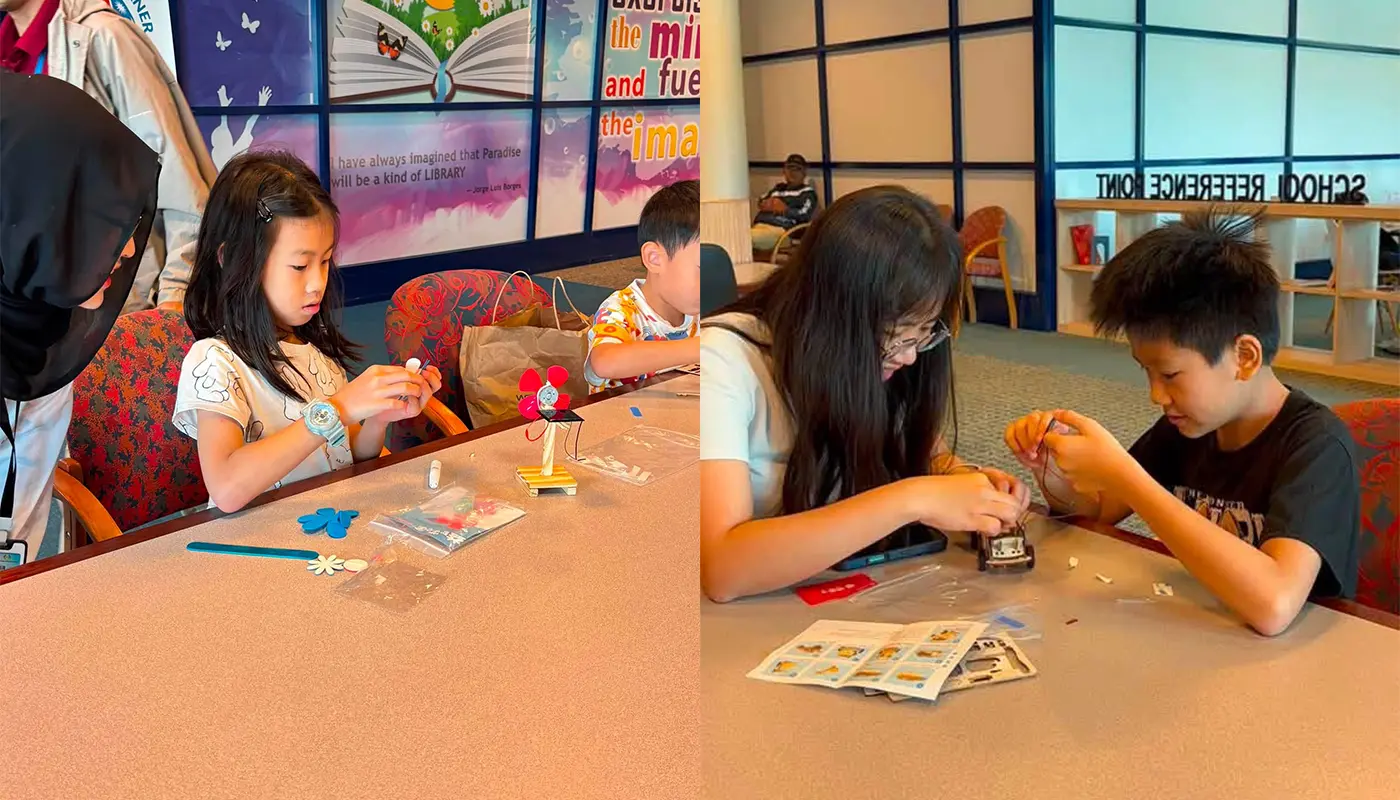
KUCHING – Young minds were introduced to the practical applications of renewable energy during a vibrant educational session held at the State Library yesterday, demonstrating how interactive learning can spark interest in science and technology.
The event, titled “Sun to Spin, Sun to Zoom!”, transformed the library’s dedicated Makerspace into a bustling workshop where theoretical concepts of solar power were converted into tangible, functioning models by enthusiastic children.
Organised by Pustaka Negeri Sarawak on 3 August 2026, the programme was specifically designed to move beyond traditional classroom instruction in favour of experiential education.
Rather than simply listening to lectures about photovoltaic cells or circuitry, attendees were tasked with constructing their own devices from scratch.
This hands-on methodology is increasingly recognised by educators as vital for cementing complex STEM concepts, as it allows learners to encounter and overcome real-world engineering challenges in a supportive environment.
The core activities centred on the assembly of DIY solar cars and solar-powered fans. These projects served as accessible entry points into the world of green technology, illustrating how sunlight can be captured and transformed into kinetic energy.
As participants connected wires, positioned panels, and tested their creations, they gained an intuitive understanding of energy conversion that textbooks alone rarely provide. The tactile nature of the work helped demystify technical subjects, making them feel approachable and relevant to daily life.
Beyond technical skills, the session placed strong emphasis on developing cognitive abilities such as critical thinking and creative problem-solving. When a car failed to move or a fan blade spun unevenly, young makers had to diagnose the issue and iterate on their designs.
This process of trial and error mirrors authentic scientific inquiry, teaching resilience and adaptability alongside technical knowledge. Such soft skills are considered equally important in preparing the next generation for a rapidly evolving technological landscape.
The response from the community was notably positive, with families expressing appreciation for the opportunity to engage with STEM in a fun, low-pressure setting. Parents observed their children collaborating, asking questions, and displaying genuine excitement about their accomplishments.
This encouraging turnout suggests a growing public appetite for informal learning opportunities that complement formal schooling, particularly in areas related to sustainability and innovation.
Libraries have increasingly evolved from quiet repositories of books into dynamic community hubs for creation and discovery. By hosting maker programmes, Pustaka Negeri Sarawak is redefining its role as a centre for lifelong learning and digital literacy.
The Makerspace facility provides essential tools and resources that might otherwise be inaccessible to individual households, thereby democratising access to technology education and fostering inclusivity in STEM fields.
Renewable energy education carries particular significance in the current global context, where climate awareness is rising among younger generations. Introducing these topics through play and experimentation helps normalise sustainable technologies from an early age.
Children who build solar devices today may well become the engineers, policymakers, or informed citizens who drive the green transition tomorrow, making such initiatives investments in long-term societal resilience.
The library has expressed gratitude to all families who participated and supported the event, acknowledging that community engagement is what makes such programmes viable.
Institutional efforts alone cannot sustain educational ecosystems; active participation from the public validates the investment and guides future planning. Feedback from this session will likely inform the design of subsequent workshops, ensuring they continue to meet the interests and needs of local youth.
Looking ahead, Pustaka Negeri Sarawak has signalled its intention to expand the Makerspace offerings, inviting returning participants and newcomers alike to explore further topics.
Future sessions may delve into robotics, coding, or other emerging technologies, building upon the foundation laid by this solar energy workshop. Consistent programming helps maintain momentum and creates pathways for sustained engagement rather than isolated experiences.
Ultimately, events like “Sun to Spin, Sun to Zoom!” exemplify how public institutions can nurture curiosity and capability simultaneously.
They bridge the gap between abstract curriculum standards and lived experience, showing children that science is not merely a subject to be studied but a tool for creation and problem-solving.
In doing so, they cultivate not just technical proficiency but also the confidence and imagination necessary for meaningful contribution to society.
