



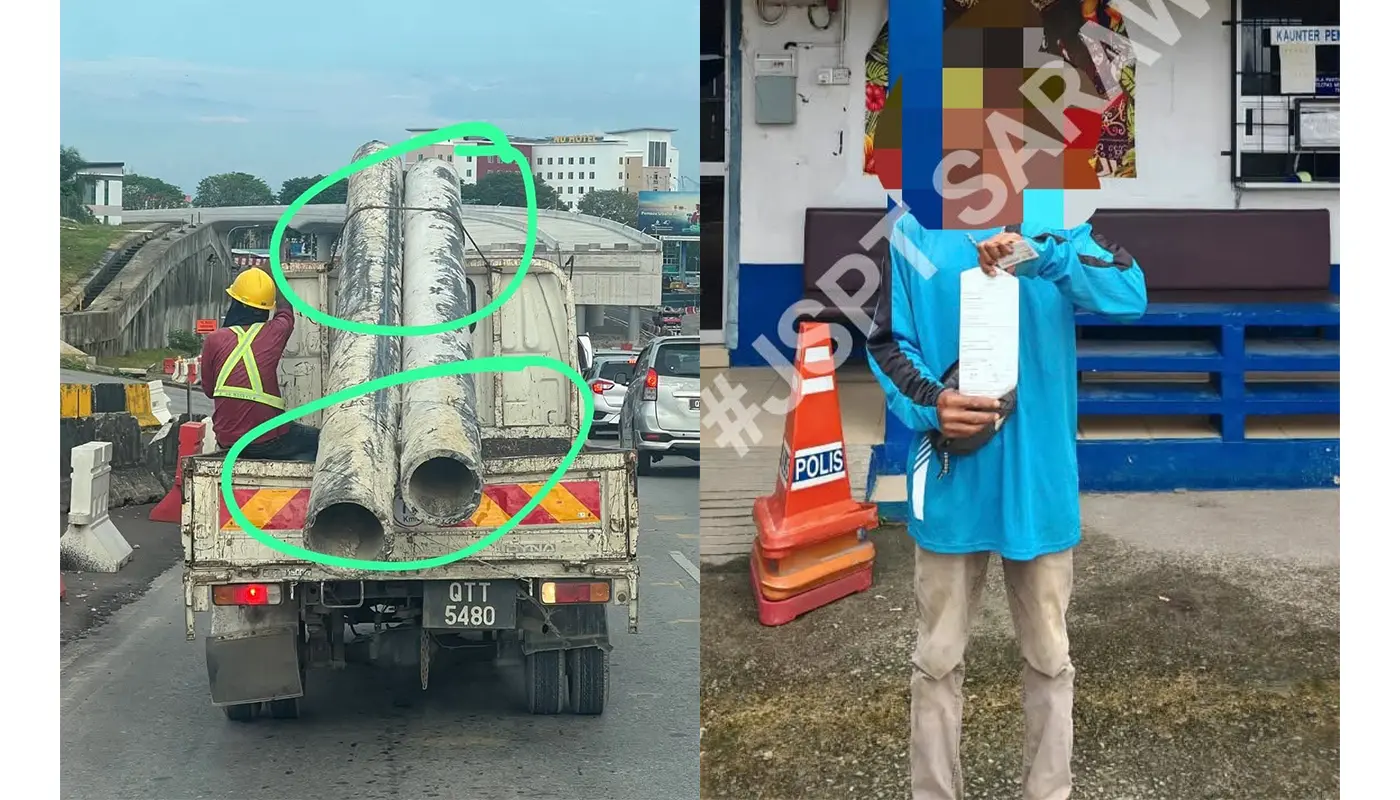
BINTULU – A commercial vehicle operator has faced legal consequences after transporting hazardous materials in an unsafe manner along a major route in this division. The enforcement action followed widespread public concern sparked by footage circulating on digital platforms late last month.

Traffic police confirmed that the incident occurred on Jalan Tun Hussein Onn on 31 July 2026. Visual evidence shared online depicted a lorry carrying dangerous loads without adequate safety precautions, prompting immediate scrutiny from authorities responsible for road transport compliance.
Investigators from the Bintulu traffic division acted swiftly upon detecting the viral content. Through intelligence gathering and systematic tracking, officers successfully identified the individual operating the vehicle despite the initial lack of specific identifying details in the public domain.
The driver voluntarily presented himself at the district traffic headquarters on 3 August 2026 to assist with enquiries. During the official interview, he acknowledged responsibility for the violation and cooperated fully with the investigative process conducted by enforcement personnel.
Authorities subsequently issued a formal summons under Rule 19(1) of the Motor Vehicles (Construction and Use) Rules LN 166/59. This specific regulation addresses the improper carriage of dangerous goods and carries penalties designed to deter negligent handling of hazardous materials on public roads.
Law enforcement officials expressed gratitude towards citizens who flagged the concerning footage. Public vigilance serves as a critical force multiplier for traffic police, enabling faster detection of violations that might otherwise escape notice during routine patrols across vast geographical areas.
Community cooperation remains indispensable for maintaining road safety standards throughout the region. When motorists report dangerous driving or regulatory breaches, they actively participate in creating safer travel conditions for everyone using the highway network daily.
Enforcement agencies have pledged to intensify monitoring efforts in response to this case. Enhanced operations will target commercial vehicles carrying hazardous substances to ensure strict adherence to safety protocols and prevent similar incidents from recurring on busy thoroughfares.
Transporting dangerous loads requires specialised training and proper equipment to mitigate risks. Regulations exist precisely because mishandling such materials can lead to catastrophic accidents endangering not only the driver but also other road users and nearby communities.
Safety compliance is non-negotiable for commercial transport operators. Cutting corners on securing hazardous cargo may save time or money temporarily but exposes companies and individuals to significant legal liability and reputational damage when violations come to light.
The swift resolution of this case demonstrates effective coordination between public reporting and police response. Digital evidence combined with traditional investigative methods proved sufficient to establish accountability within days of the original offence occurring.
Road safety advocates welcome visible enforcement actions as deterrents against complacency. When prosecutions follow publicly documented violations, it reinforces the message that regulatory breaches carry real consequences regardless of whether officers witnessed them directly.
Commercial fleet managers should review internal safety protocols following this incident. Regular audits of loading procedures and driver training programmes help identify gaps before they manifest as public hazards or legal problems for transport businesses.
Hazardous material transportation involves multiple regulatory touchpoints beyond traffic law. Environmental protection, occupational safety, and emergency response considerations all intersect, requiring comprehensive compliance frameworks rather than piecemeal adherence to isolated rules.
Public awareness campaigns about dangerous goods transport could complement enforcement efforts. Educating citizens about what constitutes unsafe carriage empowers more informed reporting whilst helping drivers understand community expectations regarding road safety standards.
Infrastructure design also influences risk levels for hazardous cargo movements. Route planning that avoids densely populated areas where possible reduces potential harm exposure, though ultimate safety depends primarily on operator diligence and regulatory oversight.
Insurance implications arise whenever safety violations occur. Premium increases or coverage denials following prosecutions create additional financial incentives for transport companies to maintain rigorous compliance cultures beyond mere avoidance of legal penalties.
Emergency services preparedness links directly to transport safety standards. First responders need accurate information about hazardous materials involved in accidents to mount appropriate responses, making proper documentation and labelling essential components of safe carriage practices.
Industry associations play vital roles in promoting best practices amongst members. Peer learning networks and voluntary certification schemes can elevate safety standards collectively, reducing reliance solely on punitive enforcement to achieve compliance objectives.
Technological solutions offer supplementary safeguards for dangerous goods transport. GPS tracking, load sensors, and automated compliance checks provide real-time monitoring capabilities that enhance human oversight rather than replacing professional judgement entirely.
Cross-border coordination matters for interstate hazardous cargo movements. Harmonised regulations and information sharing between jurisdictions prevent regulatory arbitrage where operators might exploit weaker enforcement regimes in neighbouring regions to circumvent stricter local requirements.
Historical accident data informs current enforcement priorities. Analysing past incidents involving dangerous loads helps identify recurring failure patterns, allowing targeted interventions addressing root causes rather than merely treating symptoms of systemic safety deficiencies.
Stakeholder consultation strengthens regulatory effectiveness. Engaging transport operators, community representatives, and emergency services in policy development ensures rules remain practical, enforceable, and aligned with actual operational realities on the ground.
Continuous improvement characterises mature safety management systems. Learning from each enforcement action and incorporating lessons into updated procedures prevents stagnation and adapts protections to evolving transport technologies and cargo types.
Ultimately, road safety represents shared responsibility amongst all system participants. While enforcement targets specific violators, sustainable progress requires cultural commitment to protecting human life above commercial convenience or operational expediency across entire transport ecosystems.
