



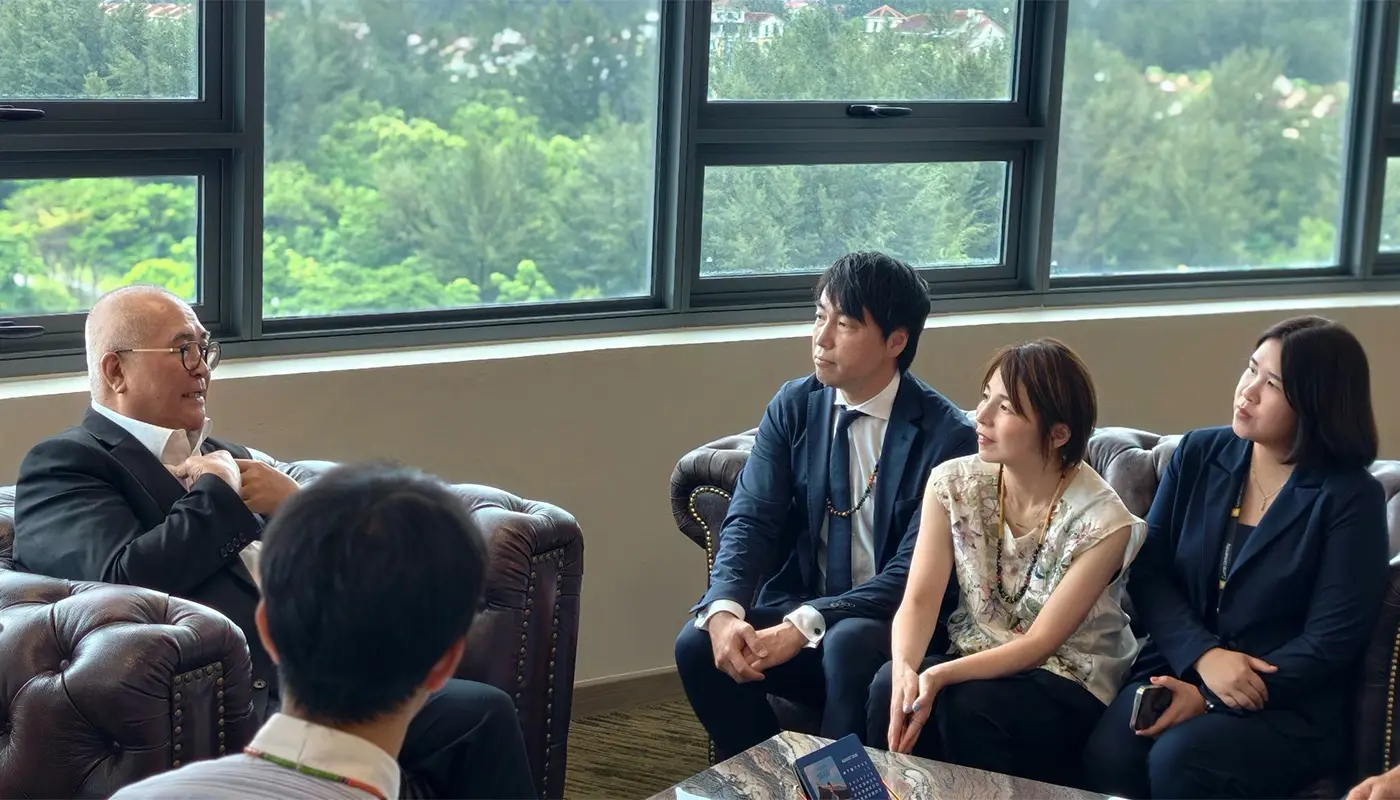
MIRI – A significant educational delegation from Japan arrived in the city on Friday morning to explore academic partnerships and student recruitment opportunities. The visit underscores growing international interest in Sarawak as a destination for higher learning.

Fifteen school principals and teachers comprised the visiting group, which touched down at 11 am. Their itinerary centred entirely on assessing facilities and programmes available at the local Curtin University campus.
Deborah Caroline from Curtin University served as the lead coordinator for the Japanese contingent. Her role involved facilitating introductions and ensuring the educators received comprehensive information about institutional offerings and student support services.
The primary objective of this inspection tour is to evaluate the university’s capacity to host international learners. By experiencing the campus environment firsthand, these educators aim to determine whether it presents a viable option for their students seeking overseas education.
Miri City Council Mayor YB Adam Yii acknowledged the arrival and significance of this high-profile visit. His recognition highlights the municipal authority’s support for educational tourism and cross-border academic exchanges within the region.
Such delegations are increasingly viewed as vital conduits for attracting foreign talent to Sarawak. When school leaders witness quality infrastructure and welcoming communities directly, they become more confident advocates for studying abroad in Malaysia.
The timing of this visit aligns with broader efforts to diversify the international student body at Curtin University. Japanese students have historically shown strong interest in engineering, business, and environmental sciences, disciplines where the institution maintains recognised expertise.
Campus inspections typically involve tours of lecture halls, laboratories, libraries, and student accommodation. These physical assessments allow visiting educators to gauge safety standards, technological resources, and overall learning environments that prospective students would encounter daily.
Beyond facilities, discussions often cover curriculum alignment, language support, and cultural integration programmes. Japanese institutions particularly value clear pathways for credit transfer and assurance that their students will receive adequate pastoral care whilst adjusting to life overseas.
The presence of senior school administrators rather than junior staff signals serious institutional commitment. Principals possess decision-making authority regarding partnership agreements and student mobility programmes, making their endorsements highly influential.
Curtin University has invested considerably in enhancing its international profile over recent years. Strategic recruitment missions like this one complement digital marketing and alumni networks by building personal relationships with key influencers in sending countries.
For Miri specifically, increased international enrolment generates positive economic spillovers. Students contribute to local businesses, rental markets, and cultural diversity, reinforcing the city’s reputation as an emerging education hub beyond Kuala Lumpur or Penang.
The mayor’s public acknowledgment also serves diplomatic purposes. Recognising foreign visitors officially demonstrates governmental hospitality and reassures partner institutions that their students will be welcomed at all levels of society.
Educational exchanges between Malaysia and Japan have deepened steadily since bilateral agreements were strengthened decades ago. However, competition from other ASEAN nations means Sarawak must continuously demonstrate unique value propositions to maintain relevance.
This particular delegation’s focus on school-level leadership suggests potential for pipeline development. Rather than recruiting individual university applicants, cultivating relationships with secondary schools can yield sustained cohorts of future undergraduates.
Feedback gathered during such visits frequently informs institutional improvements. International educators often provide candid perspectives on gaps or strengths that domestic stakeholders might overlook due to familiarity bias.
As global mobility patterns evolve post-pandemic, in-person engagements have regained importance. Virtual tours cannot replicate the sensory experience of walking through campuses or conversing spontaneously with current students and faculty members.
The success of this mission will likely be measured by subsequent application numbers and formalised memoranda of understanding. Yet even without immediate conversions, relationship-building lays groundwork for long-term collaboration.
Sarawak’s positioning as a safe, affordable, and English-speaking alternative to traditional Western destinations continues gaining traction. Visits like this one validate that messaging whilst providing tangible evidence to sceptical parents and administrators back home.
Ultimately, transforming curiosity into enrolment requires consistent follow-through after delegates depart. Maintaining communication channels and addressing concerns raised during inspections proves just as crucial as the initial welcome extended upon arrival.
