



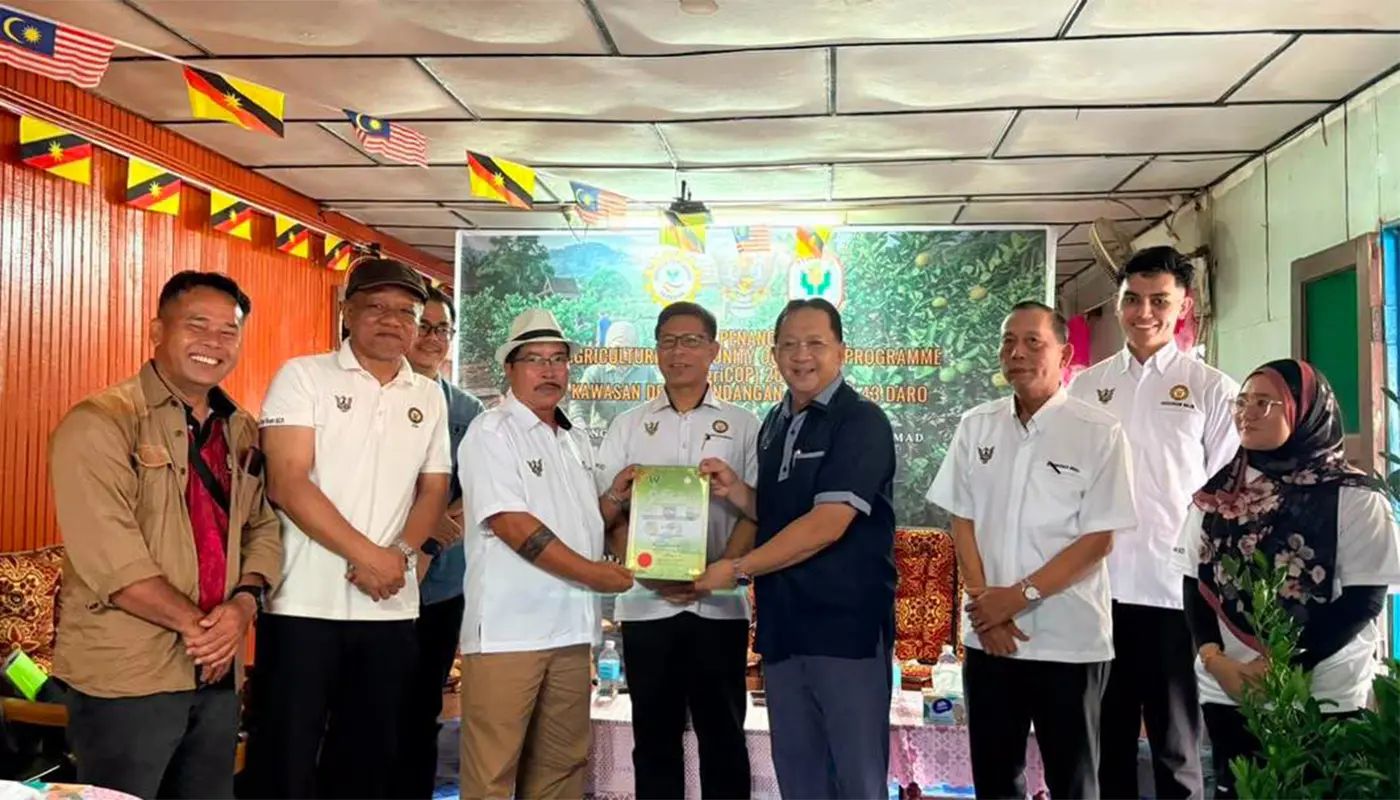
NANGA SEMAH – Rural agricultural capacity received a significant boost late last month through a targeted community development initiative. The programme focused on equipping local farmers with practical skills to enhance productivity and sustainability within their operations.

Fifty residents from Nanga Semah and Kampung Penasu participated in the Agriculture Community Outreach Programme, commonly known as AgriCOP. Hosted at Rumah Lawrence Merka Anak Jamba, the two-day event ran from 20 to 21 July 2026.
Technical training formed the core curriculum, with specific emphasis placed on lime cultivation techniques. Participants also received hands-on instruction in producing organic fertiliser, addressing both crop management and soil health simultaneously.
These selected topics reflect strategic priorities for improving smallholder farming outcomes. Mastering lime production offers growers access to high-value crops, whilst organic fertiliser knowledge reduces input costs and promotes environmental stewardship.
YB Dr Haji Safiee bin Haji Ahmad, State Assemblyman for N.42 Daro, officiated the closing ceremony. His presence underscored the government’s recognition of grassroots agricultural development as fundamental to broader economic objectives.
During his address, the assemblyman highlighted agriculture’s central role in strengthening rural economies and enhancing food security. He positioned such training initiatives as vital mechanisms for creating sustainable income streams within remote communities.
Modern agricultural technology transfer remains a key government agenda item according to the elected representative. Programmes like AgriCOP serve as effective conduits for bridging the gap between research institutions and practicing farmers in underserved areas.
Systematic crop management techniques taught during the session aim to increase both yield volumes and product quality. Environmentally friendly practices ensure that productivity gains do not come at the expense of long-term ecological balance.
Beyond technical instruction, the outreach model facilitates valuable knowledge exchange between officers and villagers. This bidirectional learning strengthens institutional relationships whilst building participant confidence in applying newly acquired skills.
Agricultural officers benefit equally from understanding local conditions and traditional practices. Such insights enable them to tailor recommendations more effectively to specific microclimates and cultural contexts encountered across Sarawak’s diverse landscape.
The Sarawak Agriculture Department has committed to expanding similar programmes throughout rural regions. Continuous rollout demonstrates institutional dedication to transforming subsistence farming into commercially viable enterprises supporting state development aspirations.
Empowering individual farmers creates multiplicative effects across entire value chains. Improved on-farm practices translate into better raw materials for processors, enhanced market competitiveness, and stronger rural purchasing power.
Food security considerations have gained renewed urgency globally and domestically. Building local production capacity reduces import dependence whilst providing buffers against external supply chain disruptions affecting essential commodities.
Sustainability dimensions extend beyond environmental concerns to encompass economic viability. Farms that generate adequate returns attract younger generations, preventing rural depopulation and preserving agricultural heritage.
Knowledge retention remains critical for lasting impact beyond training events. Follow-up support mechanisms help participants troubleshoot implementation challenges and refine techniques based on real-world experience gained post-workshop.
Community ownership of development processes increases when interventions respond to expressed needs rather than imposed agendas. Participatory design ensures relevance and fosters genuine commitment among beneficiaries.
The choice of Rumah Lawrence Merka as venue reflects respect for traditional communal structures. Utilising familiar spaces lowers participation barriers and reinforces cultural continuity alongside technological modernisation.
As Sarawak pursues competitive agricultural development, human capital investment proves as crucial as physical infrastructure. Skilled practitioners ultimately determine whether policy ambitions translate into tangible field-level results.
Future iterations will likely incorporate feedback from this cohort to refine content delivery methods. Adaptive programming ensures continued relevance as participant profiles and market conditions evolve over time.
