



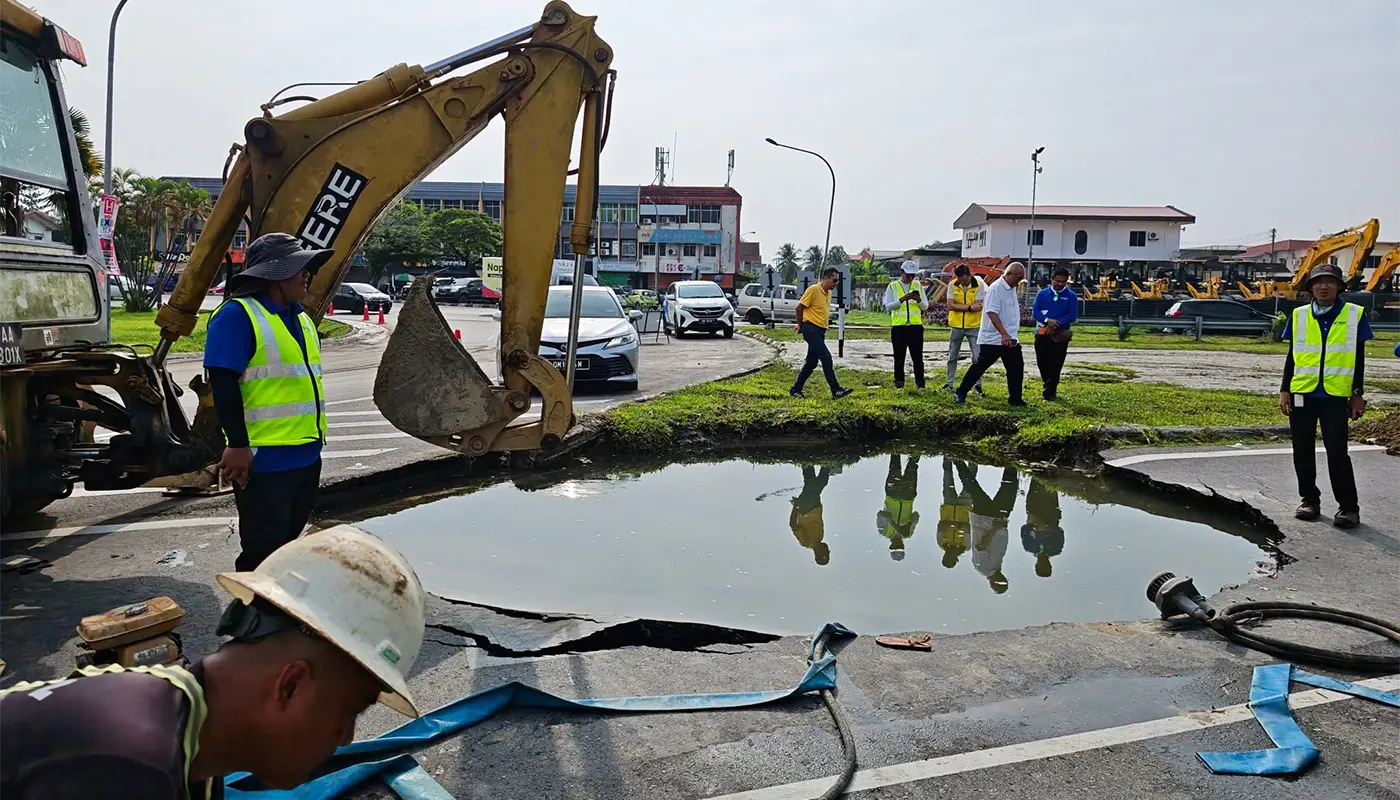
MIRI – A water pipe burst occurred at the GK roundabout on Friday morning, causing immediate disruption to both traffic flow and local water services. Authorities responded swiftly to manage the incident and mitigate its impact on the community.

The pipe burst was reported at approximately 9 am, prompting an urgent inspection by municipal officials. The rapid deployment of personnel ensured that the situation could be assessed without delay and appropriate safety measures implemented promptly.
Sarawak Water has since erected protective barriers around the affected zone to safeguard motorists and pedestrians. These precautions are essential given the location’s high traffic volume and the inherent hazards associated with open excavation sites.
Motorists navigating the area have been explicitly cautioned to exercise heightened vigilance. Reduced speed limits and altered lane configurations may be in effect until repairs are completed and the roadway fully restored.
Repair crews anticipate working through the day with completion targeted for approximately 6 pm. However, officials have warned that unforeseen complications could extend this timeline beyond initial estimates depending on subsurface conditions encountered during excavation.
Water supply interruptions inevitably accompany such emergencies, necessitating contingency planning for affected households and businesses. Recognising this urgency, authorities have committed to deploying mobile tankers to provide interim relief to residents without running water.
Specific distribution points for these tankers are currently being finalised based on accessibility and population density considerations. Residents are urged to monitor official Sarawak Water communication channels for real-time updates regarding tanker locations and schedules.
In addition to mobile units, temporary water intake centres will be established within impacted residential neighbourhoods as quickly as logistics permit. These fixed points aim to reduce queuing times and ensure equitable access across the affected zone.
Miri City Council Mayor YB Adam Yii confirmed his administration’s active oversight of the unfolding situation. His statement reinforced the council’s commitment to coordinating with utility providers and keeping the public informed throughout the repair process.
Infrastructure failures of this nature highlight the ongoing challenges of maintaining aging urban utilities amidst growing demand. While inconvenient, such incidents also serve as catalysts for evaluating system resilience and prioritising future upgrades.
The roundabout’s strategic importance amplifies the disruption’s ripple effects across the city’s transport network. Diversion routes may experience increased congestion as drivers seek alternatives, underscoring the need for patience and adherence to posted signage.
Communication transparency remains paramount during service disruptions. By directing citizens to verified official sources, authorities aim to prevent misinformation and ensure that accurate guidance reaches those most affected by the outage.
Residents experiencing prolonged supply issues are encouraged to report their status through designated hotlines or digital platforms. This feedback helps operators prioritise tanker deployments and identify pockets of unmet need that might otherwise be overlooked.
Safety considerations extend beyond road users to include repair workers operating in live traffic environments. The installed barriers serve dual purposes: protecting the public from construction hazards whilst shielding crews from vehicular risks.
As evening approaches, the focus will shift towards assessing whether daytime progress meets projected milestones. Should delays materialise, extended work hours or additional resources may be mobilised to minimise overnight inconvenience.
Community cooperation plays a vital role in managing such crises efficiently. Adhering to advisories, conserving stored water supplies, and checking on vulnerable neighbours collectively ease the burden on emergency response systems.
Long-term solutions likely involve comprehensive pipeline assessments to identify other potential failure points before they manifest. Reactive repairs address immediate symptoms, but proactive maintenance prevents recurrent disruptions that erode public confidence.
The council’s pledge to continue monitoring developments signals sustained engagement beyond initial response phases. Ongoing oversight ensures accountability and demonstrates that resident welfare remains central to municipal governance during emergencies.
Ultimately, restoring normalcy requires balancing technical execution with compassionate service delivery. Both dimensions are evident in the coordinated efforts currently underway to resolve this multifaceted challenge facing Miri’s communities.
