



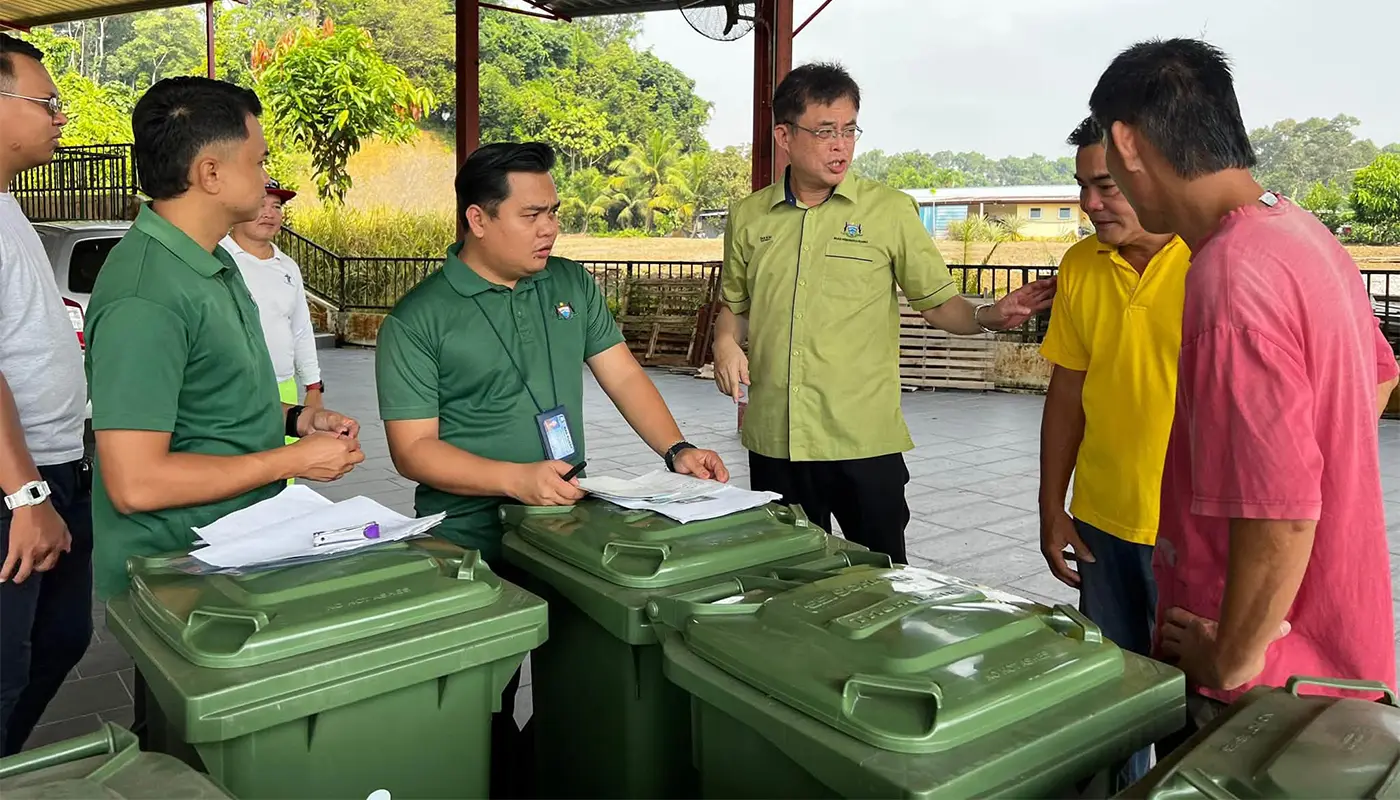
BATU KAWA – A targeted waste management initiative commenced this week with the distribution of individual refuse containers to households in Lo Ti Kong. The delivery forms part of a broader municipal strategy aimed at reducing unauthorised waste disposal within the district.

Sixteen residential units received dedicated bins during this initial phase of the programme. The allocation ensures that participating families possess adequate receptacles for daily household waste, thereby removing excuses for improper disposal practices.
Padawan Municipal Council Chairman Cr. Tan Kai confirmed the ongoing nature of this intervention. His statement emphasised that the current distribution represents merely one component of sustained efforts to address sanitation challenges in the area.
Illegal dumping remains a persistent concern across many suburban neighbourhoods despite existing enforcement measures. Providing accessible infrastructure acknowledges that behavioural change often requires enabling conditions alongside regulatory compliance.
Individual bin ownership fosters personal responsibility for waste segregation and storage. When residents have designated containers, they are less likely to resort to discarding rubbish in vacant lots, drainage ditches, or roadside verges.
The selection of Lo Ti Kong as a focal point reflects data-driven prioritisation based on reported incidents and community feedback. Targeted interventions yield better outcomes than blanket approaches when resources must be allocated efficiently.
Municipal authorities recognise that infrastructure provision alone cannot eliminate dumping entirely. Complementary education campaigns and consistent enforcement remain necessary to reinforce proper disposal habits over the long term.
This initiative aligns with wider environmental objectives pursued by local councils throughout Sarawak. Improving waste collection systems contributes directly to public health, aesthetic quality, and ecological preservation within urbanising areas.
Residents receiving bins are typically briefed on correct usage protocols and collection schedules. Clear communication prevents misunderstandings that could undermine the programme’s effectiveness or create new problems through misuse.
The chairman’s commitment to continuing distributions signals institutional dedication beyond symbolic gestures. Sustained investment demonstrates that waste management is treated as an operational priority rather than a reactive afterthought.
Community engagement plays a crucial role in such programmes’ success. When residents perceive municipal actions as supportive rather than punitive, cooperation levels tend to increase significantly across diverse demographic groups.
Waste infrastructure upgrades also support recycling and composting initiatives where applicable. Properly sorted materials at source reduce landfill volumes and create opportunities for circular economy development at the neighbourhood level.
Monitoring mechanisms will likely track both bin utilisation rates and dumping incident frequencies in coming months. Evidence-based evaluation allows authorities to refine strategies and scale successful approaches to other underserved locations.
The timing of this distribution coincides with heightened awareness of environmental stewardship nationwide. Local actions resonate more strongly when connected to larger narratives about sustainability and civic responsibility.
Neighbourhood cleanliness impacts property values, tourism appeal, and resident wellbeing simultaneously. Addressing waste issues therefore yields multiplicative benefits extending far beyond mere sanitation metrics.
Collaboration between council departments, contractors, and community leaders enables efficient implementation. Coordinated logistics ensure that deliveries occur smoothly without disrupting daily routines or creating additional burdens for recipients.
Future phases may expand coverage based on lessons learned from this pilot cohort. Adaptive scaling allows programmes to evolve organically whilst maintaining focus on measurable outcomes rather than arbitrary quotas.
Public accountability strengthens when officials communicate progress transparently. Regular updates on distribution milestones and impact assessments help maintain trust and encourage continued community participation.
Ultimately, transforming waste culture requires patience and persistence alongside physical infrastructure. Each bin delivered represents both a practical tool and a symbolic invitation towards shared environmental citizenship within Batu Kawa’s evolving landscape.
