



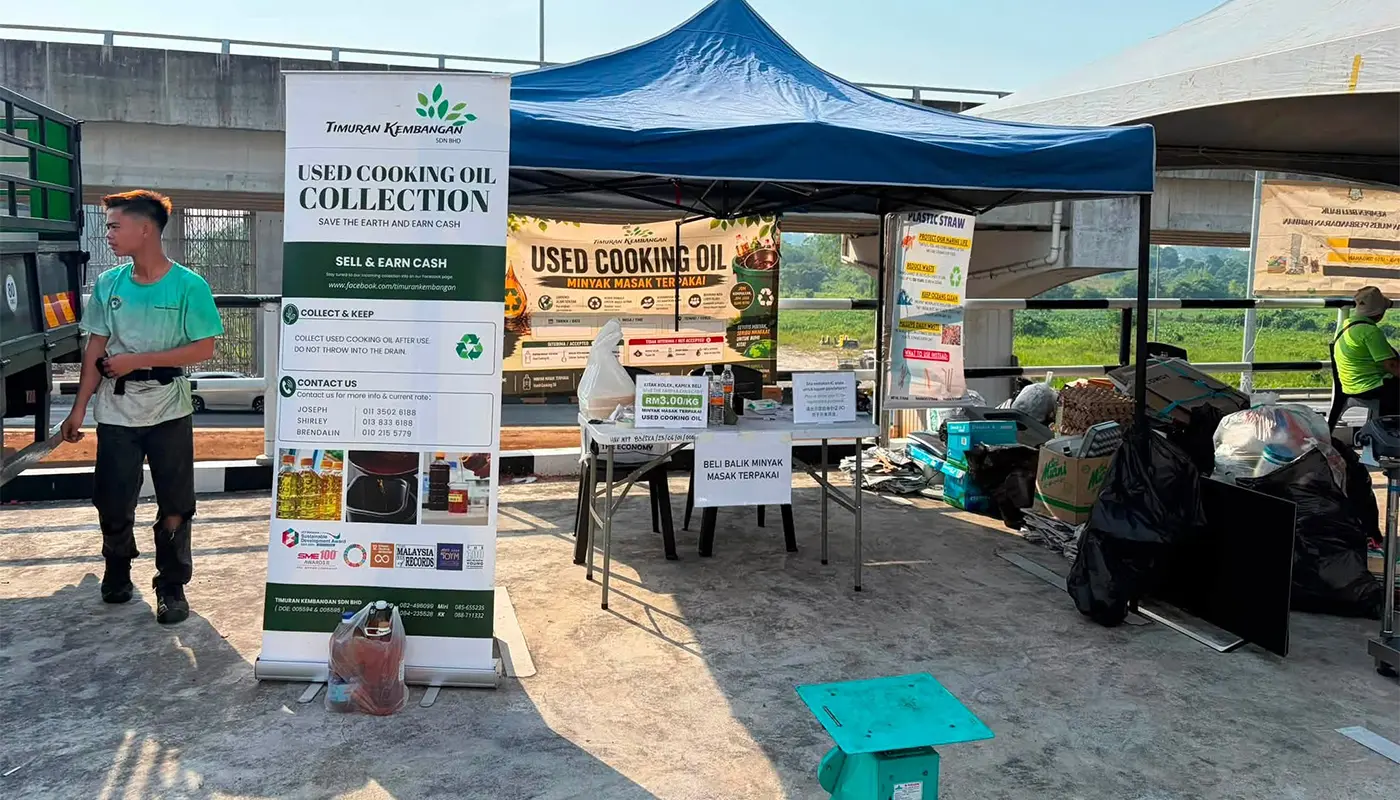
KUCHING – Residents of the Padawan district gathered at the Westfield Point Car Park on Saturday morning to participate in a recycling initiative organised by the Padawan Municipal Council (MPP). The Buy Back Campaign 2026, which ran from 8.00 am until noon near the Daikin store, aimed to encourage sustainable waste management practices amongst local communities.

Although the event has now concluded, its objectives align with the council’s broader vision of fostering a sustainable, inclusive, and liveable environment within the district. Such campaigns serve as practical interventions that translate environmental policy into tangible community action, bridging the gap between municipal planning and household-level behaviour change.
Buy-back programmes operate on simple economic incentives that make recycling financially rewarding for participants. By offering monetary compensation for recyclable materials, these initiatives lower psychological and logistical barriers to proper waste segregation. Residents who might otherwise discard valuable resources are motivated to collect, sort, and transport items that would typically end up in landfills.
The four-hour duration was strategically chosen to accommodate weekend schedules when families are more available for community activities. Morning timing avoids peak afternoon heat whilst capturing foot traffic from nearby commercial areas. Location selection adjacent to established retail outlets leverages existing visitor patterns to maximise participation without requiring dedicated travel.
Recycling campaigns contribute directly to public health outcomes beyond their environmental benefits. Reduced accumulation of discarded materials decreases breeding grounds for disease vectors and minimises illegal dumping in residential neighbourhoods. Cleaner surroundings correlate with improved mental wellbeing and stronger community pride, creating positive feedback loops that reinforce continued participation.
Sustainability messaging embedded in such events helps normalise circular economy concepts amongst populations unfamiliar with technical terminology. When residents experience direct benefits from recycling, abstract notions of environmental stewardship become concrete and personally relevant. This experiential learning often proves more effective than educational campaigns lacking hands-on components.
Inclusivity remains central to the campaign’s design philosophy. Buy-back programmes welcome participants regardless of income level, education background, or age. Elderly residents, students, and low-income households can all contribute meaningfully whilst receiving fair compensation. This democratic accessibility distinguishes recycling incentives from exclusive environmental initiatives that cater primarily to affluent demographics.
Data collected during collection events informs future waste management planning for the municipality. Volume measurements by material type reveal consumption patterns and identify gaps in recycling infrastructure. Such empirical evidence enables targeted interventions rather than guesswork-based resource allocation, improving programme efficiency over successive iterations.
Local recycling ecosystems benefit from regular collection events that maintain steady supply flows for processing facilities. Intermittent large-scale collections complement ongoing kerbside services by capturing bulk quantities and reaching underserved areas. This hybrid approach ensures comprehensive coverage whilst accommodating varying resident preferences and circumstances.
Community engagement generated through face-to-face interactions builds trust between municipal authorities and constituents. Staff present at collection points answer questions, provide guidance on proper sorting techniques, and gather feedback on service improvements. These informal exchanges humanise bureaucratic institutions and create channels for responsive governance.
Environmental education occurs organically during buy-back transactions as staff explain material values and processing pathways. Participants learn which items hold market value and why certain contaminants reduce recyclability. This knowledge transfers to household decision-making long after individual events conclude, amplifying educational impact beyond immediate attendance figures.
Padawan’s commitment to liveability encompasses both physical infrastructure and social capital development. Recycling campaigns simultaneously address waste reduction targets whilst strengthening neighbourly connections through shared civic activity. Communities that collaborate on environmental goals often demonstrate greater resilience and collective efficacy across other domains.
Future iterations of the Buy Back Campaign will likely incorporate lessons learned from Saturday’s implementation. Participant feedback, operational observations, and quantitative performance metrics guide continuous refinement of logistics, messaging, and incentive structures. Adaptive management ensures that programmes evolve alongside changing community needs and technological capabilities.
Residents who missed this opportunity are encouraged to monitor municipal announcements for upcoming collection dates. Sustained participation transforms occasional recycling into habitual practice, generating cumulative environmental and economic benefits. Individual actions, when aggregated across communities, drive meaningful progress toward regional sustainability objectives.
