



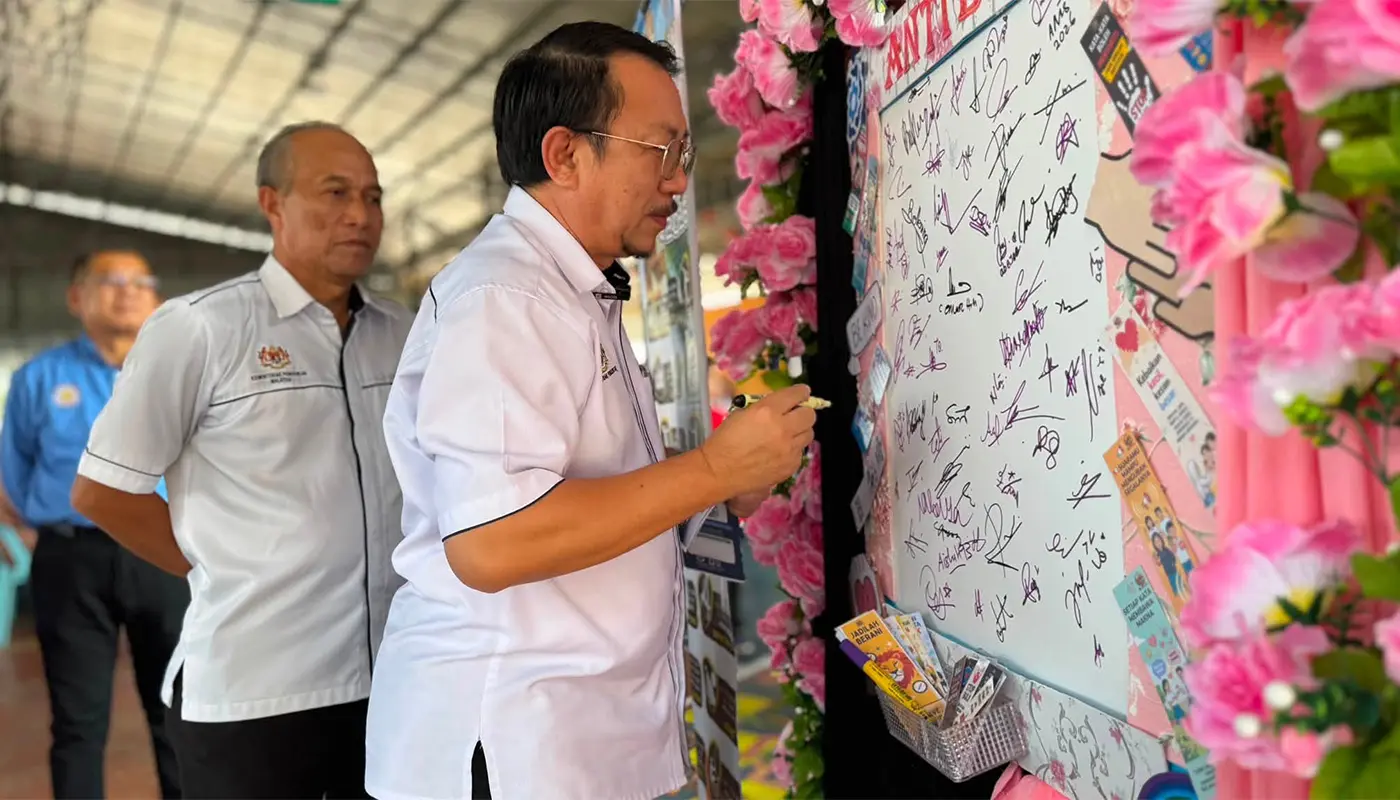
SARATOK – Educational institutions and local residents gathered at the SJKC Min Syn Open Hall on Thursday for a significant community engagement event organised by the Saratok District Education Office (PPD). The Civil Education Carnival 2026 served as a strategic platform designed to reinforce connections between schools and the wider public whilst demonstrating commitment to accessible learning opportunities.
The carnival’s organisation reflects sustained dedication amongst education workers to bring services directly into community spaces rather than expecting families to navigate bureaucratic channels independently. This proactive outreach model reduces barriers to information access and signals institutional willingness to meet stakeholders where they are most comfortable. Physical presence in neighbourhood venues builds trust through visible accessibility.
Collaboration between schools, parents, community members, and strategic partners formed the operational foundation enabling the event’s success. Such multi-stakeholder coordination demonstrates that quality education extends beyond classroom walls to encompass supportive ecosystems where diverse actors contribute complementary resources and perspectives. Shared ownership strengthens sustainability beyond individual programme cycles.
Mr Omar bin Haji Mahli, Sarawak Director of Education, officiated the closing ceremony, underscoring state-level recognition of district-level initiatives. Senior leadership presence validates local efforts and communicates alignment between divisional implementation and broader policy frameworks. Hierarchical endorsement helps secure continued resource allocation and institutional priority for community-engaged approaches.
The carnival explicitly connects to aspirations outlined in the Malaysia Education Plan (RPM) 2026–2035, particularly regarding equitable access and quality improvement. Translating national policy documents into locally relevant activities ensures that strategic visions materialise as tangible experiences rather than remaining abstract commitments confined to planning documents. Grounded implementation gives meaning to high-level rhetoric.
Producing knowledgeable, skilled, moral, and resilient generations requires educational environments that integrate academic instruction with character development and practical competencies. Carnivals showcasing student achievements, vocational demonstrations, and cultural performances illustrate holistic education models that prepare youth for diverse life pathways beyond examination performance alone. Breadth of preparation matches complexity of future challenges.
Equitable access remains central to the event’s underlying philosophy, recognising that geographic location, socioeconomic status, or family background should not determine educational opportunity quality. Outreach events specifically target populations who might otherwise remain disconnected from available support services due to information gaps, transportation constraints, or cultural hesitations. Intentional inclusion counters systemic exclusion patterns.
Parental engagement during such events fosters home-school partnerships essential for student success across all achievement domains. When caregivers understand curriculum expectations, assessment methods, and available resources, they can provide more effective learning support outside formal instructional hours. Informed families become active educational allies rather than passive recipients of institutional decisions.
Community members attending gain firsthand exposure to contemporary educational practices that may differ significantly from their own schooling experiences. Demystifying modern pedagogy reduces generational disconnects and builds intergenerational understanding about evolving learning needs. Familiarity breeds confidence in institutional competence and relevance.
Strategic partner participation expands resource bases beyond government allocations alone. Private sector sponsors, civil society organisations, and tertiary institutions contribute expertise, materials, and networks that amplify public investment impact. Diversified support structures enhance resilience against budgetary fluctuations whilst introducing innovative approaches from outside traditional education sectors.
Student involvement in carnival organisation and presentation develops leadership, communication, and project management skills through authentic experiential learning. Responsibility for real events carrying genuine stakes motivates deeper engagement than simulated classroom exercises typically achieve. Applied competence builds alongside theoretical knowledge through meaningful contribution.
Cultural integration within educational events affirms identity whilst maintaining academic rigour, countering false dichotomies between heritage preservation and modernisation. When students see their communities reflected positively within institutional settings, belonging increases and aspiration expands. Representation matters profoundly for educational engagement and persistence.
Feedback mechanisms embedded within carnival interactions enable responsive programme refinement based on actual user experiences rather than assumed needs. Direct conversation reveals pain points, unmet expectations, and emerging priorities that standardised surveys frequently miss. Adaptive governance depends upon systematic listening integrated into regular operations.
Thursday’s gathering exemplifies how educational institutions can function as community anchors beyond narrow instructional mandates. When schools actively cultivate relationships with surrounding populations, they become sites of social cohesion and collective aspiration rather than isolated enclaves serving only enrolled students. Institutional embeddedness strengthens both educational outcomes and community wellbeing simultaneously.
Looking forward, sustaining momentum generated through periodic carnivals requires institutionalised follow-up mechanisms maintaining engagement between major events. Continuous communication channels, regular touchpoints, and ongoing partnership activities prevent relational decay that undermines long-term collaboration goals. Consistency transforms episodic enthusiasm into enduring ecosystem strength supporting every child’s educational journey toward prosperous futures.
