



SARIKEI – Community and tribal heads across the state are being called upon to act as vital conduits for educational opportunities, ensuring that young people in their localities fully utilise available government support.

The push comes as authorities seek to maximise the impact of free higher education policies designed to uplift rural populations and prepare the next generation for a rapidly evolving global economy.
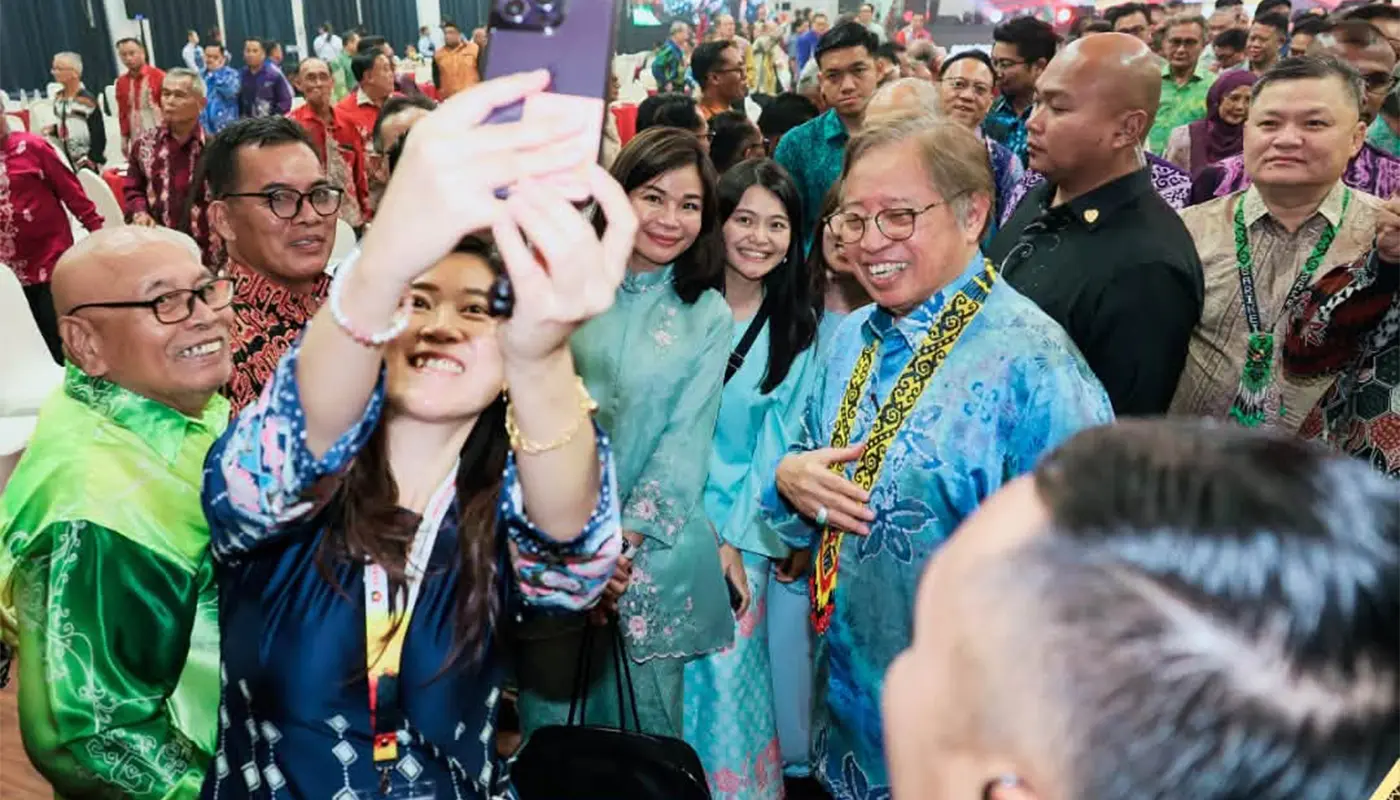
Speaking at a Leaders’ Dinner with Community and Tribal Leaders held at Sentral Hall on Friday, Sarawak Premier Datuk Patinggi Tan Sri (Dr) Abang Haji Abdul Rahman Zohari bin Tun Datuk Abang Haji Openg emphasised the strategic importance of this outreach.
He noted that education serves as the fundamental bedrock for developing skilled human capital capable of navigating future economic shifts and emerging job markets.
The Premier stressed that grassroots leaders must possess a thorough understanding of current state education policies to communicate them effectively.
This knowledge transfer is considered essential for reaching parents and students in remote areas who might otherwise remain unaware of the benefits available to them.
Without active advocacy at the village level, policy intentions may not translate into tangible outcomes for those most in need.
“I hope our village leaders understand this and encourage our children to be diligent in their education,” he stated during his address. His remarks underscored the expectation that local influencers take personal ownership of youth development within their respective communities.
He further clarified that access to tertiary studies should be universal, transcending socioeconomic boundaries or family backgrounds.
“Children of farmers, children of villagers, children of fishermen, children of the middle class or children of the wealthy, all must be given the opportunity to pursue their studies at the university level,” he said. This inclusive approach aims to ensure that talent is nurtured regardless of geographical or financial constraints.
To support this vision, the state government has committed substantial financial resources to the initiative. An allocation of RM260 million has been set aside specifically for implementing free higher education this year.
This funding is intended to facilitate thousands of local students in attending institutions owned by or linked to the state administration.
Early data suggests strong initial uptake of the programme. The first cohort comprised approximately 4,800 students, demonstrating significant interest from eligible candidates.
Projections indicate that momentum is building, with the second intake expected to exceed 5,000 enrolments. These numbers reflect growing awareness and acceptance of the educational pathways now open to Sarawakian youth.
Students entering these programmes will have access to curricula aligned with future industry demands. Fields such as cyber analytics, aerospace technology, and data science are among the new disciplines being prioritised.
Mastery of these subjects is viewed as critical for maintaining competitiveness in an increasingly digital and technologically driven world.
The Premier highlighted that structural changes in the global economy necessitate a workforce equipped with contemporary skills. Ensuring that young people acquire relevant expertise is therefore not merely an educational goal but an economic imperative.
A highly skilled population is seen as the primary driver for enhancing the state’s overall economic value and resilience.
“Our role as leaders is to encourage our children to be diligent in their education and fill our universities with new knowledge,” he remarked. This statement reinforces the idea that academic pursuit is a collective responsibility shared between families, community figures, and policymakers.
He connected educational attainment directly to broader prosperity, noting that intellectual capital translates into economic strength.
“With new knowledge, we can increase the economic strength of Sarawak,” he added. The linkage between classroom learning and regional development forms the core rationale behind the sustained investment in tuition-free tertiary education.
Ultimately, the effectiveness of these policies hinges on communication channels between the administration and the populace.
Community leaders are positioned uniquely to bridge this gap, translating high-level policy into actionable guidance for households. Their engagement is regarded as indispensable for transforming legislative intent into widespread social benefit.
By fostering a culture that values academic diligence and technical proficiency, the state aims to secure its long-term development trajectory.
The collaboration between government bodies and traditional leadership structures represents a holistic strategy for empowering the next generation through accessible, quality education.
