



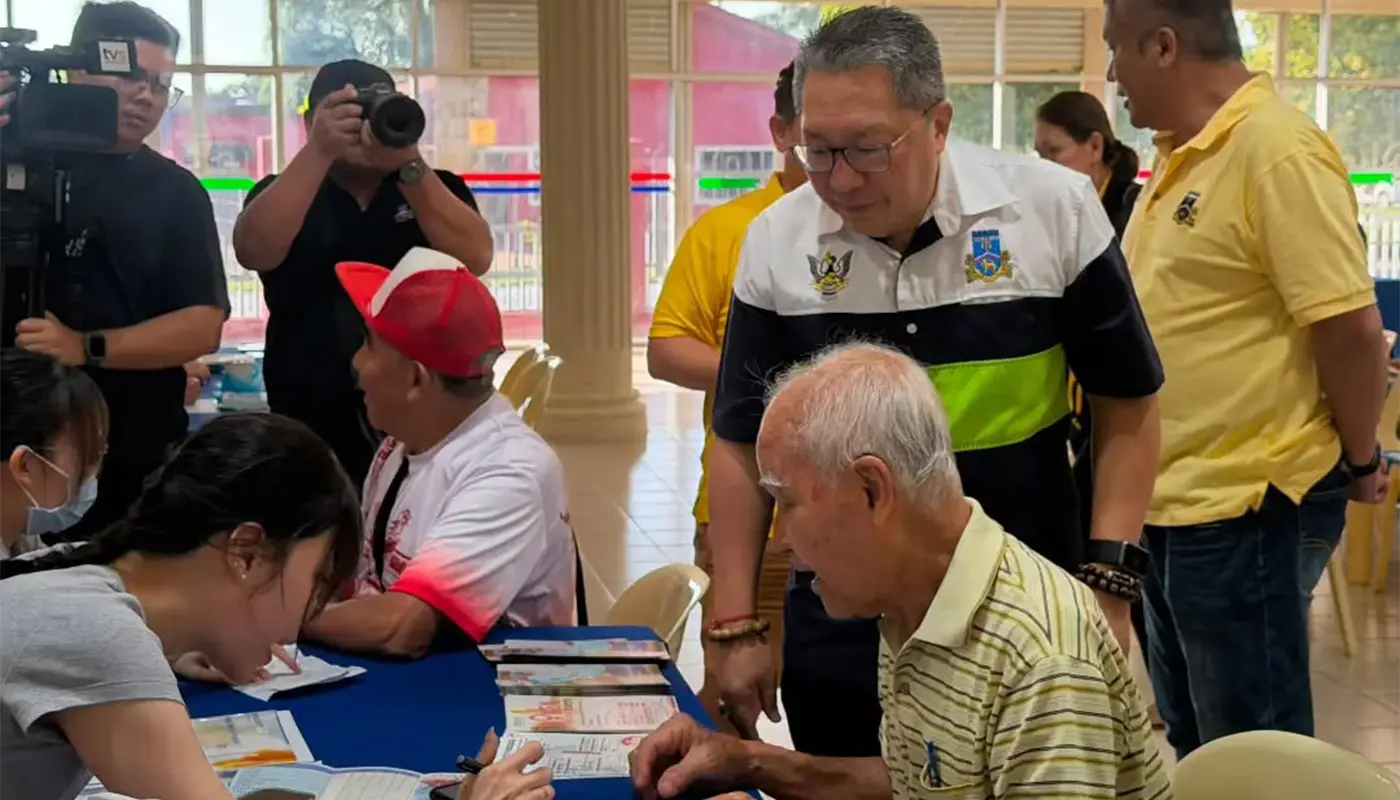
KUCHING – A free community health screening held at the Bintawa Heng Ann Thian Miau Temple on Sunday, 12 July 2026, attracted a large turnout of local residents eager to take advantage of the preventive care initiative.

The programme, organised in partnership with Kuching South City Council, Borneo Medical Centre, and several supporting organisations, offered basic health checks including blood pressure, blood sugar, and body mass index (BMI) assessments.
The event was designed to encourage early detection of common health issues and to promote awareness of the importance of regular monitoring.
Organisers emphasised that preventive care remains one of the most effective ways to reduce long-term health risks, particularly in communities where lifestyle-related conditions such as diabetes and hypertension are on the rise.
Residents began arriving early in the morning, with queues forming before the official start time of 8:00 AM.
The programme ran until midday, providing accessible health services without the need for prior appointments.
The first 400 participants who completed the screening received a complimentary 5kg bag of white rice, a gesture aimed at supporting families while encouraging participation.
Community health drives of this nature have become increasingly common across Sarawak, reflecting a broader push by local councils and medical institutions to strengthen public health literacy.
By situating the programme within a temple compound, organisers also sought to create a welcoming environment that encouraged families to attend together.
Medical staff from Borneo Medical Centre were on hand to conduct the screenings and provide advice to participants.
Many attendees expressed appreciation for the opportunity to receive immediate feedback on their health status, noting that such initiatives help reduce barriers to accessing medical services.
The Kuching South City Council highlighted the importance of collaboration between civic bodies and healthcare providers in ensuring that residents are better informed about their health.
Officials noted that the event was not only about identifying potential health concerns but also about fostering a culture of proactive care within the community.
Public health experts have long stressed that early detection of conditions such as high blood pressure and elevated blood sugar can significantly reduce the risk of complications later in life.
In Sarawak, where non-communicable diseases remain a growing concern, initiatives like this play a vital role in complementing hospital-based services.
The distribution of rice to early participants was symbolic of the organisers’ commitment to community welfare, combining health awareness with practical support.
While supplies were limited, the gesture underscored the event’s focus on both physical well-being and social solidarity.
Local residents who attended described the programme as timely and beneficial, particularly for those who may not regularly visit clinics.
Parents also welcomed the opportunity to bring their children along, reinforcing the message that health awareness should begin at a young age.
The event concluded successfully at noon, with organisers expressing gratitude to all partners and volunteers who contributed to its smooth running.
They reaffirmed their commitment to continuing similar initiatives in the future, recognising that community-based programmes remain essential in bridging gaps in healthcare access.
As Sarawak continues to prioritise public health and preventive measures, the Kuching health drive stands as a reminder of the value of collective effort in building healthier communities.
By combining medical expertise, civic support, and community participation, the initiative demonstrated how local partnerships can make a tangible difference in everyday lives.
