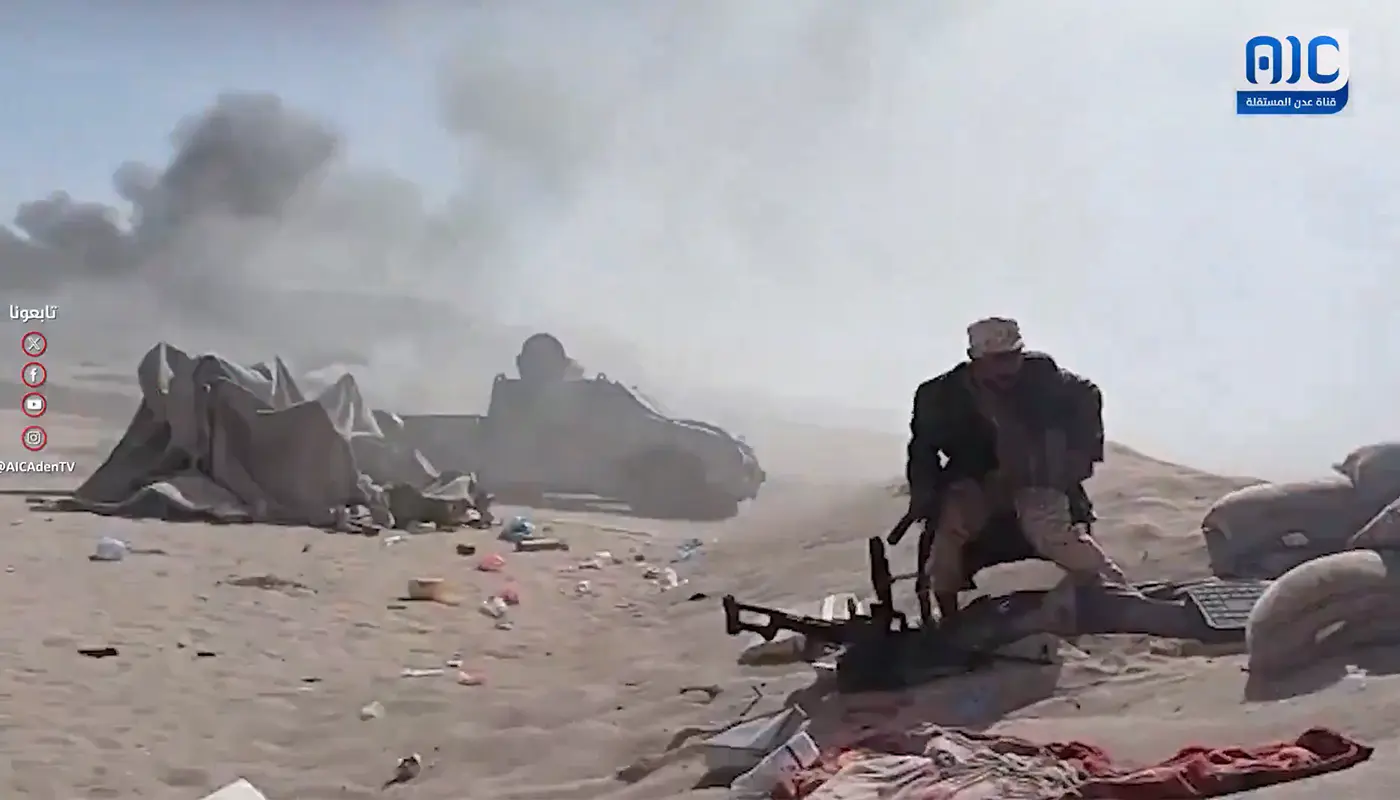
Heavy clashes have erupted in Hadramout governorate, eastern Yemen, as Saudi-backed forces and the Southern Transitional Council (STC) battle for control of strategic areas near the Saudi border.
The fighting marks a sharp escalation in tensions between Saudi Arabia and the United Arab Emirates (UAE), two Gulf allies whose diverging interests in Yemen have now spilled into open confrontation.
According to reports, Saudi-led coalition aircraft bombed STC positions on the outskirts of Seiyun, forcing separatist fighters to withdraw from the al-Safaq checkpoint in Rakhyah district.
The coalition also struck the al-Khashaa military camp, the largest in Hadramout, with seven air raids, and targeted Seiyun base, killing at least 20 separatist fighters, according to AFP.
Residents described the intensity of the bombardment. “We just see flashes and explosions hitting checkpoints, clearing the way for the [Saudi-backed] forces to advance,” said Reyad Khames, who lives near al-Khashaa.
The STC, backed by the UAE, has condemned what it calls Saudi “aggression” against “South Arabia.” In a statement, the group accused Riyadh of violating international humanitarian law by targeting civilian sites, including schools and residential areas.
It warned that the strikes had destroyed infrastructure and created opportunities for extremist groups and the Houthis to exploit the chaos.
The separatists have also escalated politically, publishing a constitutional declaration for a breakaway state of South Arabia, with Aden as its capital.
The declaration mirrors the borders of the former South Yemen, which existed until unification in 1990. STC leader Aidarous al-Zubaidi announced a two-year transitional period, after which a referendum on independence will be held.
The UAE confirmed it has withdrawn its last troops from Yemen and urged de-escalation, highlighting the widening rift with Saudi Arabia.
Once united in their campaign against the Iran-backed Houthis, the two Gulf powers now find themselves backing rival factions in Yemen.
Analysts say this split could weaken the coalition’s ability to contain the Houthis, who continue to hold the northern highlands.
International reaction has been cautious. Kenneth Katzman, a senior fellow at the Soufan Center, told Al Jazeera that Washington is reluctant to take sides.
“The United States never wants its allies to fight with each other,” he said, noting that President Donald Trump has remained muted to avoid alienating either Riyadh or Abu Dhabi.
Katzman added that US policy remains focused on preventing Iran from supplying weapons to the Houthis.
Observers warn that the fighting in Hadramout risks destabilising Yemen further, undermining peace efforts and worsening the humanitarian crisis.
The STC insists its referendum plan shows it is “ready to govern,” while Saudi Arabia has invited Yemeni factions to Riyadh for dialogue. Whether talks can bridge the widening gulf between the coalition partners remains uncertain.