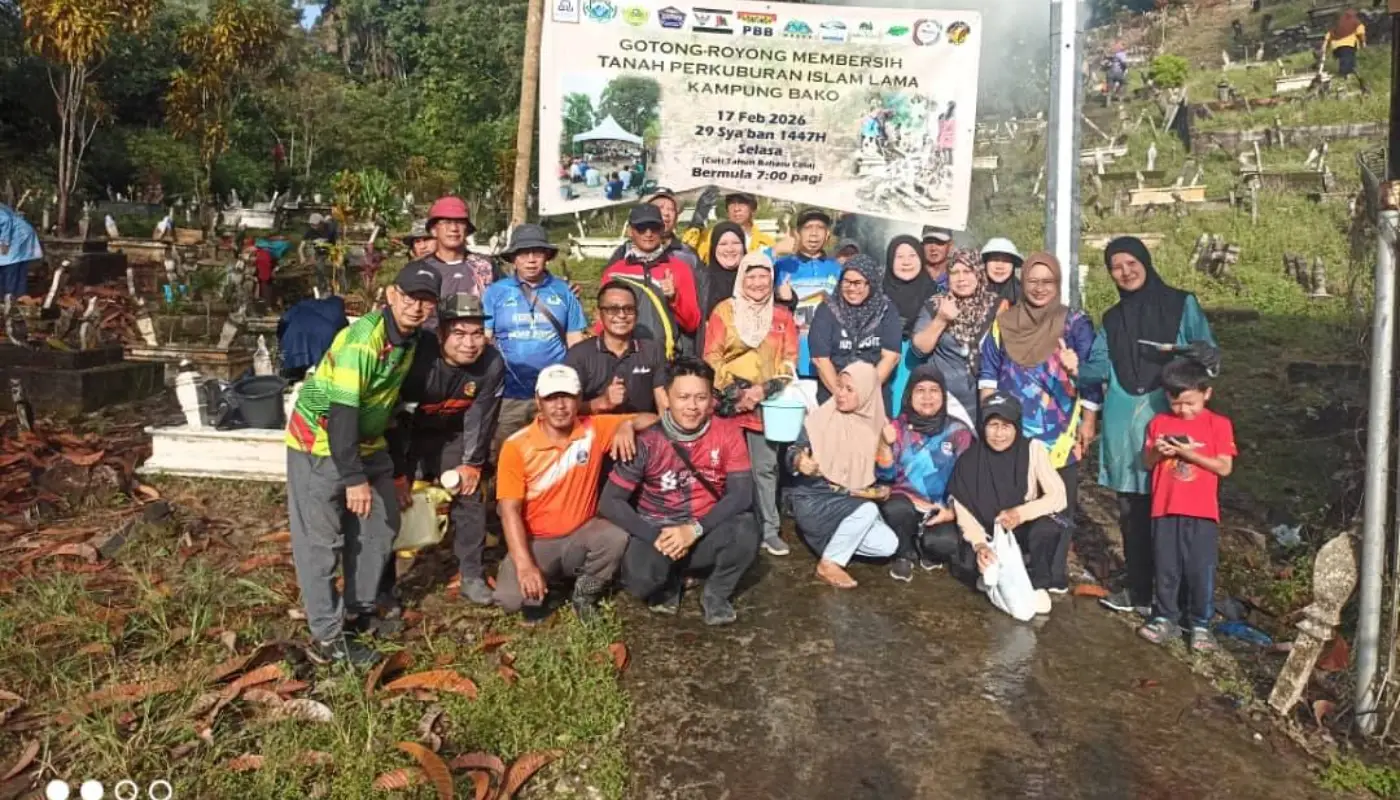
KUCHING – On 17 February, the usually quiet grounds of Kampung Bako Seberang Cemetery turned lively. Close to 300 residents showed up with gloves, tools, and a shared purpose.
People came from Kampung Bako Hulu, Tengah, Hilir, and Seberang. They worked side by side with local NGOs, mosque and surau committees, the Village Development and Safety Committee, Kejiranan Mesra, Rukun Tetangga, SABERKAS, and Parti Pesaka Bumiputera Bersatu (PBB).
The programme paired a Gotong-Royong clean-up with a Tahlil prayer session, bringing together physical work and spiritual reflection in one morning. The goal was simple. Clean and restore the cemetery, and strengthen ties among neighbours at the same time.
Graves were cleared of weeds. Pathways were tidied. Rubbish was collected and hauled away. As the space grew neater, conversations flowed. Old friends caught up. Younger residents worked alongside elders, learning by doing rather than listening to speeches about community spirit.
Leaders from the village shared why efforts like this matter. A cemetery is more than land. It holds memories of parents, grandparents, and friends. Caring for it shows respect for those who came before and sets an example for those growing up now.
Gotong-royong has long been part of Malaysian village life. It reflects a habit of stepping in when something needs to be done, without waiting to be asked. Seeing youth groups, religious bodies, and local associations move in sync proved that the tradition still fits today’s pace of life.
By the end of the programme, the cemetery looked brighter and better kept. More than that, people left with a sense of pride. Shared effort builds connection in a way few other activities do.
Support from groups like SABERKAS and PBB added another layer. When community organisations and political bodies back local initiatives, small projects gain stronger footing and wider reach.
Residents now hope this becomes a regular event. Clean public spaces matter, but the bigger win lies in the relationships built along the way.
As one organiser put it, the aim is to keep this spirit alive and let it stand as proof that unity, respect, and shared responsibility still shape the heart of the community.