



BETONG – Significant advancement has been recorded on a vital rural connectivity project in the Betong Division, with physical works now surpassing the halfway mark. The infrastructure initiative aims to transform travel for remote communities by establishing a direct link between key settlements.

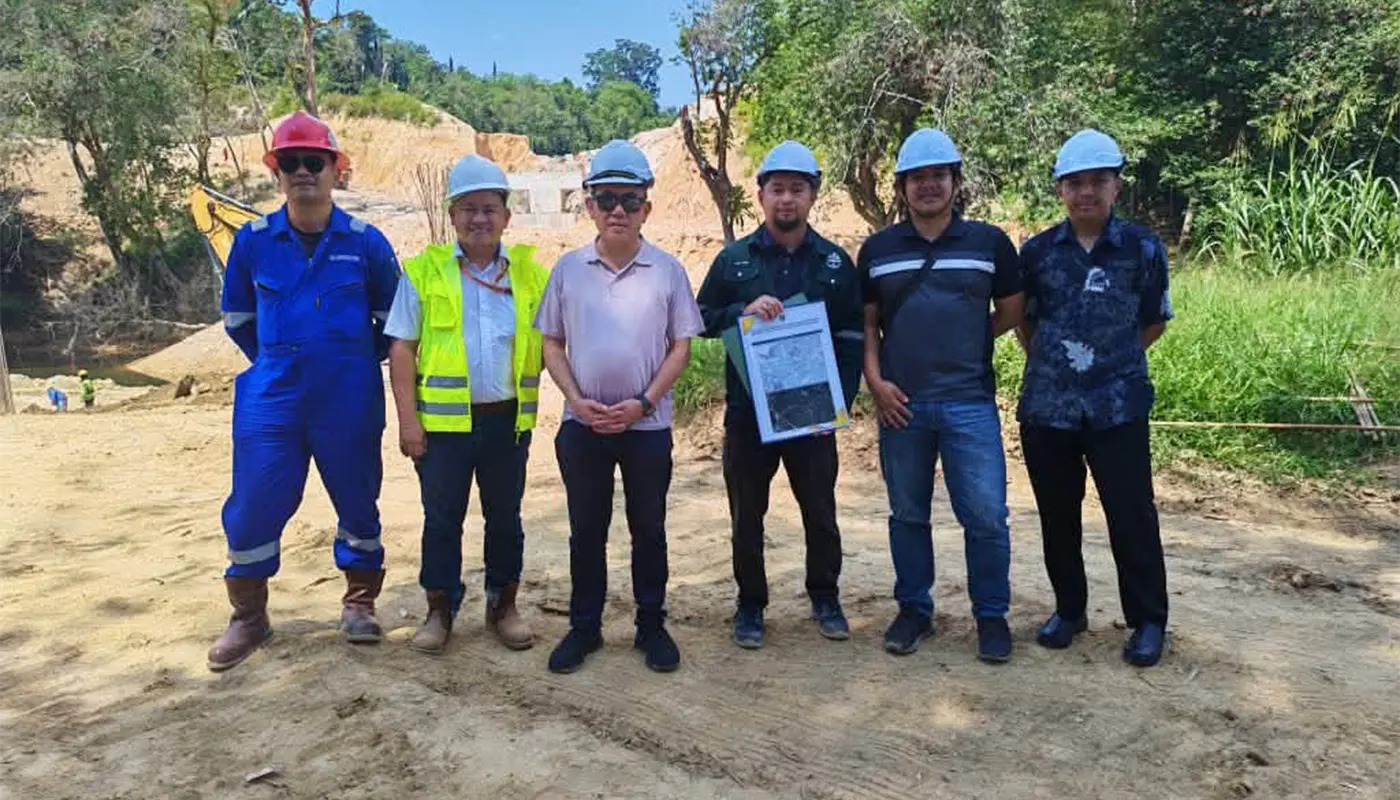
YB Datuk Gerald Rentap anak Jabu conducted an official site inspection to assess implementation status firsthand. As the State Assemblyman for N.36 Layar and Deputy Minister of Youth, Sports and Entrepreneur Development, his presence underscored the government’s commitment to rural development.
The proposed access road connects SK Ajau at Rh Panjang Gensurai directly to Rh Panjang Skatap. Upon completion, this route will drastically reduce travel distance for residents who currently navigate a considerably longer path to reach essential services and neighbouring villages.
Technical teams from the Sarawak Public Works Department accompanied the assemblyman during the assessment. Representatives from the Betong Division JKR office, alongside appointed consultants and contractors, were present to provide detailed updates on construction activities.
Current physical progress stands at 68.08 per cent according to briefings delivered on-site. Syed Faqih Muhammad bin Wan Mohamad Yusop, representing the Project Superintendent, outlined ongoing works including road formation, drainage installation, pavement laying, and critical bridge piling operations.
The project encompasses construction of a one-kilometre roadway built to JKR R1 standards plus a 90-metre bridge structure. These specifications ensure the infrastructure can safely accommodate rural traffic volumes whilst maintaining durability under local environmental conditions.
Commencement occurred on 10 June 2025 with contractual completion scheduled for 9 December 2026. This timeline reflects the complexity of building in challenging terrain where weather and logistics frequently impact construction schedules.
During discussions, the assemblyman emphasised the necessity of sustained collaboration among all stakeholders. He stressed that meeting deadlines must not compromise adherence to technical specifications or established quality benchmarks.
The transformative potential of this infrastructure extends beyond mere convenience. By reducing the existing 6.6-kilometre journey to just one kilometre, the new route promises substantial time savings and improved safety for daily commuters.
Enhanced accessibility typically catalyses socio-economic improvements in underserved areas. Better roads facilitate market access for agricultural produce, enable reliable school attendance, and improve emergency response capabilities for isolated households.
Bridge construction represents the most technically demanding component of the entire project. Piling works currently underway form the foundation for a structure that must withstand seasonal flooding and heavy loads typical of rural transport networks.
Drainage systems being installed concurrently prevent water damage that could prematurely degrade the road surface. Proper hydrological management is especially crucial in Sarawak’s tropical climate where intense rainfall events occur regularly throughout the year.
The R1 standard designation indicates the road is designed for low-volume rural traffic with appropriate geometric parameters. This classification balances cost-effectiveness with functional adequacy for the communities it serves.
Stakeholder coordination remains pivotal as the project enters its final phases. Aligning contractor schedules, material deliveries, and inspection protocols ensures momentum is maintained without sacrificing workmanship quality.
Rural infrastructure investments like this one align with broader state development objectives. Connecting remote longhouses to main networks supports equitable growth and reduces urban-rural disparities across Sarawak’s vast geography.
Community anticipation for the completed route continues to build as visible progress accelerates. Residents understand that temporary construction disruptions will yield lasting benefits for generations to come.
Monitoring mechanisms remain active throughout the remaining construction period. Regular site visits and progress reporting help identify potential delays early, allowing corrective measures before they escalate into major setbacks.
Ultimately, this access road represents more than asphalt and concrete. It embodies a tangible commitment to improving livelihoods and integrating marginalised communities into the mainstream economy of Betong Division.
