



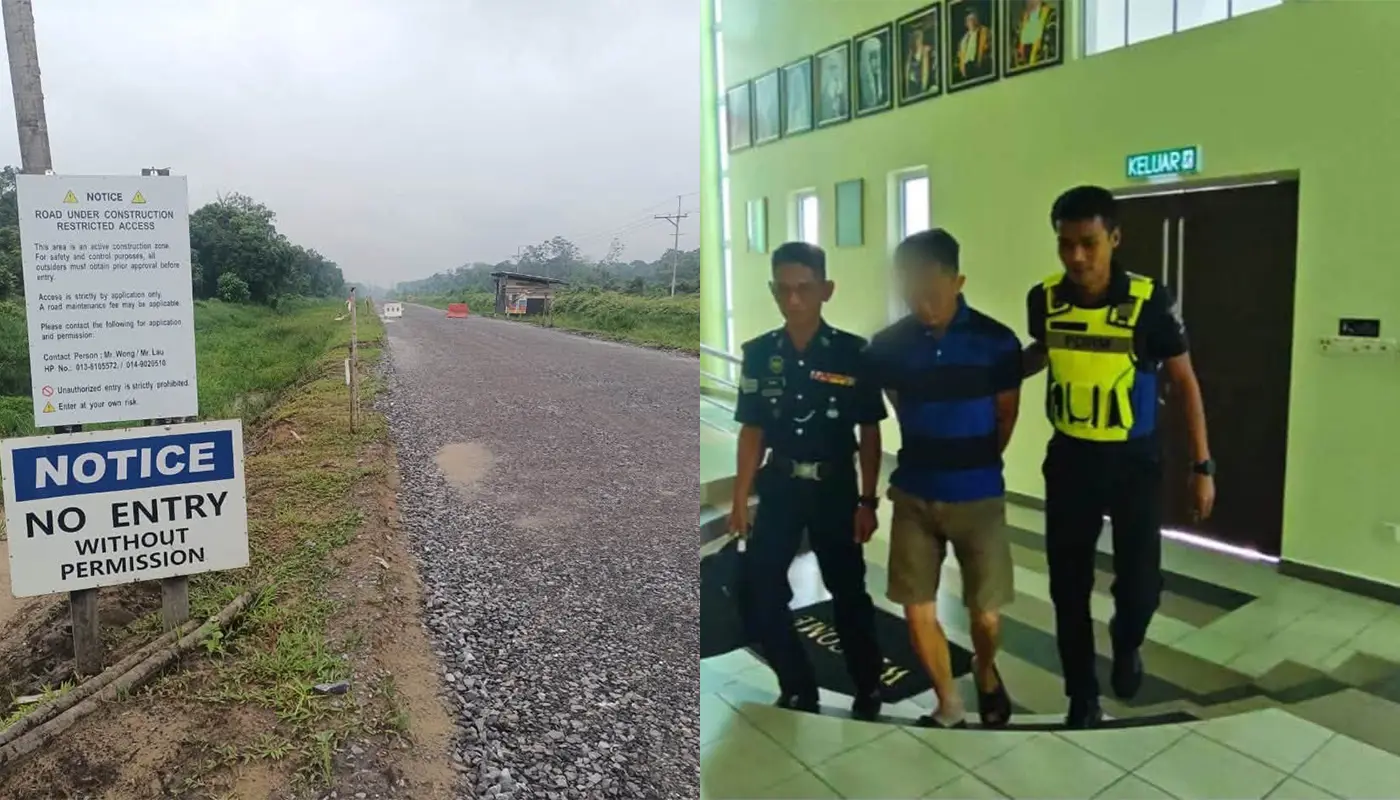
MATU – A thirty-seven-year-old man has been sentenced to two weeks in prison after pleading guilty to trespassing at a road construction site in the Matu district. The incident, which occurred in late July 2026, highlights the ongoing efforts by local authorities to secure restricted areas and prevent unauthorised access to infrastructure projects.

The case originated on 27 July 2026, when a complainant was conducting routine patrols at the Jemoreng-Passin road project site. During the patrol, the individual spotted a vehicle behaving suspiciously within the premises.
Upon noticing the presence of the patrol, the driver accelerated and attempted to flee the area. This erratic behaviour raised immediate concerns regarding security and potential illicit activities at the site.
Acting on the report, the Matu Daro Criminal Investigation Division, with assistance from officers at the Matu Police Station, launched an investigation to identify and apprehend the suspect.
The operation was successful, leading to the arrest of a local man aged thirty-seven. The vehicle used during the incident was also confiscated as part of the evidence gathering process.
Further investigations revealed more than just a simple trespassing offence. A preliminary urine screening test conducted on the suspect returned positive results for amphetamine and methamphetamine.
This finding indicated that the individual was under the influence of drugs at the time of the incident, which may have contributed to his reckless decision to enter the restricted zone and attempt to evade authorities.
The case was initially investigated under Section 447 of the Penal Code, which pertains to criminal trespass. Following the completion of initial enquiries, the investigation papers were referred to the Deputy Public Prosecutor in Sarawak. The suspect was remanded in custody for four days to facilitate these legal procedures.
On 29 July 2026, the accused appeared before the Sarikei Magistrate’s Court. Facing the charge of trespassing, he entered a guilty plea. The court subsequently sentenced him to two weeks of imprisonment, effective from the date of sentencing.
The convict was transferred to Sibu Prison to serve his term. This swift judicial process underscores the seriousness with which the courts view breaches of security at critical infrastructure sites.
Superintendent Rahim Anak Mihos, the Chief of Police for the Matu Daro District, issued a statement following the conclusion of the case.
He reminded the public that entering restricted or private areas without the explicit permission of the landowner or premises manager is a criminal offence. Such actions not only violate the law but also pose significant safety risks to both the trespasser and workers at the site.
Construction zones are inherently dangerous environments, often featuring heavy machinery, uneven terrain, and incomplete structures. Unauthorised entry can lead to severe accidents or injuries.
Furthermore, trespassing can disrupt project timelines and compromise the security of materials and equipment. Authorities urge residents to respect boundary markers and warning signs placed around such sites.
The involvement of drugs in this incident serves as a stark reminder of the broader social issues that intersect with crime. Substance abuse can impair judgement and lead individuals to engage in risky or illegal behaviours they might otherwise avoid.
Police continue to conduct operations to detect and deter drug use within the community, aiming to address both the supply and demand sides of the narcotics trade.
Local communities are encouraged to remain vigilant and report any suspicious activities near construction sites or private properties. Early reporting can help prevent crimes before they escalate and ensure that law enforcement can respond effectively.
The cooperation between the public and the police is vital for maintaining order and safety in the Matu and Daro districts.
The Matu Daro Police Headquarters remains committed to enforcing laws that protect public and private property.
By holding offenders accountable through the legal system, authorities aim to send a clear message that trespassing and other related offences will not be tolerated. This approach helps to foster a culture of respect for the law and community norms.
As infrastructure development continues across Sarawak, the need for robust security measures at project sites becomes increasingly important. Collaboration between project managers, local authorities, and the police ensures that these developments proceed smoothly and safely.
The recent sentencing in this case serves as a precedent for future incidents, reinforcing the legal consequences of unauthorised access.
