



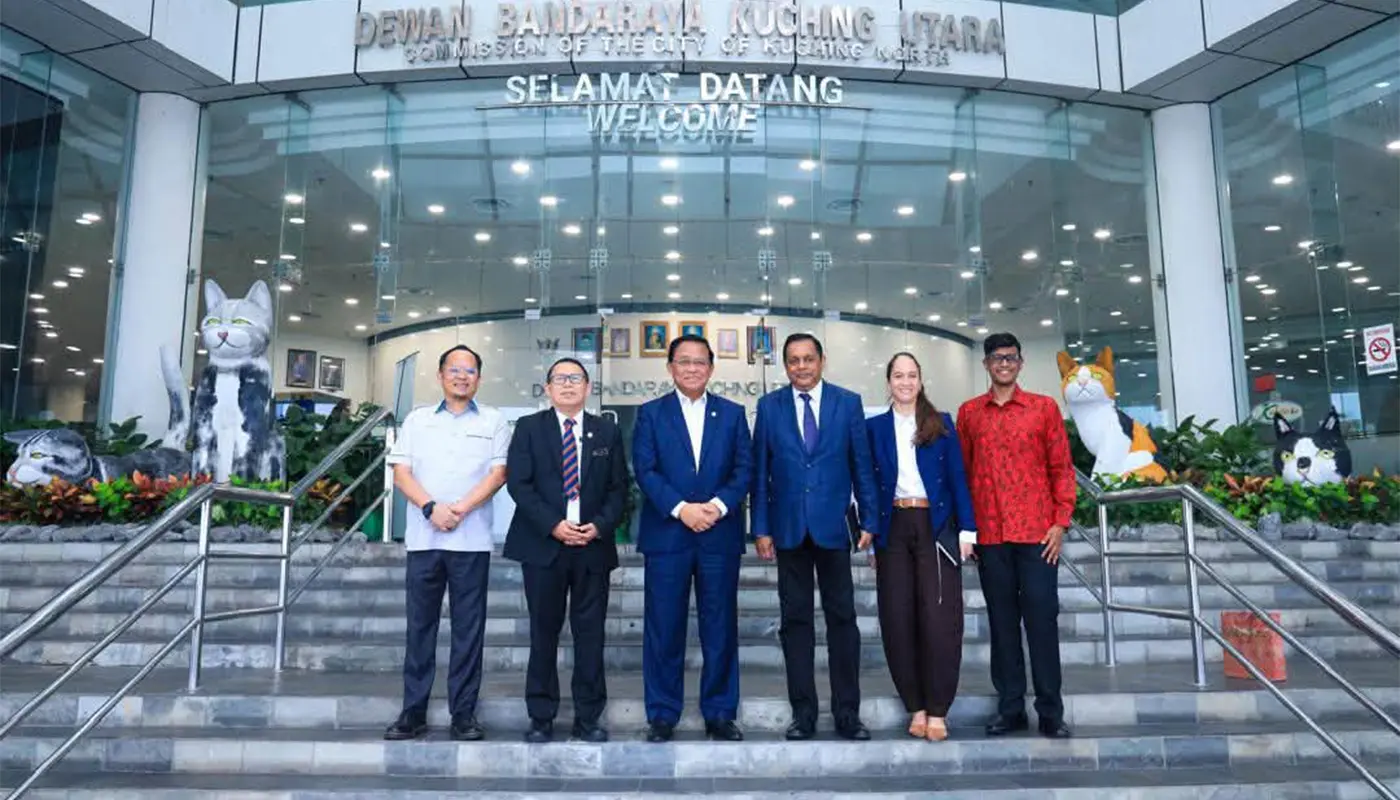
KUCHING – A delegation from the World Health Organization (WHO) paid a courtesy visit to the Deputy Minister in the Sarawak Premier’s Department, Yang Berhormat Datuk Dr Haji Abdul Rahman bin Haji Junaidi, at the Kuching North City Hall (DBKU) headquarters on Wednesday.
The meeting was led by Dr Rabindra Abeyasinghe, WHO Representative for Malaysia, Brunei Darussalam and Singapore.
The visit provided an opportunity for both sides to share perspectives on urban development and community-focused initiatives.
Discussions centred on strengthening collaboration in creating inclusive urban environments. Particular emphasis was placed on the Age-Friendly Cities initiative, which aims to ensure that city planning and services are responsive to the needs of all age groups, especially the elderly.
Dr Abdul Rahman, who also serves as Project Coordinator for the Regional Development Agency, highlighted the importance of aligning development strategies with community priorities.
He noted that initiatives such as Age-Friendly Cities can help foster stronger social support systems and improve quality of life.
Dr Abeyasinghe expressed WHO’s commitment to supporting local authorities in advancing health-orientated urban planning.
He underscored the organisation’s role in promoting policies that encourage inclusivity and resilience in city development.
The courtesy visit also allowed DBKU officials to outline current programmes and future plans for Kuching’s urban landscape. The discussions reinforced the shared objective of integrating health and well-being into city governance.
Present during the meeting were DBKU Director Yang Berusaha Encik Ramzi bin Abdillah and Deputy Director of the Community Services Department Encik Rudzaimeir Malek, along with WHO officers.
Their participation reflected the collaborative nature of the engagement, with both local and international representatives contributing to the dialogue.
The exchange of views marked a step forward in strengthening ties between Sarawak’s local government and the WHO.
It also highlighted the growing importance of partnerships in addressing urban challenges and ensuring that development remains inclusive and sustainable.
By focusing on initiatives that prioritise community needs, the meeting underscored the role of international cooperation in shaping healthier and more responsive cities.
