



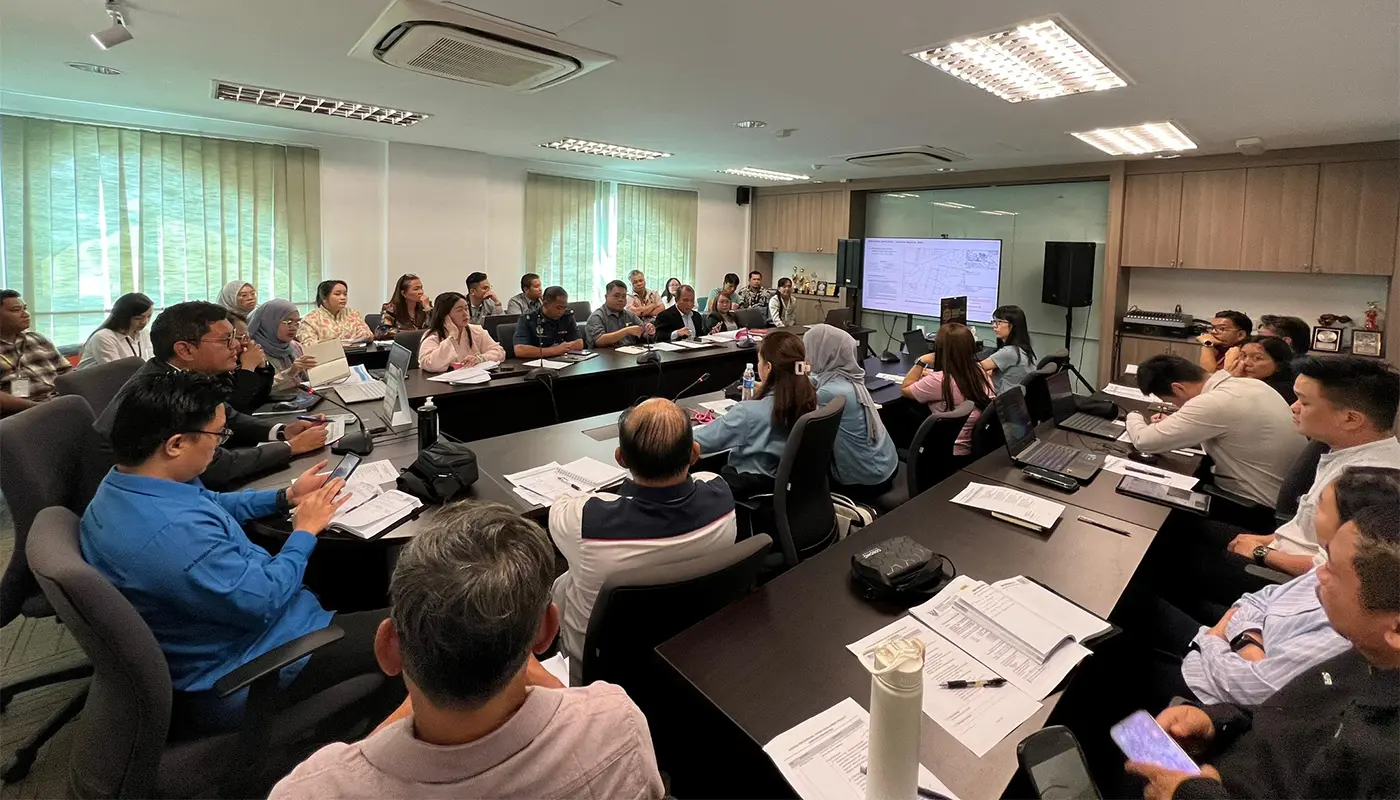
MIRI – The Sarawak Public Works Department (JKR) Miri Division convened a project handover, coordination meeting, and kick-off session on 20 April 2026 to mark the start of the development of new state government quarters across Sarawak.

The meeting, held at the JKR Miri Tower 1 Meeting Room, brought together representatives from government agencies, contractors, and consultants.
The initiative is part of a strategic plan by the Sarawak Government to improve the welfare of civil servants, particularly those serving in rural and interior districts, while enhancing efficiency in service delivery.
The handover session was attended by Ir. Ts. Cliff Jude Zehnder, Assistant Engineer of the Development Division, alongside the project management team.
Discussions focused on ensuring smooth coordination between stakeholders and aligning project objectives with the state’s broader development agenda.
Among the projects included in Package 2 of the initiative are new quarters in Marudi District, Telang Usan District, Long Bedian Subdistrict, and Tinjar Subdistrict, all within the Miri Division.
These locations were identified as priority areas where improved housing facilities are expected to support civil servants in carrying out their duties more effectively.
Officials emphasised that JKR Sarawak will maintain close monitoring of the projects to ensure progress remains on schedule and that construction adheres to technical standards and safety requirements.
The department highlighted the importance of collaboration between contractors, consultants, and government agencies to achieve timely delivery.
The development of new quarters is seen as a crucial step in strengthening Sarawak’s administrative capacity, particularly in remote areas where infrastructure challenges often hinder service provision.
By providing modern and well-planned housing, the government aims to boost morale among civil servants and create a more conducive environment for public service.
This initiative reflects Sarawak’s ongoing commitment to improving living standards for its workforce while supporting socio-economic growth in rural communities.
With the kick-off now complete, the projects are expected to move forward under strict supervision to ensure quality and efficiency.
