



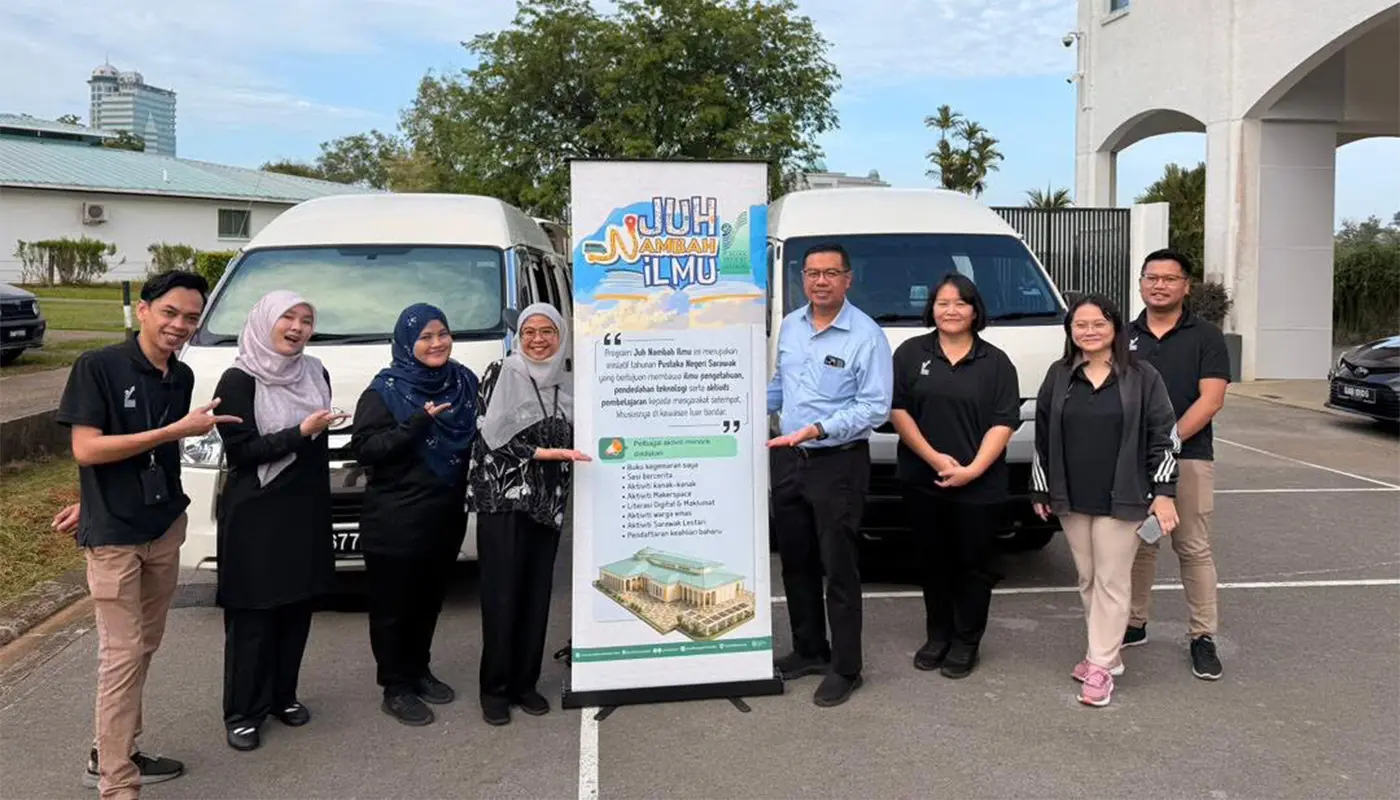
KUCHING – The Sarawak State Library has reaffirmed its commitment to community service through the continuation of its Juh Nambah Ilmu 2026 programme, which is being held across nine locations in Bau and Lundu districts from 23 to 26 June 2026.

Centred on the theme “Give Back to Community”, the initiative is designed to bring knowledge, creativity, and literacy-focused activities directly to residents, particularly those in rural areas.
The programme highlights the library’s mission to ensure that educational resources and interactive learning opportunities are accessible to all segments of society.
Activities under the programme include reading sessions, creative workshops, and interactive learning modules tailored to different age groups.
These sessions aim to encourage lifelong learning, foster literacy, and promote community engagement through knowledge-sharing.
The Sarawak State Library has consistently emphasised the importance of outreach programmes as part of its broader strategy to bridge educational gaps between urban and rural communities.
By taking services beyond its physical premises, the library ensures that communities in remote areas are not left behind in accessing information and learning opportunities.
Officials noted that the Juh Nambah Ilmu initiative also supports the state’s wider vision of nurturing a knowledge-based society. By providing platforms for creativity and literacy, the programme contributes to building stronger, more informed communities.
The library’s ongoing efforts reflect its role not only as a repository of books and information but also as a dynamic institution dedicated to community development.
Through programmes such as this, the Sarawak State Library continues to strengthen its bond with the public, reinforcing its mission of inclusivity and service.
The Juh Nambah Ilmu 2026 programme is expected to attract significant participation from local residents, with activities tailored to meet the needs of diverse groups.
The initiative underscores the library’s belief that knowledge should be shared widely and equitably, ensuring that every community benefits from educational opportunities.
