



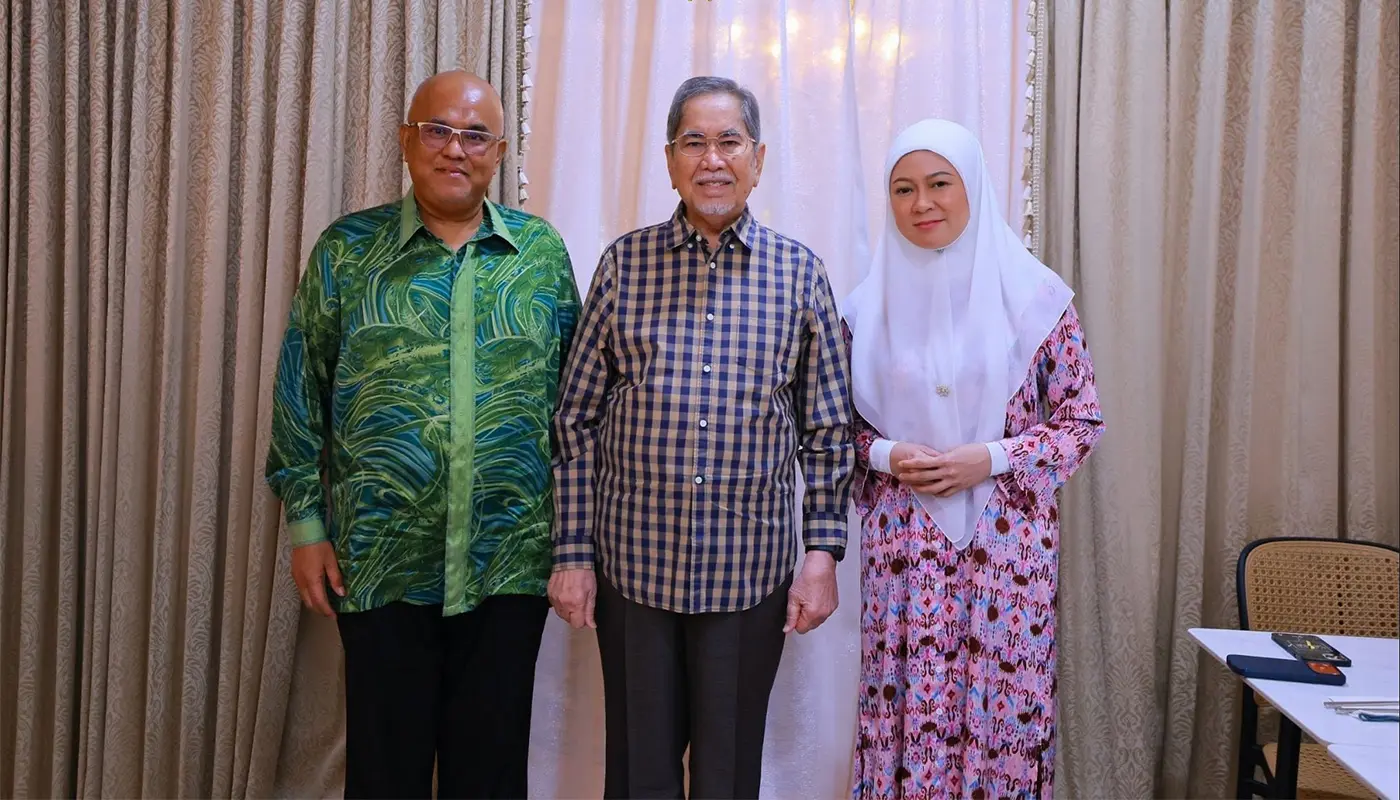
KUALA LUMPUR – The Governor of Sarawak, Tun Pehin Sri Dr Haji Wan Junaidi bin Tuanku Jaafar, accompanied by Toh Puan Datuk Patinggi Hajjah Fauziah binti Mohd Sanusi, welcomed a special guest at their official residence in Kuala Lumpur on Friday morning.

Datuk Haji Syed Mehdar bin Syed Abdullah visited the residence to personally deliver a wedding invitation to His Excellency and Toh Puan.
The invitation was for the forthcoming marriage of his daughter, Sharifah Nurul Ain, to her partner Syed Ahmad. The ceremony is scheduled to take place in the capital on 26 July 2026.
The meeting was conducted in a warm and cordial atmosphere, reflecting the close ties between the families.
In addition to the formal presentation of the invitation, discussions extended to family genealogy and lineage, a topic of shared interest among those present.
The exchange of views also touched on broader matters and current issues, underscoring the friendly and respectful nature of the gathering.
Tun Wan Junaidi and Toh Puan Fauziah expressed their heartfelt congratulations to the couple, offering prayers for smooth preparations and a blessed ceremony.
Their well wishes highlighted the importance of family unity and tradition, values that continue to hold significance in Malaysian society.
The governor, who has been in office since January 2024, has often emphasised the importance of maintaining strong community and family bonds alongside his official duties.
His presence at such occasions reflects his commitment to fostering goodwill and supporting cultural traditions.
Wedding ceremonies in Malaysia are often seen as more than personal milestones; they are community events that bring together relatives, friends, and leaders.
The forthcoming marriage of Sharifah Nurul Ain and Syed Ahmad is expected to be celebrated with joy and respect, in keeping with the customs of the region.
The visit concluded with mutual appreciation, reinforcing the value of personal connections between leaders and citizens.
Such engagements not only strengthen social ties but also reflect the enduring role of tradition in modern governance.
