



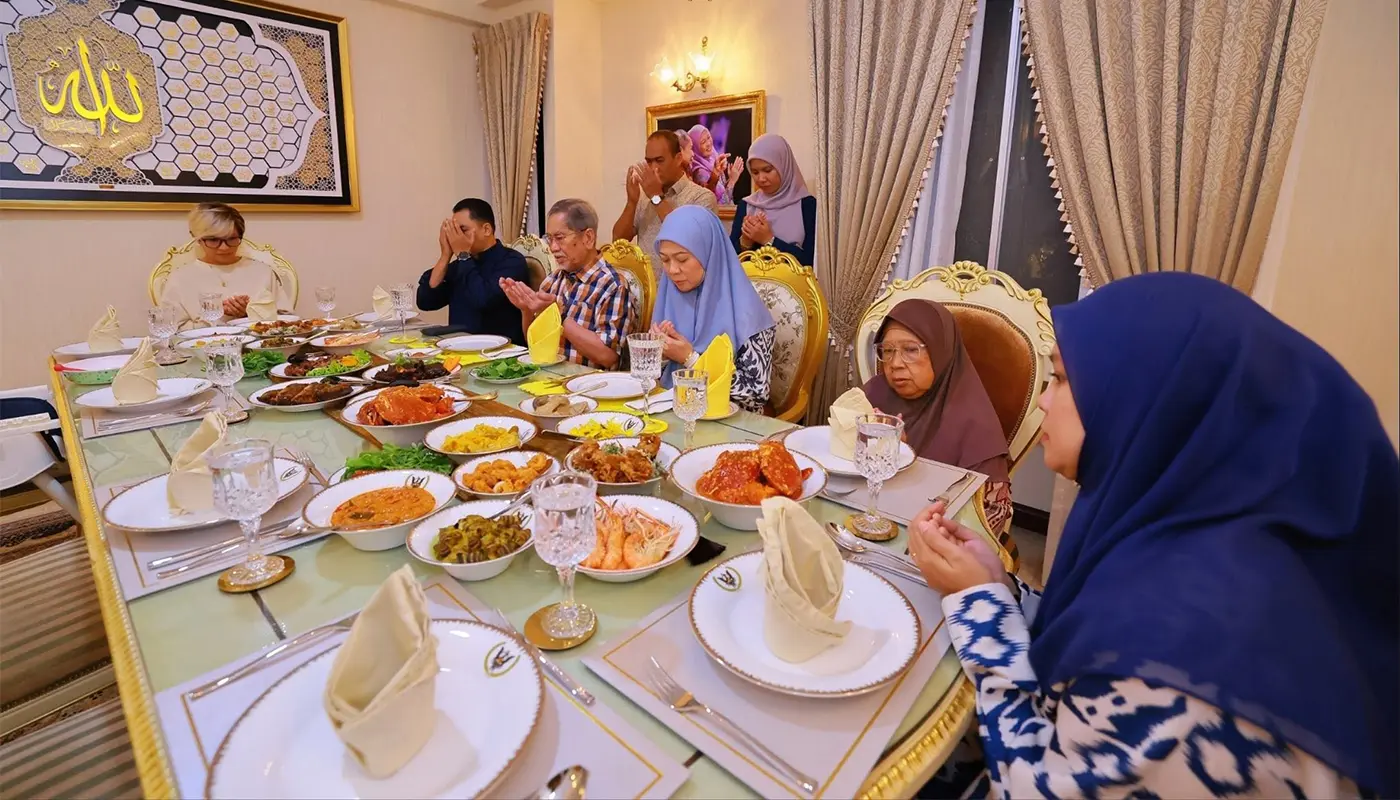
KUALA LUMPUR – The Sarawak State Governor, Tun Pehin Sri Dr. Haji Wan Junaidi bin Tuanku Jaafar, joined his wife, Toh Puan Datuk Patinggi Hajjah Fauziah binti Mohd Sanusi, and family members in observing the sunnat Tasu’a fast at their official residence on 25 June.

The occasion brought together several generations of the family. Among those present were Toh Puan’s mother, Mahani binti Haji Aman, her daughter Sharifah Nuril, son-in-law David James Forley, and granddaughter Feona Elsie Norjannah Forley.
The evening meal following the breaking of fast was marked by a warm and convivial atmosphere, with conversations flowing easily among the attendees.
Tun Pehin Sri Wan Junaidi and Toh Puan Fauziah took the opportunity to exchange updates with their relatives, asking after their well-being and sharing recent developments.
The gathering highlighted the value placed on family ties, particularly during religious observances that encourage reflection, unity, and gratitude.
The Tasu’a fast, observed on the ninth day of Muharram in the Islamic calendar, is regarded as a sunnat practice that carries spiritual significance.
It precedes the Ashura fast and is often observed by Muslims as a way of seeking blessings and strengthening faith.
For many families, it also serves as a moment to come together in prayer and fellowship. The governor emphasised the importance of such gatherings in nurturing familial bonds.
The simplicity of the evening, he noted, provided a meaningful space for reinforcing relationships and ensuring that the values of respect and togetherness remain central within the household.
In Malaysia, family-centred traditions continue to play a vital role in social cohesion. Religious practices such as fasting are often accompanied by communal meals, which not only fulfil spiritual obligations but also reinforce cultural values of hospitality and unity.
The evening at the official residence reflected these principles, with the governor and Toh Puan leading by example in demonstrating how faith and family can be harmoniously intertwined.
Their participation in the Tasu’a fast alongside relatives underscored the enduring importance of maintaining close ties, even within the demands of public life.
As the family shared food and conversation, the gathering served as a reminder of the strength found in togetherness.
In a time when modern life can often fragment relationships, such occasions highlight the enduring relevance of traditions that bring people closer.
