



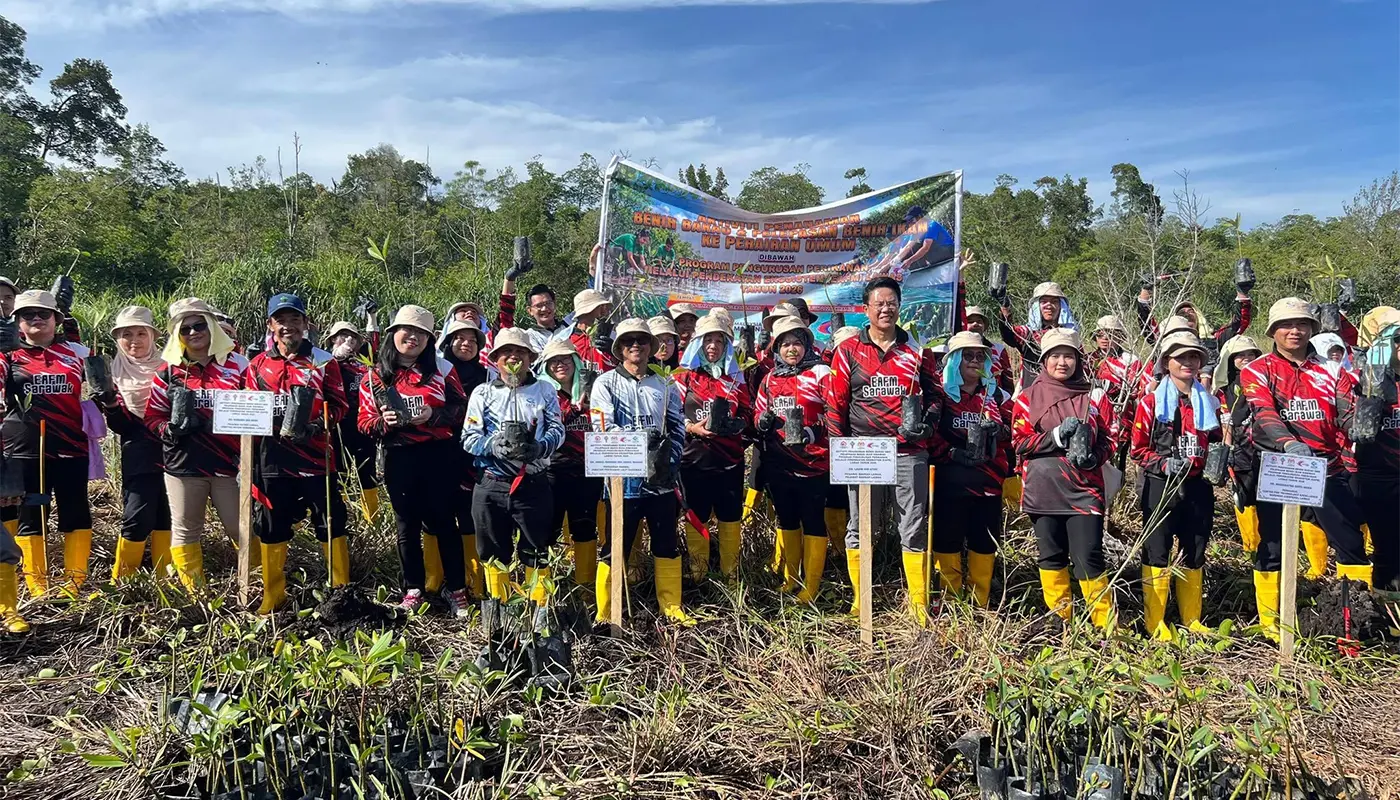
LAWAS – A large-scale environmental programme combining mangrove planting and fish seed release was carried out in Lawas on 25 June 2026 under the Ecosystem Approach for Fisheries Management (EAFM) Lawas 2026 initiative.

The event was jointly organised by the Sarawak Marine Fisheries Department (JPLS) and the Sarawak Forest Department (JHS), with support from CENTEXS Lawas and local agencies.
The programme took place at two key sites: the Kayangeran Forest Reserve and the Labik-Labik River. At the forest reserve, 800 seedlings of the Rhizophora apiculata species were planted to strengthen coastal ecosystems and reduce erosion.
Meanwhile, 4,500 juvenile sea bass were released into the river to enhance fish stocks and support long-term food security.
More than 100 participants joined the initiative, including staff from the Miri Region III Marine Fisheries Office, JPLS, JHS, and students from CENTEXS Lawas.
Their involvement reflected the collaborative nature of the project, which aimed to combine conservation with community education.
The programme was officiated by the Director of the Sarawak Marine Fisheries Department, Abdul Rahman Abdul Wahab, who was accompanied by senior officials such as Miri Region III Fisheries Head Saini Suliansa and Lawas District Forest Officer Suwardi Sidik.
Abdul Rahman also led symbolic activities, including the ceremonial release of fish seeds and planting of mangrove saplings, alongside invited guests and students.
In addition to conservation efforts, the event incorporated community support measures. At the closing ceremony, 63 safety jackets valued at RM10,332 were distributed to members of the fishing community.
The department also presented mock cheques worth RM132,648 under the Entrepreneur Development and Fisheries Technology Transfer Programme, aimed at assisting local entrepreneurs in adopting modern practices and strengthening their livelihoods.
Officials highlighted that the initiative was not only about environmental protection but also about empowering the fishing community.
By combining ecological restoration with direct support, the programme sought to balance sustainability with socio-economic development.
Mangrove ecosystems play a vital role in protecting coastlines, storing carbon, and providing habitats for marine life. Similarly, fish seed release programmes are widely recognised as a means of replenishing stocks and ensuring long-term viability of fisheries.
The Lawas initiative demonstrated Sarawak’s commitment to integrating these approaches under the EAFM framework, which emphasises holistic management of marine resources.
The collaboration between government departments, educational institutions, and local communities underscored the importance of shared responsibility in safeguarding natural resources.
Organisers expressed hope that the programme would inspire continued participation in conservation activities, ensuring that future generations benefit from healthy ecosystems and sustainable fisheries.
