



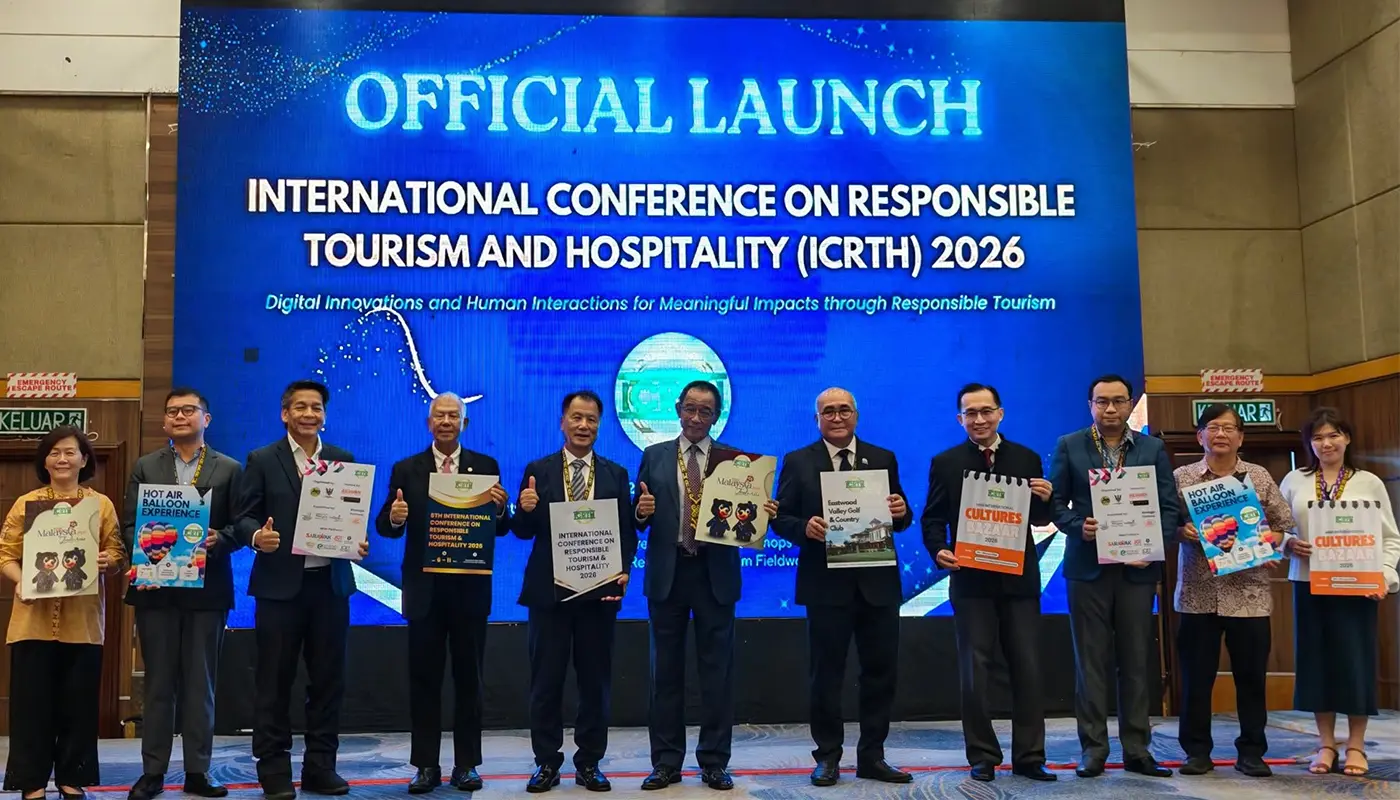
MIRI – The city of Miri has taken centre stage this week as it hosts the 6th International Conference on Responsible Tourism and Hospitality (ICRTH) 2026, held from 6 to 11 July at Eastwood Valley Golf and Country Club.

The event brings together global tourism leaders, academics, policymakers, and community representatives to discuss sustainable practices in the industry.
The conference theme, Digital Innovations and Human Interactions for Meaningful Impacts through Responsible Tourism, reflects the growing importance of technology and collaboration in shaping tourism’s future.
Delegates will engage in workshops, networking sessions, and fieldwork activities designed to showcase how responsible tourism can generate long-term benefits for communities and the environment.
Miri’s role as host city underscores its rising profile as a tourism destination. The city is home to two UNESCO World Heritage Sites: Gunung Mulu National Park and, most recently, Niah National Park.
The latter was inscribed in 2024 for its archaeological significance, with discoveries at the Niah Caves providing evidence of human settlement dating back at least 50,000 years.
The site preserves prehistoric cave paintings, boat-shaped coffins, and remains that have contributed to global understanding of early human civilisation.
Tourism plays a vital role in Miri’s economy, and local leaders have emphasised the need for growth that is both inclusive and environmentally responsible.
The conference provides a platform to highlight Sarawak’s diverse cultural heritage, natural attractions, and community-driven initiatives.
Delegates are encouraged to explore the city’s offerings, from local cuisine to cultural bazaars, while supporting small businesses and artisans.
Special events during the conference include the Responsible Tourism Awards in Southeast Asia, which recognise outstanding practices in sustainability and community engagement.
Delegates will also participate in fieldwork at Niah National Park and other destinations, offering hands-on experiences in conservation and community-based tourism.
The inscription of Niah National Park as a UNESCO site has added momentum to Sarawak’s tourism sector, reinforcing the message that conservation and development can coexist.
The recognition is expected to attract more international visitors while ensuring that heritage sites are preserved for future generations.
As the conference unfolds, Miri is not only showcasing its natural and cultural treasures but also positioning itself as a model for responsible tourism in Southeast Asia.
The event highlights how collaboration between governments, communities, and industry stakeholders can create meaningful impacts that extend beyond tourism itself.
