



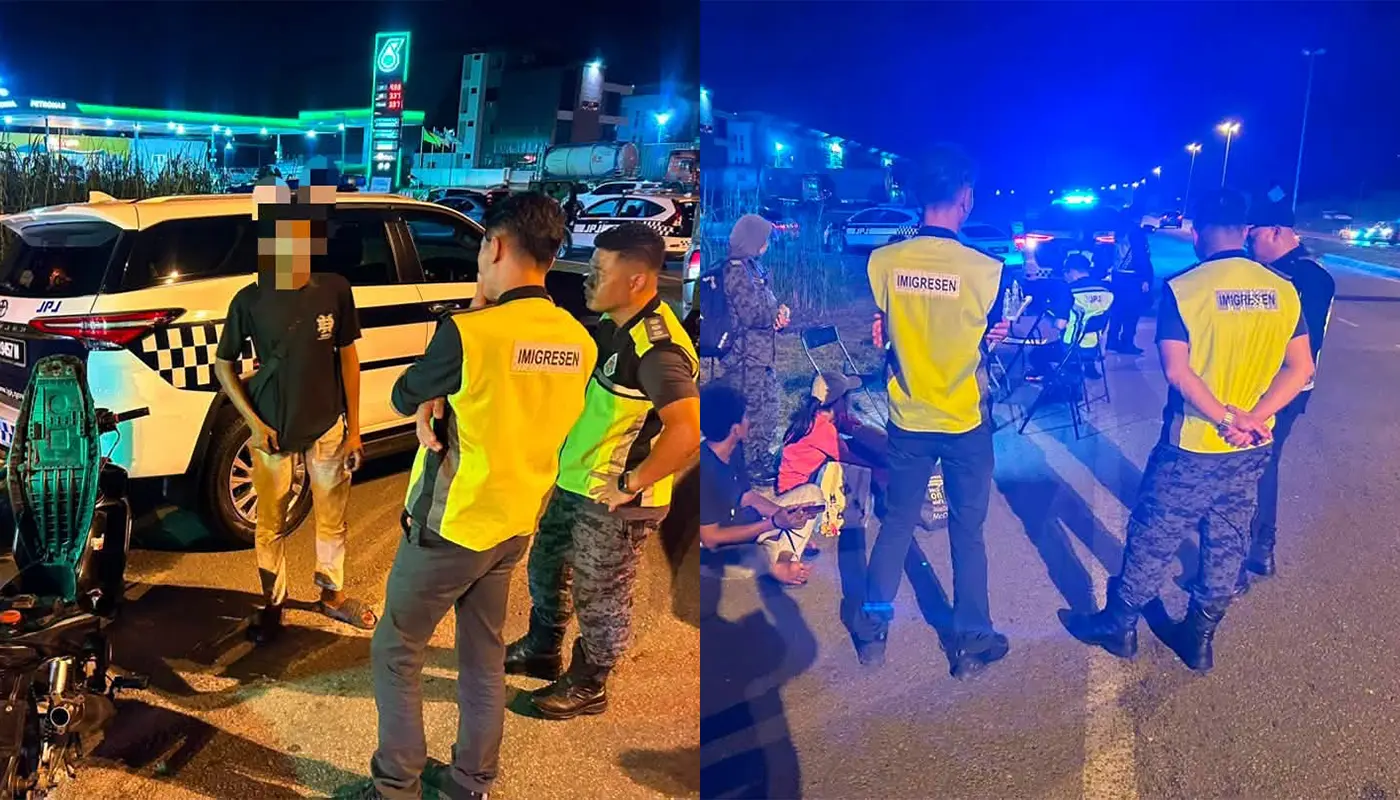
MIRI – A comprehensive enforcement initiative conducted along the Miri Bypass has resulted in multiple vehicle confiscations and several drug-related arrests. The joint operation, carried out on Thursday, brought together multiple state and federal authorities to clamp down on traffic violations and broader criminal offences on one of the busiest transport routes in the region.

The widespread crackdown was spearheaded by the Sarawak Road Transport Department (JPJ Sarawak), operating primarily through its local Miri operational division. They were closely supported by personnel from the Skaloh Enforcement Station, forming a robust frontline presence. To broaden the scope of the legal checks, the transport department partnered with the National Anti-Drug Agency and the Malaysian Immigration Department.
Positioned strategically along the Miri Bypass, the multi-agency teams monitored traffic flowing in both directions. This dual-carriageway approach ensured a highly effective screening process, preventing errant drivers from simply performing illegal U-turns to evade the authorities. The bypass is a critical arterial route, heavily utilised by commercial heavy vehicles, daily commuters, and cross-border travellers.
Throughout the duration of the targeted roadblocks, officers flagged down and thoroughly inspected a total of 450 vehicles. The sheer volume of traffic stopped highlights the massive scale of the initiative. Personnel conducted systematic reviews of documentation, physical vehicle conditions, and the behavioural state of the drivers behind the wheel.
During these rigorous checks, officers uncovered a wide array of traffic violations. A prominent issue detected among the motorists was the illegal installation of high-intensity discharge and light-emitting diode headlamps. Authorities have long warned against these after-market modifications, as lights that fail to comply with strict factory specifications can cause severe glare, temporarily blinding oncoming drivers and dramatically increasing the risk of fatal nighttime collisions.
In addition to hazardous lighting, enforcement teams issued numerous penalties for documentation failures. Many motorists were found operating their vehicles with expired driving licences, while others could not produce any valid driving credentials at all. Such infractions raise significant concerns regarding driver competency and general road safety awareness within the local community.
Officers also clamped down on vehicles displaying registration plates that flouted standard sizing and formatting regulations. Illegal number plates are frequently utilised by motorists attempting to evade automated speed enforcement cameras or digital toll systems. Furthermore, officers penalised several vehicle owners for various other technical and mechanical defects that rendered their transport unsafe for public road usage.
The strict enforcement resulted in the immediate seizure of eight different vehicles. The transport department exercises this right when allowing a vehicle to continue its journey would pose an unacceptable risk to the public. The confiscated transports included a mix of two-wheeled and four-wheeled motor vehicles.
Among the seized property were two motorcycles flagged for having expired motor vehicle licences, commonly referred to as road tax, alongside a complete lack of mandatory insurance coverage. Driving without insurance is considered a severe hazard, as it leaves potential accident victims without any avenue for financial recourse or medical compensation in the event of a collision.
Similarly, three standard passenger cars and one commercial pickup truck were impounded for the exact same documentation failures. The presence of so many uninsured vehicles on a major highway underscores the necessity of these random governmental checks. Ensuring that every vehicle on the road is legally registered and financially covered remains a top priority for transport officials.
The operation also highlighted issues surrounding international drivers navigating local roads without the proper legal clearance. Officers confiscated a motorcycle being ridden by a foreign national who could not produce a valid driving licence recognised by Malaysian authorities.
In another instance, a luxury passenger vehicle was seized after officers discovered it was being driven by a foreign national similarly lacking any legal driving documentation. The strict impounding of these vehicles serves as a firm reminder that all motorists, regardless of nationality, must adhere strictly to local transport legislation when navigating the state transport network.
Beyond traffic and vehicular offences, the presence of the National Anti-Drug Agency proved highly crucial. Officers profiled drivers exhibiting suspicious or erratic behaviour, pulling them aside for on-site substance screening. The combination of traffic enforcement with narcotics screening has become a standard protocol in ensuring holistic public safety.
Narcotics officers conducted rapid screening tests on twelve profiled individuals during the highway operation. The results of these tests were highly concerning, revealing that nine of the individuals screened tested positive for methamphetamine consumption.
Driving under the influence of synthetic stimulants like methamphetamine is exceptionally dangerous. The narcotic drastically alters a driver’s perception of speed, reduces their natural reaction times, and can lead to highly aggressive or reckless driving behaviour. The nine individuals were immediately detained and processed by the anti-drug agency for further legal action in accordance with their specific judicial jurisdiction.
Meanwhile, personnel from the Malaysian Immigration Department conducted parallel screenings to ensure that all foreign nationals passing through the checkpoint possessed valid visas, work permits, and travel documentation. Despite the thorough checks conducted on hundreds of vehicles and their passengers, the immigration team recorded zero offences during this specific enforcement window.
The lack of immigration violations suggests a high level of compliance regarding border and residential documentation among the travellers intercepted that day. It also demonstrates the thoroughness of the integrated approach, ensuring that every facet of the law is actively monitored even when certain departments do not register an immediate arrest.
Following the successful conclusion of the highway roadblock, the Sarawak Road Transport Department issued a public statement expressing profound gratitude to their partner agencies. They commended the National Anti-Drug Agency and the Malaysian Immigration Department for their unwavering commitment, professionalism, and operational support.
The transport authority emphasised that this sort of strategic, cross-agency synergy is essential for maintaining law and order on public roads. By pooling resources, sharing intelligence, and combining their respective jurisdictional powers, government agencies can execute far more effective sweeps than they could while operating in isolation.
Officials confirmed that collaborative enforcement operations of this nature will continue to be deployed consistently across the region. The ultimate goal of these stringent measures is not merely punitive, but deeply preventative. By constantly reinforcing the rule of law, authorities hope to drastically reduce the number of regulatory violations, deter substance abuse among motorists, and ultimately elevate the overall standard of road safety for all residents travelling throughout Sarawak.
