



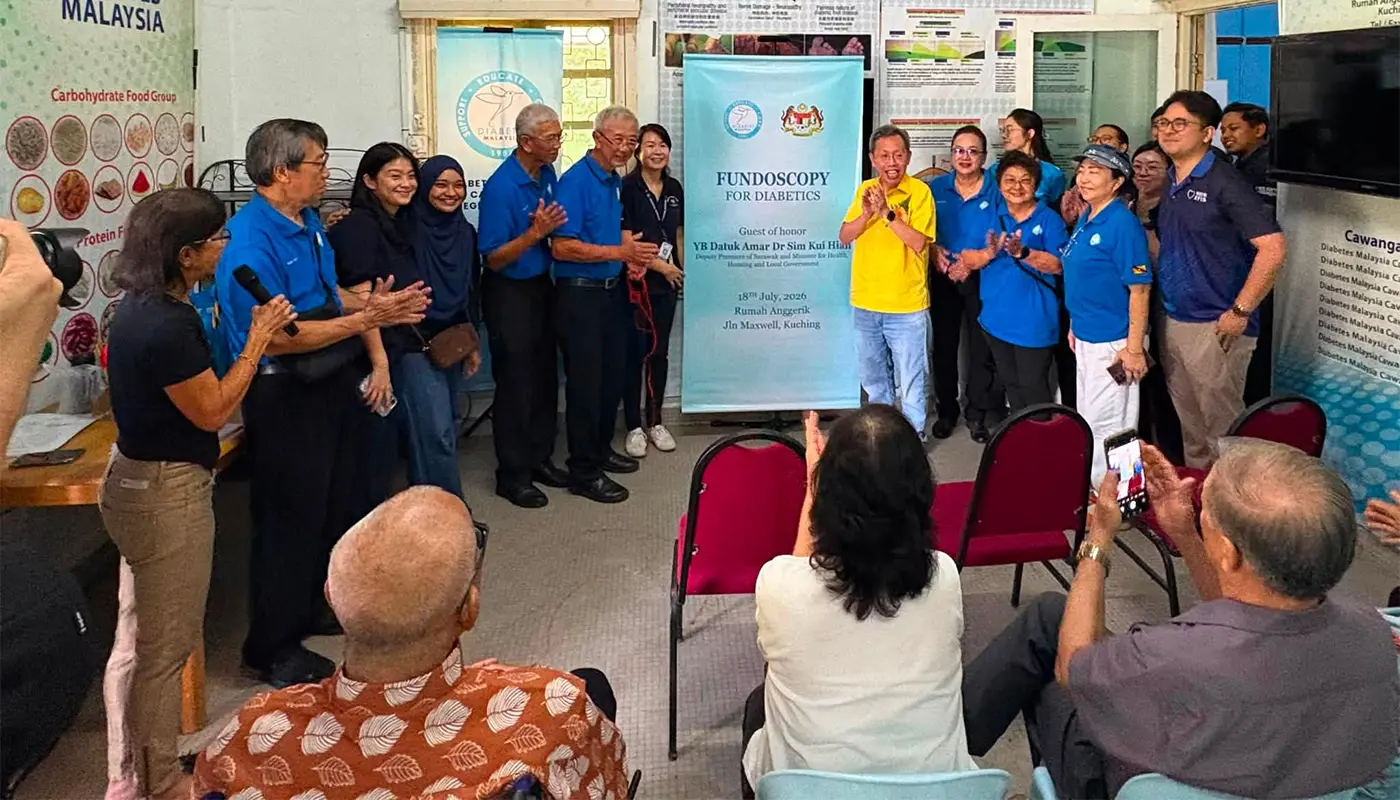
KUCHING – The critical importance of early detection in managing diabetes complications was highlighted during a recent community health initiative focused on retinal screening.

The event, held at the Sarawak Diabetic Center, underscored the persistent challenges posed by the disease in the state and the vital role of collaborative medical efforts in mitigating long-term health risks.
Deputy Premier of Sarawak, Dr Sim Kui Hian, commended the sustained efforts of Diabetes Malaysia Sarawak and the Department of Ophthalmology at Sarawak General Hospital (SGH).
He praised their resilience and dedication to providing essential community services that address one of the most pressing public health issues facing the region.
Diabetes prevalence remains alarmingly high in Malaysia, with statistics indicating that approximately one in every five individuals is affected by the condition.
This trend is mirrored in Sarawak, where the burden of disease places significant strain on healthcare resources and families alike.
While the condition itself is manageable, the associated complications pose severe threats to quality of life and longevity.
Medical data suggests that diabetic complications are widespread and often debilitating. Approximately 30 per cent of patients suffer from eye-related issues, while kidney complications affect around 40 per cent.
Additionally, lower limb problems impact roughly 25 per cent of sufferers, and cardiovascular diseases are prevalent in about 65 per cent of cases.
These figures illustrate the multifaceted nature of diabetes management and the need for comprehensive care strategies.
Despite the availability of accessible public clinics across the state, a significant number of cases remain undiagnosed until complications arise.
This gap in early detection highlights the necessity for proactive screening programmes that reach out to at-risk populations before irreversible damage occurs.
Retinal screening, or fundoscopy, is a key component of this preventive approach, allowing specialists to identify signs of diabetic retinopathy in its earliest stages.
Dr Adeline, the Head of the Department of Ophthalmology at Sarawak General Hospital, shared her personal journey with the programme.
She revealed that she has been involved in the initiative since 2011, beginning her participation as a medical officer.
Her long-standing commitment reflects the deep institutional memory and dedication within the state’s healthcare sector.
Dr Sim Kui Hian drew attention to Dr Adeline’s tenure as an example of the broader spirit exhibited by Sarawak’s medical professionals.
He described this perseverance as emblematic of the “Sarawak children” ethos, characterised by an unwavering commitment to nation-building and community welfare.
“We never give up,” the Deputy Premier stated, emphasising the collective determination required to tackle chronic diseases effectively.
This sentiment resonates with the broader goals of the state government to improve health outcomes through sustained investment in human capital and public health infrastructure.
The collaboration between non-governmental organisations like Diabetes Malaysia and state hospitals demonstrates a model of effective partnership.
By combining the outreach capabilities of community groups with the clinical expertise of hospital specialists, these initiatives can achieve greater reach and impact than either entity could alone.
Fundoscopy screenings are particularly crucial because diabetic retinopathy is often asymptomatic in its early phases.
Without regular examination, patients may not notice vision changes until significant damage has occurred. Early intervention can prevent blindness and preserve independence for thousands of residents.
The event served not only as a service delivery platform but also as a reminder of the ongoing vigilance required in public health.
As lifestyle factors continue to influence diabetes rates, the demand for such screening services is likely to grow. Ensuring that these programmes remain well-funded and staffed is therefore a priority for health planners.
Dr Sim’s acknowledgment of the team’s efforts reinforces the value placed on frontline healthcare workers who operate behind the scenes.
Their consistent presence in community settings helps bridge the gap between clinical care and public awareness, fostering a culture of health consciousness.
As Sarawak continues to develop its healthcare capabilities, initiatives like the CNS Fundoscopy programme stand as testaments to the progress made in managing chronic diseases.
They highlight the importance of persistence, collaboration, and compassionate care in building a healthier society for all residents.
