
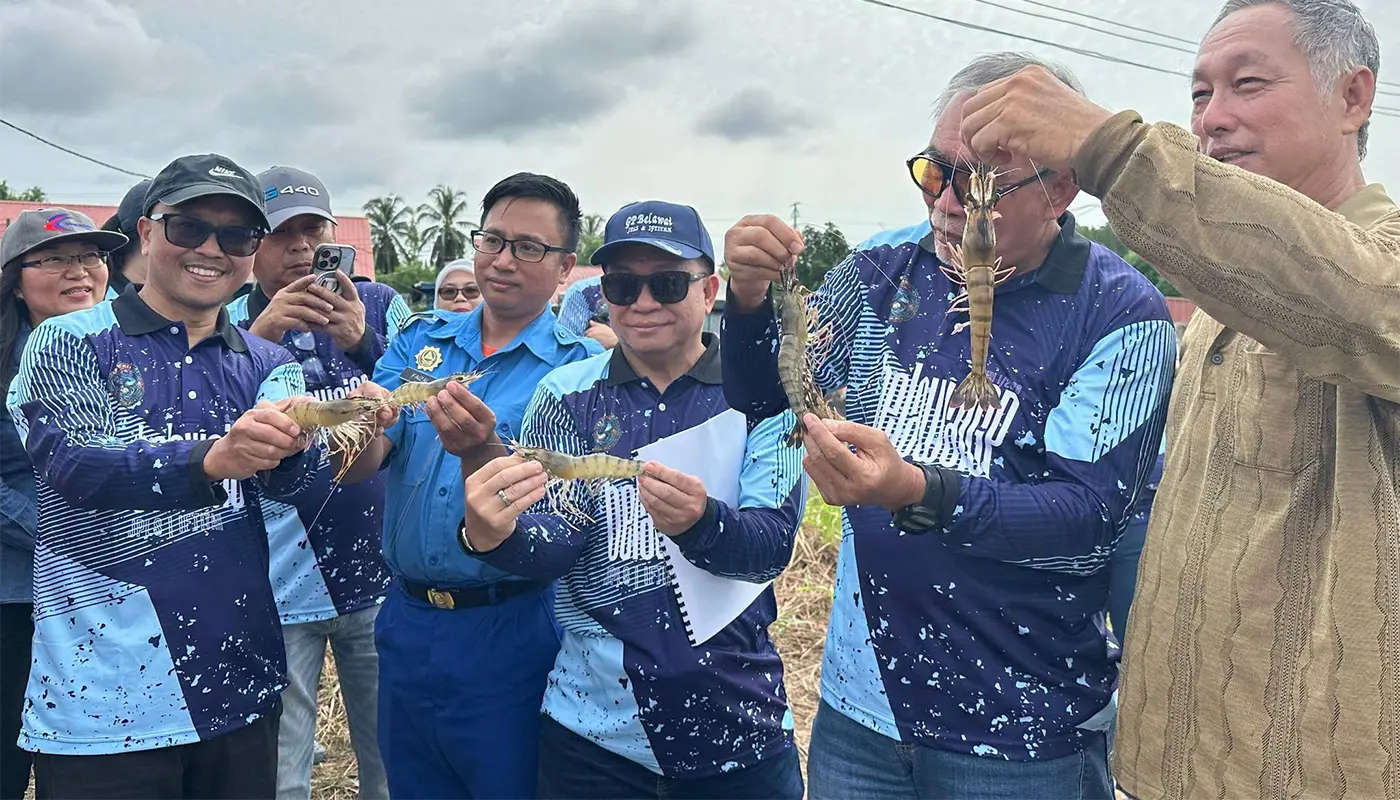


SELUMIT – A focused inspection of the local aquaculture sector took place in Selumit this weekend, as state leaders sought to assess the progress and potential of prawn farming in the region. The visit highlighted the growing importance of sustainable seafood production in contributing to Sarawak’s food security and economic diversification.
YB Datuk Haji Len Talif Salleh, the State Assemblyman for N.41 Kuala Rajang, led the working visit to a prominent prawn farming facility in the area. He was accompanied by Encik Abdul Rahman bin Abdul Wahab, the Director of the Sarawak Marine Fisheries Department.
Their joint presence demonstrated a coordinated effort between political leadership and technical agencies to support and monitor the development of the fisheries industry.
The delegation began their tour with a comprehensive briefing session conducted by the pond operator, Encik Hii Hieng Ing. This initial discussion provided essential context regarding the operational mechanics of the farm, including water quality management, feeding protocols, and disease control measures.
Understanding these technical aspects is crucial for policymakers to formulate effective support strategies for local entrepreneurs.
Following the briefing, the group proceeded to tour the extensive farming grounds. The facility is dedicated to the cultivation of two high-value species: white prawns and tiger prawns.
These varieties are among the most sought-after in the national aquaculture industry, known for their superior taste and market demand. By focusing on these specific species, the farm aligns itself with broader national goals to increase self-sufficiency in premium seafood products.
The scale of the operation is significant, comprising 25 individual ponds designed for optimal growth conditions. According to estimates provided during the visit, the farm achieves an annual production output ranging between 120 and 140 metric tons.
This substantial volume plays a vital role in stabilising the local supply chain, ensuring that fresh, high-quality prawns are available to consumers while reducing reliance on imports.
Such production levels contribute directly to strengthening the fisheries industry in Sarawak. By boosting local output, the farm helps to create jobs, stimulate related businesses such as feed supply and logistics, and enhance the overall resilience of the rural economy.
The success of this enterprise serves as a benchmark for other aspiring aquaculturists in the constituency. During the inspection, YB Datuk Haji Len Talif Salleh took the opportunity to review a live prawn harvest.
Observing the harvesting process firsthand allowed him to appreciate the labour-intensive nature of the work and the skill required to maintain high survival rates. It also provided a tangible connection to the end product that reaches local markets and restaurants.
A key component of the visit was the direct interaction between the assemblyman and the entrepreneur. Encik Hii Hieng Ing shared valuable feedback on the current operational landscape, highlighting both successes and ongoing challenges.
Issues such as rising input costs, access to financing, and technological upgrades were likely discussed, providing the government with real-time insights into the needs of the sector.
These dialogues are essential for identifying areas where state assistance can be most effective. Whether through infrastructure improvements, training programmes, or regulatory adjustments, understanding the ground realities enables more targeted and impactful policy interventions.
The potential for further development in the area was also explored, with a focus on expanding capacity and adopting innovative farming techniques.
The involvement of the Sarawak Marine Fisheries Department ensures that the farm adheres to strict environmental and safety standards. Sustainable practices are critical to preventing ecological damage and ensuring the long-term viability of aquaculture activities.
The director’s presence reinforced the message that growth must be balanced with responsible stewardship of natural resources.
Selumit’s emergence as a hub for prawn farming reflects the broader agricultural transformation taking place across Sarawak.
By leveraging its natural advantages and supportive policies, the state is positioning itself as a key player in the regional seafood market. Initiatives like this visit help to sustain momentum and encourage continued investment in the sector.
As the tour concluded, the emphasis remained on collaboration and continuous improvement. The partnership between government officials, regulatory bodies, and private entrepreneurs forms the backbone of a thriving aquaculture industry.
With sustained support and innovation, facilities like the one in Selumit will continue to drive economic growth and food security for the people of Kuala Rajang and beyond.


