



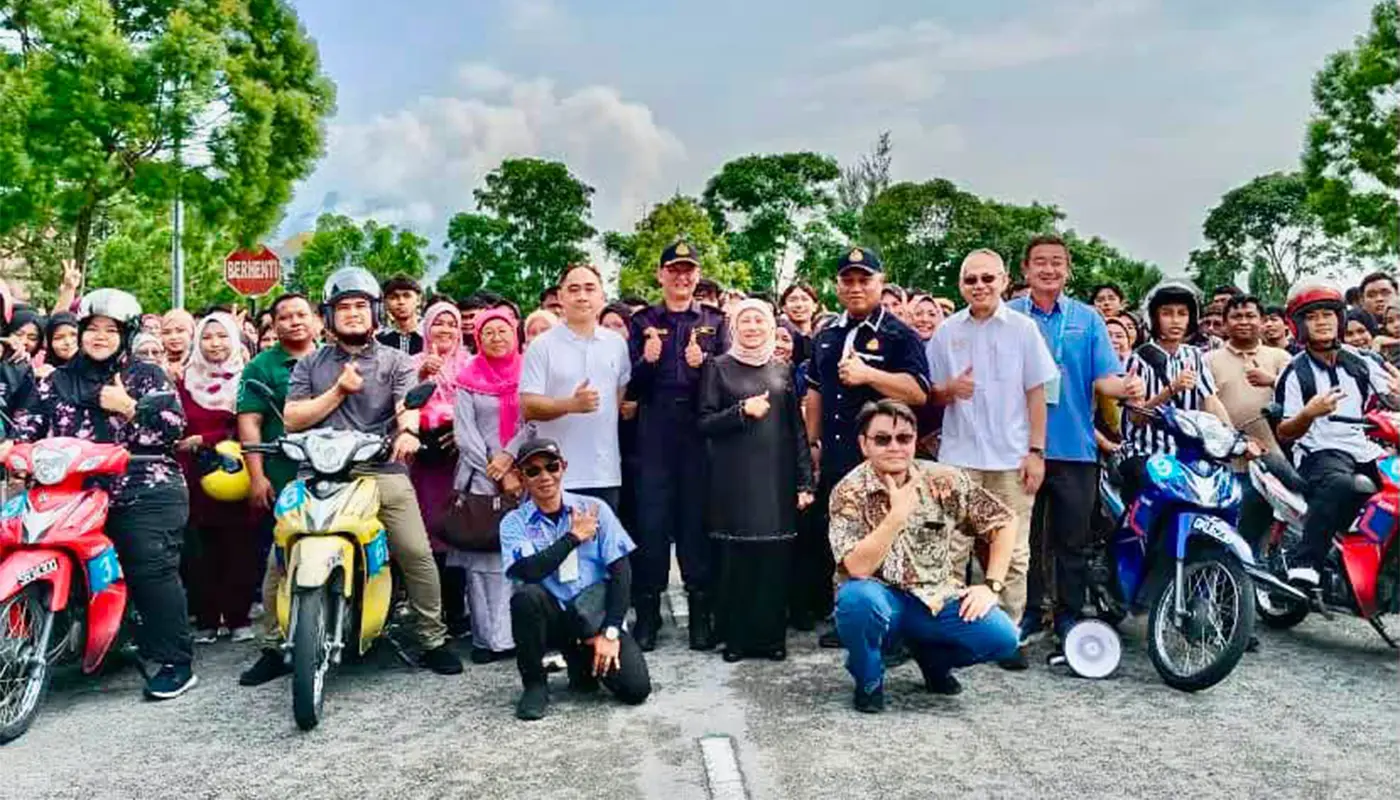
KUCHING – A major initiative to improve road safety and community mobility unfolded in Santubong this weekend, as hundreds of local residents participated in a specialised driving licence assistance scheme.

The event, held at CENTEX Kuching, focused on the practical assessment phase of the programme, offering a structured pathway for constituents to obtain valid Malaysian driving licences.
The programme is formally known as the P.193 Santubong Parliamentary Driving Licence Assistance Programme, or BLM.
It represents a concerted effort to remove barriers that often prevent individuals from securing their licences, such as cost or lack of access to training facilities.
By providing these opportunities, the organisers aim to foster a generation of drivers who are not only legally compliant but also highly competent and disciplined.
YB Dato’ Sri Hajah Nancy Shukri, the member of Parliament for P.193 Santubong and the Minister of Women, Family and Community Development of Malaysia, attended the event to show her support.
She took the opportunity to inspect the practical tests firsthand, ensuring that the procedures were being followed correctly.
Her presence allowed her to engage directly with the participants and the staff, highlighting the importance of such community-centric initiatives in empowering local residents.
The success of the programme relies on a strategic collaboration between several key stakeholders. The P.193 Santubong Parliamentary Service Center worked closely with the Sarawak Road Transport Department (JPJ) and the Santubong Driving Institute.
This partnership ensures that the training and testing meet all regulatory requirements while remaining accessible to the public.
The involvement of a dedicated driving institute provides the necessary technical expertise, while JPJ oversees the legal and procedural aspects of the licensing process.
Senior officers from the JPJ Sarawak Driver Licensing Division were present throughout the day to monitor the proceedings.
Alongside representatives from the Santubong Driving Institute, they ensured that every test was conducted in an orderly and fair manner.
Their oversight is crucial in maintaining the integrity of the licensing system, guaranteeing that only those who demonstrate sufficient skill and knowledge are granted the privilege to drive.
The primary goal of this assistance programme extends beyond the mere issuance of documents. It is deeply rooted in the objective of producing responsible road users who prioritise safety above all else.
In a region where traffic volumes are increasing, the need for prudent and integrity-based drivers has never been more critical.
By focusing on quality training, the programme aims to reduce the likelihood of accidents and promote a culture of caution on Sarawak’s roads.
JPJ Sarawak has expressed strong support for this collaborative model. The department hopes that such partnerships will be strengthened and expanded in the future, thereby widening access to legal driver licensing for more communities.
This approach aligns with broader national efforts to enhance road safety standards and ensure that all motorists are adequately prepared for the challenges of modern driving.
For many participants, the programme offers a vital opportunity to advance their personal and professional lives. A valid driving licence can open doors to better employment prospects and greater independence.
By alleviating the financial and logistical burdens associated with traditional licensing routes, the initiative serves as a significant boost to social mobility within the Santubong constituency.
The choice of CENTEX Kuching as the venue provided a suitable environment for the rigorous practical assessments.
The facility’s infrastructure allowed for a smooth flow of candidates through the various testing stations, minimising wait times and reducing stress for the learners.
This efficient organisation reflects the high level of planning and coordination involved in executing such a large-scale community project.
As the tests concluded, the focus shifted to the long-term impact of these efforts. By investing in driver education at the grassroots level, the organisers are contributing to a safer transport ecosystem for everyone.
The combination of government support, private sector expertise, and community engagement creates a robust framework for sustainable change.
This event stands as a testament to the power of targeted public service interventions. With hundreds of candidates now closer to achieving their licensing goals, the immediate benefits are evident.
However, the true measure of success will be seen in the years to come, as these newly licensed drivers navigate the roads with confidence, competence, and a deep respect for safety regulations.
