



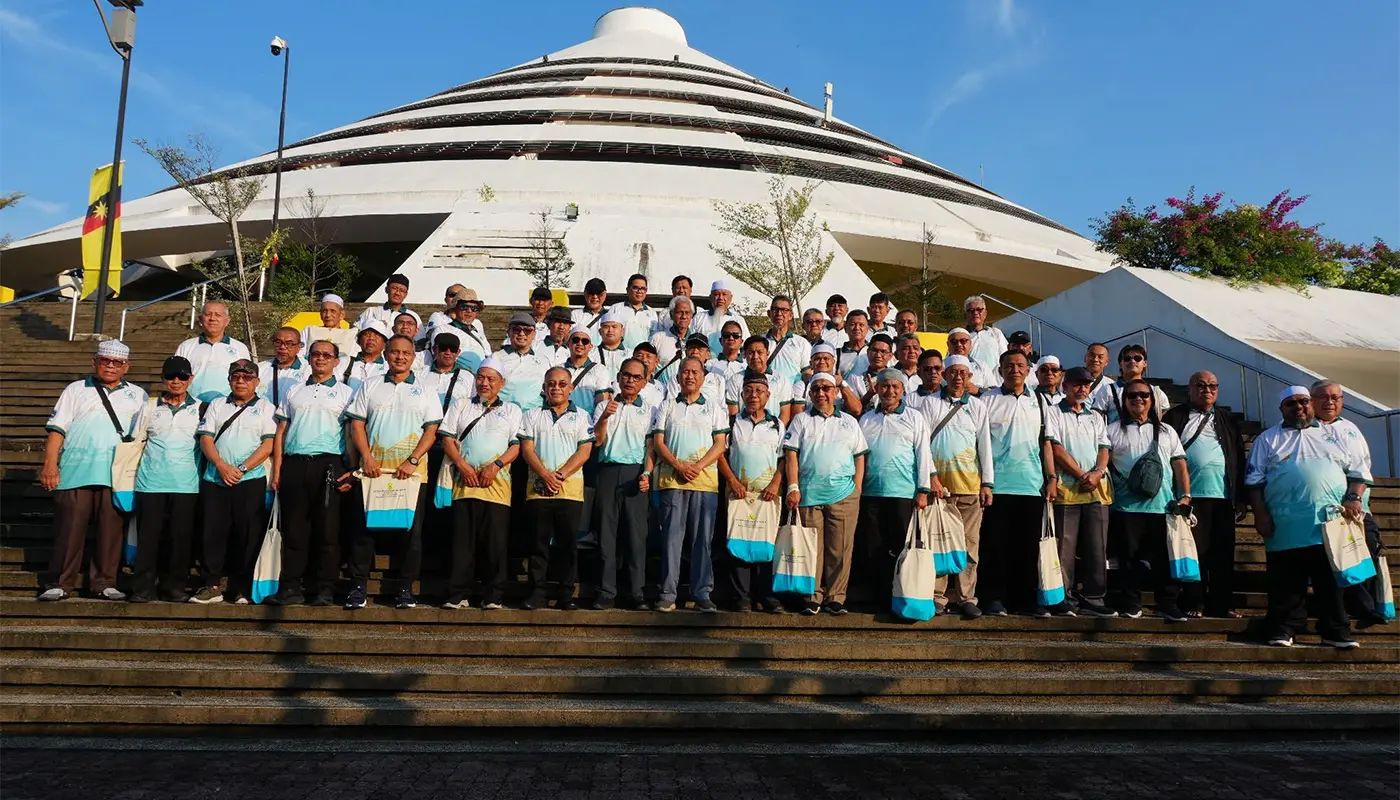
BINTULU – A significant cross-border exchange fostering regional ties took place at Wisma Bintulu on Wednesday as local authorities hosted a visiting delegation from Brunei Darussalam. The goodwill mission brought together community leaders and religious representatives to strengthen institutional bonds and share best practices in mosque administration across neighbouring territories.
Sixty-seven participants comprising takmir committee members and congregants from Rashidah Sa’adatul Bolkiah Mosque in Kampung Sungai Akar formed the core of the visiting party. They were accompanied by representatives from several other Bruneian mosques, creating a diverse group united by shared faith and mutual interest in community development. The three-day visit spanning 6 to 8 August 2026 provided ample opportunity for meaningful interaction beyond formal ceremonies.
Dato Haidar and Datu Haji Muhammad Yakup bin Kari, General Manager of the Bintulu Development Authority, jointly welcomed the guests alongside senior officers from the agency. Their presence underscored official commitment to nurturing transboundary relationships that extend beyond governmental channels into civil society domains. Such high-level engagement signals recognition of people-to-people connections as vital complements to diplomatic and economic partnerships.
The delegation’s theme, “One Journey, Thousand Memories of Brotherhood”, encapsulated the spirit animating all scheduled activities throughout their stay. This guiding philosophy emphasised experiential learning and emotional connection over transactional exchanges or superficial tourism. Participants sought genuine understanding of how Sarawakian Muslim communities organise worship, education, charity, and social services within their unique cultural context.
Knowledge sharing regarding mosque management formed a central pillar of the exchange programme. Discussions covered governance structures, financial sustainability, youth engagement strategies, maintenance protocols, and community outreach methodologies applicable across different administrative systems. Comparative insights enable both sides to adapt successful innovations whilst respecting contextual differences shaping institutional evolution in each jurisdiction.
Local mosque institutions served as primary sites for observational learning and interpersonal networking during the visit. Delegates toured facilities, observed prayer routines, engaged with resident imams and administrators, and participated in communal meals fostering informal dialogue. These immersive experiences proved more valuable than presentations alone in conveying lived realities of religious community organisation in contemporary Sarawak.
Wisma Bintulu itself functioned as both venue and symbol of developmental aspirations uniting host and guest communities. Tours of the authority’s headquarters showcased urban planning achievements, infrastructure projects, and socioeconomic initiatives transforming the region. Understanding broader development contexts helps religious leaders situate their own contributions within larger narratives of progress and wellbeing affecting their congregations.
A special dinner hosted by the Bintulu Development Authority provided relaxed setting for relationship building outside structured programming. Shared meals hold particular significance in Malay-Muslim cultures as occasions for bonding, storytelling, and expressing hospitality beyond formal protocol constraints. Culinary diplomacy often accomplishes relational work that official agendas cannot achieve through speeches or signed memoranda alone.
Cross-border religious exchanges carry historical depth predating modern nation-state boundaries in Borneo. Traditional networks of scholars, traders, pilgrims, and migrants have long connected coastal communities across what are now international borders. Contemporary programmes consciously revive these organic linkages whilst adapting them to current institutional frameworks and communication technologies enabling sustained collaboration.
Youth participation ensures intergenerational continuity of friendships forged during such visits. Younger attendees bring fresh perspectives, digital literacy, and energy complementing elder wisdom and institutional memory. Mixed-age delegations prevent exchanges from becoming nostalgic exercises disconnected from future-oriented community needs requiring innovative solutions and adaptive leadership capacities.
Documentation and follow-up mechanisms transform episodic encounters into enduring partnerships yielding tangible outcomes beyond sentimental recollections. Joint projects, staff exchanges, resource sharing agreements, and regular communication channels institutionalise goodwill generated during intensive face-to-face interactions. Sustainable cooperation requires deliberate investment in maintenance infrastructure matching initial enthusiasm with operational discipline.
Mutual appreciation expressed by hosts acknowledges effort undertaken by visitors travelling considerable distances despite logistical challenges. Recognition validates sacrifices made by volunteers balancing religious duties, employment responsibilities, and family commitments to participate in collective endeavours serving broader communal interests. Gratitude reinforces reciprocal obligations underpinning authentic brotherhood rather than performative courtesy masking indifference.
Regional integration benefits from grassroots connections supplementing top-down policy coordination amongst governments. Trust built through personal relationships enables smoother navigation of bureaucratic complexities when pursuing joint initiatives addressing shared challenges like disaster response, environmental protection, or cultural preservation. People-centred approaches humanise abstract concepts of regionalism making them relevant to everyday lives.
Religious institutions increasingly serve as platforms for soft diplomacy advancing national interests through authentic cultural expression rather than instrumental manipulation. Genuine faith-based exchanges resist reduction to geopolitical calculations precisely because they originate from sincere spiritual motivations transcending political expediency. Authenticity preserves credibility essential for lasting influence in an era sceptical of manufactured narratives.
Future collaborations may expand beyond mosque management to encompass education, healthcare, entrepreneurship, arts, and environmental stewardship reflecting holistic understandings of community wellbeing. Faith traditions offer ethical frameworks and motivational resources applicable to diverse development challenges requiring moral imagination alongside technical expertise. Integrated approaches honour complexity of human flourishing better than siloed interventions addressing symptoms without engaging root causes.
