



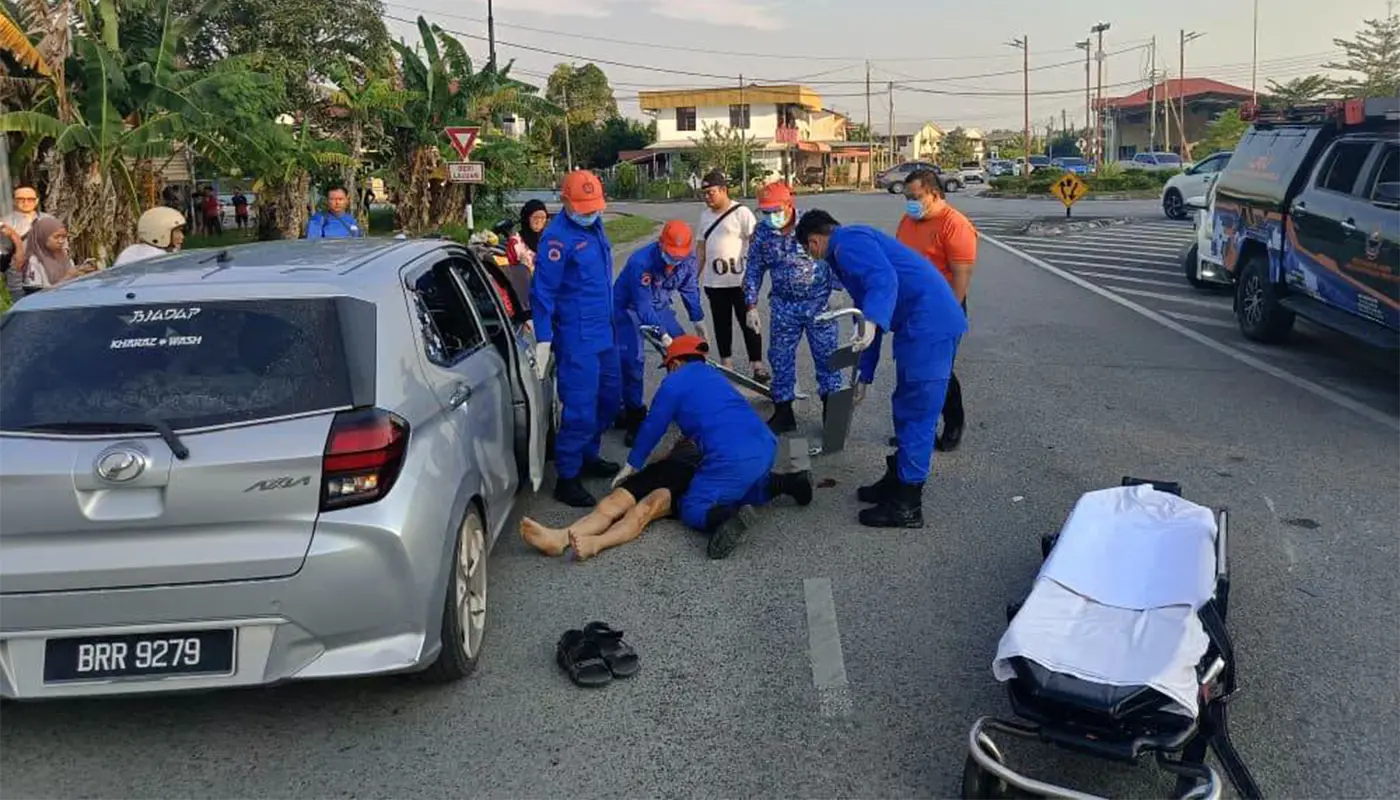
SARIKEI – Rapid intervention by local emergency responders ensured timely medical assistance for an individual injured in a traffic collision on Friday. The incident occurred along Jalan Siew Ah Koon, prompting immediate deployment of civil defence personnel following notification from healthcare authorities.

Hospital staff initiated the emergency request after receiving preliminary information about the roadside accident. This direct communication channel between medical facilities and first responder units enabled swift mobilisation without delay. Such coordinated alert systems prove vital in reducing response times for time-sensitive injuries sustained in vehicular crashes.
The MyASPA-O Alpha squad was dispatched instantly upon receipt of the call to provide on-scene first aid. Their rapid arrival at the location demonstrated operational readiness and geographic coverage effectiveness within the district. Pre-positioned resources and trained volunteers allow civil defence organisations to complement formal ambulance services during peak demand periods.
Upon reaching the scene, team members conducted a thorough initial assessment of the casualty. Examination revealed facial trauma alongside dental injuries requiring specialised medical attention beyond field capabilities. Accurate triage at the incident site ensures appropriate destination selection and pre-arrival notification to receiving hospital departments.
Stabilisation measures were administered before transporting the patient to hospital for definitive care. First responders focused on controlling bleeding, protecting compromised airways, and minimising movement that could exacerbate spinal or cranial injuries. These foundational interventions bridge the critical gap between injury occurrence and advanced clinical treatment.
Safe transfer to the medical facility followed established protocols for trauma patients. Handover procedures included verbal briefing and documentation exchange to ensure continuity of care upon arrival. Seamless transitions between pre-hospital and hospital-based providers significantly influence patient outcomes in acute injury scenarios.
Facial and dental trauma presents unique challenges due to potential airway compromise and cosmetic implications. Swelling, fractured bones, or dislodged teeth can obstruct breathing passages if not managed properly during early phases. Trained first aiders recognise these risks and adjust positioning and monitoring accordingly during transport.
Community safety benefits substantially from visible emergency service presence and demonstrated competence. Residents gain confidence knowing that skilled assistance remains accessible when unexpected incidents occur. Public trust in local response capacity encourages earlier reporting and greater cooperation during active operations.
Training programmes for civil defence volunteers emphasise practical skills relevant to common regional hazards. Regular drills covering extrication techniques, wound management, and patient handling maintain proficiency despite infrequent real-world activations. Continuous learning adapts curricula to emerging best practices and equipment innovations.
Equipment standardisation across squads ensures interoperability and familiarity during multi-agency responses. Uniform kits containing bandages, splints, cervical collars, and communication devices enable predictable performance regardless of which unit attends. Logistics planning accounts for replenishment cycles to prevent stockouts during extended deployments.
Volunteer commitment forms the backbone of auxiliary emergency services throughout Sarawak. Individuals balance civilian employment or studies with unpaid service obligations driven by civic responsibility. Recognition and appreciation from communities help sustain motivation and recruitment pipelines essential for organisational resilience.
Inter-agency collaboration enhances overall emergency management effectiveness beyond individual organisational boundaries. Police, fire services, hospitals, and civil defence share information and coordinate actions through established command structures. Integrated approaches prevent duplication whilst filling capability gaps during complex incidents.
Post-incident reviews provide valuable feedback loops for continuous improvement. Analysis of response timelines, clinical decisions, and resource utilisation identifies strengths and areas needing refinement. Institutional learning transforms isolated experiences into systemic enhancements benefiting future patients and responders alike.
Public education initiatives complement reactive response capabilities by promoting preventative behaviours. Awareness campaigns targeting seatbelt use, helmet compliance, speed adherence, and impaired driving address root causes of road trauma. Informed citizens become partners in reducing preventable injuries rather than passive recipients of emergency care.
Infrastructure improvements also contribute to collision reduction alongside behavioural interventions. Road geometry corrections, signage upgrades, lighting enhancements, and barrier installations mitigate environmental risk factors. Multi-pronged strategies combining engineering, enforcement, and education yield sustainable safety gains over time.
Data collection from individual incidents feeds into broader surveillance systems tracking injury patterns and response performance. Trend analysis informs policy decisions regarding resource allocation, training priorities, and legislative reforms. Evidence-based governance ensures public investments align with actual community needs and measurable outcomes.
