



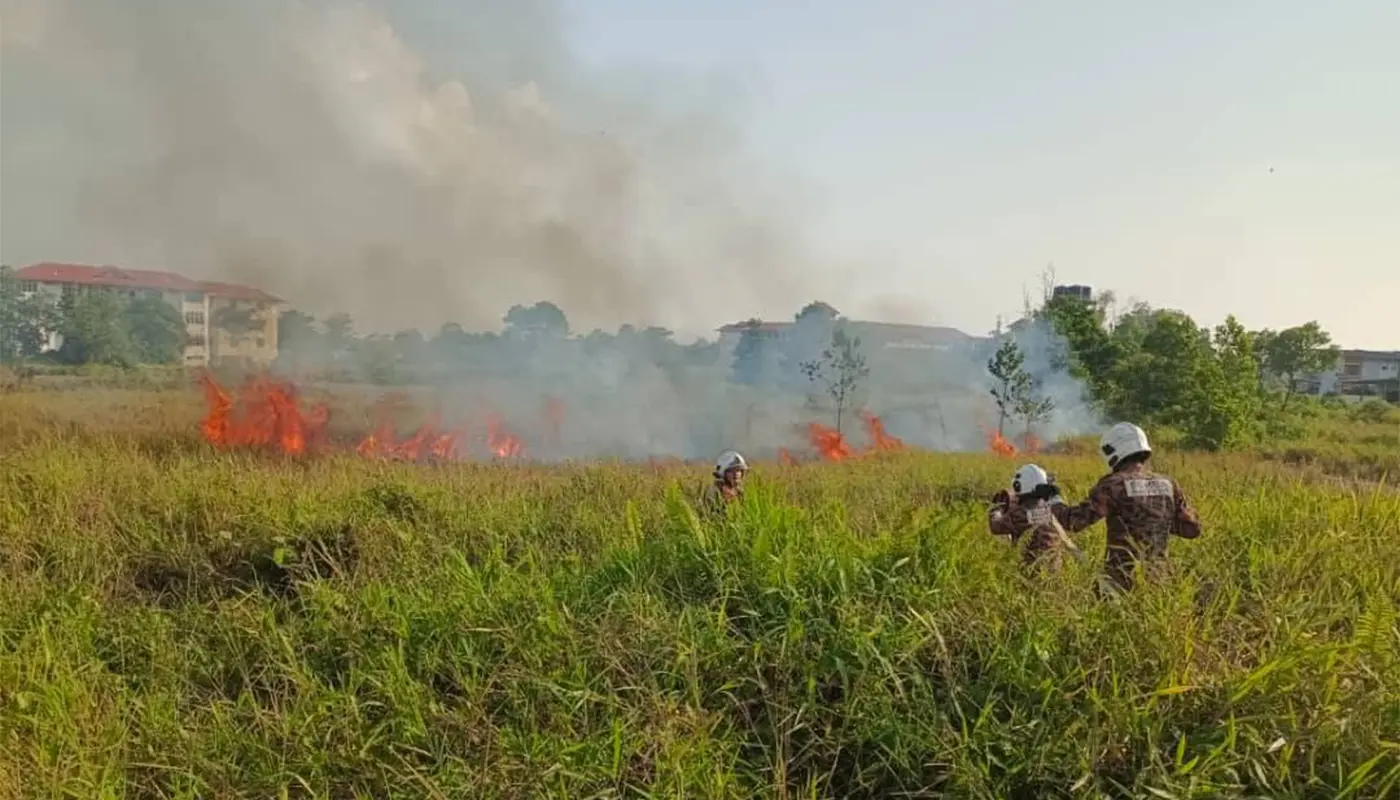
SIBU JAYA – Emergency responders successfully contained a vegetation fire that engulfed approximately one acre of land at a religious premises on Friday. The incident occurred at the Sibu Jaya Methodist Church, prompting a swift deployment from the local fire station to prevent further spread and protect surrounding structures.

Personnel from the Bravo Team at the Sibu Jaya Fire and Rescue Station arrived promptly at the scene after being dispatched from their base located just two kilometres away. Rapid response times proved critical in managing the blaze before it could escalate or threaten adjacent properties in the vicinity. The proximity of the station to the incident site facilitated this efficient mobilisation.
Upon arrival, the operational commander conducted an immediate size-up assessment to evaluate the situation. This initial survey confirmed that open burning had consumed over one acre of ground as originally reported by the complainant. Accurate situational awareness enabled the team to formulate an appropriate suppression strategy tailored to the specific conditions encountered.
Safety protocols were strictly enforced throughout the intervention. The commanding officer directed all crew members to don full personal protective equipment before engaging with the flames. Adherence to these standards ensured that firefighters remained protected against heat exposure, smoke inhalation, and other hazards inherent to wildland firefighting operations.
Suppression efforts utilised a single hose line stretching three hundred feet from the primary appliance. Water was drawn directly from the onboard tank of the LFRT Atego vehicle bearing registration BJU 6191. This self-contained approach eliminated dependency on external hydrants, which may not be readily available near open land areas.
The firefighting operation continued methodically until the flames were completely extinguished. Crews worked systematically across the affected area to eliminate hotspots and prevent rekindling. Thorough overhaul procedures followed active suppression to ensure no residual combustion remained beneath surface debris or vegetation.
Following confirmation that the site was safe and secure, the operational commander authorised withdrawal from the scene. All personnel and equipment returned to the station without further incident. Post-incident checks verified that machinery remained in good working order and ready for subsequent emergency calls.
Alexander served as both supervisor and operation commander for this deployment, overseeing tactical decisions and crew welfare. Shaufik operated the appliance as the driver, ensuring safe transit and optimal positioning at the scene. Their leadership and technical competence contributed significantly to the mission’s successful outcome.
Four additional firefighters supported frontline suppression activities during the engagement. Aziz, Kelvin, Syakirin, and Syamsu executed hose handling, water application, and perimeter monitoring tasks under supervision. Their coordinated efforts exemplified effective teamwork essential to controlling open-area fires efficiently.
Control room operator Edika managed communications and resource coordination from the dispatch centre. Continuous liaison between field units and headquarters maintained situational awareness and enabled rapid escalation if circumstances deteriorated. Reliable command-and-control infrastructure remains fundamental to effective emergency management.
Vegetation fires in semi-urban zones pose unique challenges due to potential interface with built environments. Dry weather conditions can accelerate flame spread through grass and scrub, demanding vigilant monitoring even after apparent containment. Public awareness regarding outdoor burning restrictions helps reduce ignition risks during susceptible periods.
Community appreciation has been expressed for the professionalism displayed by responding crews. Residents value the combination of technical skill, prompt attendance, and courteous conduct demonstrated during emergencies. Such positive feedback reinforces morale and strengthens public confidence in emergency services.
Preventative measures remain equally important alongside reactive capabilities. Regular maintenance of firebreaks around institutional properties can limit fuel loads available to accidental ignitions. Collaboration between facility managers and fire authorities enhances preparedness and reduces vulnerability to landscape fires.
Training exercises frequently simulate scenarios similar to this incident to maintain operational readiness. Practical drills reinforce hose deployment techniques, water conservation strategies, and safety discipline under pressure. Continuous skill development ensures teams can adapt to varying terrain and fuel types encountered in real incidents.
Resource allocation reflects strategic planning based on historical incident patterns and risk assessments. Station placement, apparatus specifications, and staffing levels are calibrated to meet anticipated demands within each jurisdiction. Data-driven decision-making optimises coverage whilst maximising return on public investment.
Inter-agency cooperation sometimes augments fire service capacity during large-scale events. Police, civil defence volunteers, and municipal workers may assist with traffic control, evacuation support, or auxiliary suppression when required. Integrated response frameworks enhance community resilience against multi-faceted emergencies.
Post-incident reviews provide valuable learning opportunities for continuous improvement. Analysis of tactical decisions, equipment performance, and communication effectiveness identifies strengths and areas for refinement. Institutional knowledge accumulated through such evaluations elevates future operational standards.
Public education initiatives complement enforcement and response functions in comprehensive fire safety programmes. Outreach efforts target schools, residential associations, and commercial entities to disseminate prevention messages widely. Informed communities become active partners in reducing overall risk exposure.
