



KUCHING – The local government administration in the northern sector of the state capital has taken a significant step forward in its transition towards greener governance.

In a bid to institutionalise highly efficient and environmentally sustainable power consumption patterns, the North Kuching City Hall (DBKU) has formally launched a strategic capacity-building initiative targeted at fully adopting the prestigious ISO 50001:2018 international benchmark.
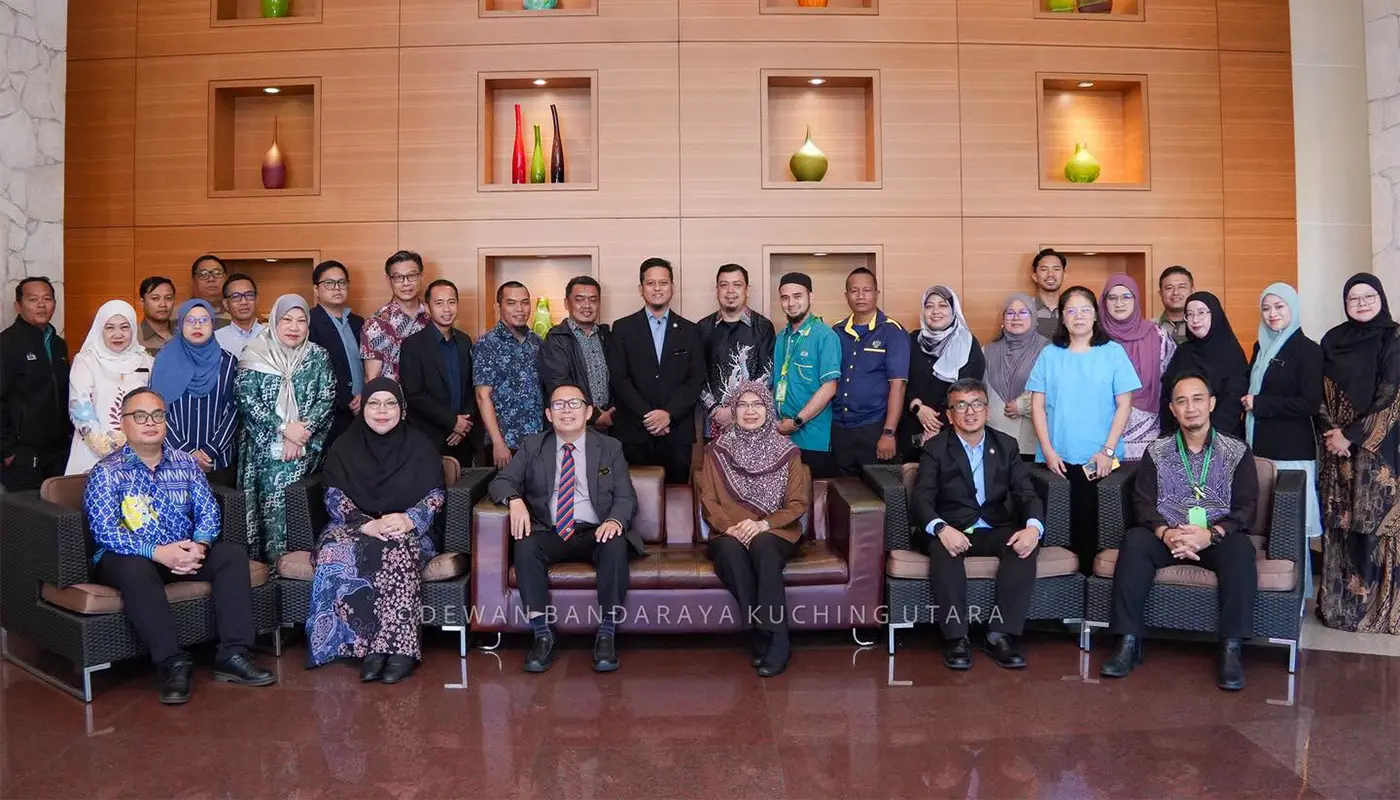
As part of this ongoing transition, the municipal council orchestrated a specialized two-day workshop focusing on the core principles and rigorous internal audit practices required by the Energy Management System (EnMS).
The intensive training program, which concluded at the Hock Lee Hotel and Residence, was specifically designed to equip municipal personnel with the technical competencies needed to monitor, review, and lower the organization’s carbon footprint.
The educational sessions were facilitated by Puan Sarimah Othong, a leading industry expert from SIRIM Academy Sdn. Bhd., who guided the participants through the complex regulatory frameworks governing modern energy conservation.
The workshop drew a targeted cohort of DBKU administrative and technical officers whose day-to-day portfolios directly intersect with the roll-out and supervision of the city’s green policies.
Marking the formal commencement of the training initiative, the opening ceremony was presided over by the Director of DBKU, Encik Ramzi bin Abdillah.
His presence underscored the high level of institutional priority being placed on restructuring municipal operations to align with international ecological standards, reflecting a broader regional push toward sustainable urban development.
The strategic implementation framework for the ISO 50001:2018 protocol within the council covers a well-defined operational scope.
The primary parameters for certification dictate the establishment of a comprehensive energy management oversight system tailored specifically to the maintenance, daily routines, and building operations of both the central DBKU Headquarters and its various subsidiary branch offices.
By embedding these stringent international criteria into their administrative architecture, DBKU aims to construct a highly systematic approach to utility consumption.
The overarching strategy relies heavily on maximizing current resource allocation, eliminating systemic waste across the grid, and upgrading general operational output, which in turn reduces unnecessary municipal expenditures.
Beyond immediate financial and administrative benefits, this systemic overhaul directly feeds into the state’s broader sustainable development master plan.
By actively driving down corporate electricity demand and optimizing internal infrastructure, the local authority is positioning itself to effectively mitigate the long-term socioeconomic challenges associated with global climate change.
A pivotal theme emphasized throughout the training was the strategic mobilization of internal auditors, who are increasingly viewed as essential drivers for institutional evolution.
Rather than merely acting as compliance checkers, these trained officers are tasked with bolstering corporate governance and identifying potential financial or structural risks before they impact municipal services.
Through the deployment of regular, objective internal assessments, the council intends to identify operational bottlenecks, systemic weaknesses, and areas of regulatory non-compliance at an early stage.
This proactive stance ensures that the newly adopted framework remains dynamically aligned with evolving green targets and achieves its long-term environmental objectives.
Looking ahead, the senior leadership at DBKU has expressed optimistic expectations that the specialized skills and theoretical knowledge accumulated during the workshop will be seamlessly integrated into daily municipal workflows.
There is an ongoing mandate for these trained officers to disseminate their insights across all departments, fostering a collective corporate culture rooted firmly in conservation and civic sustainability.
