



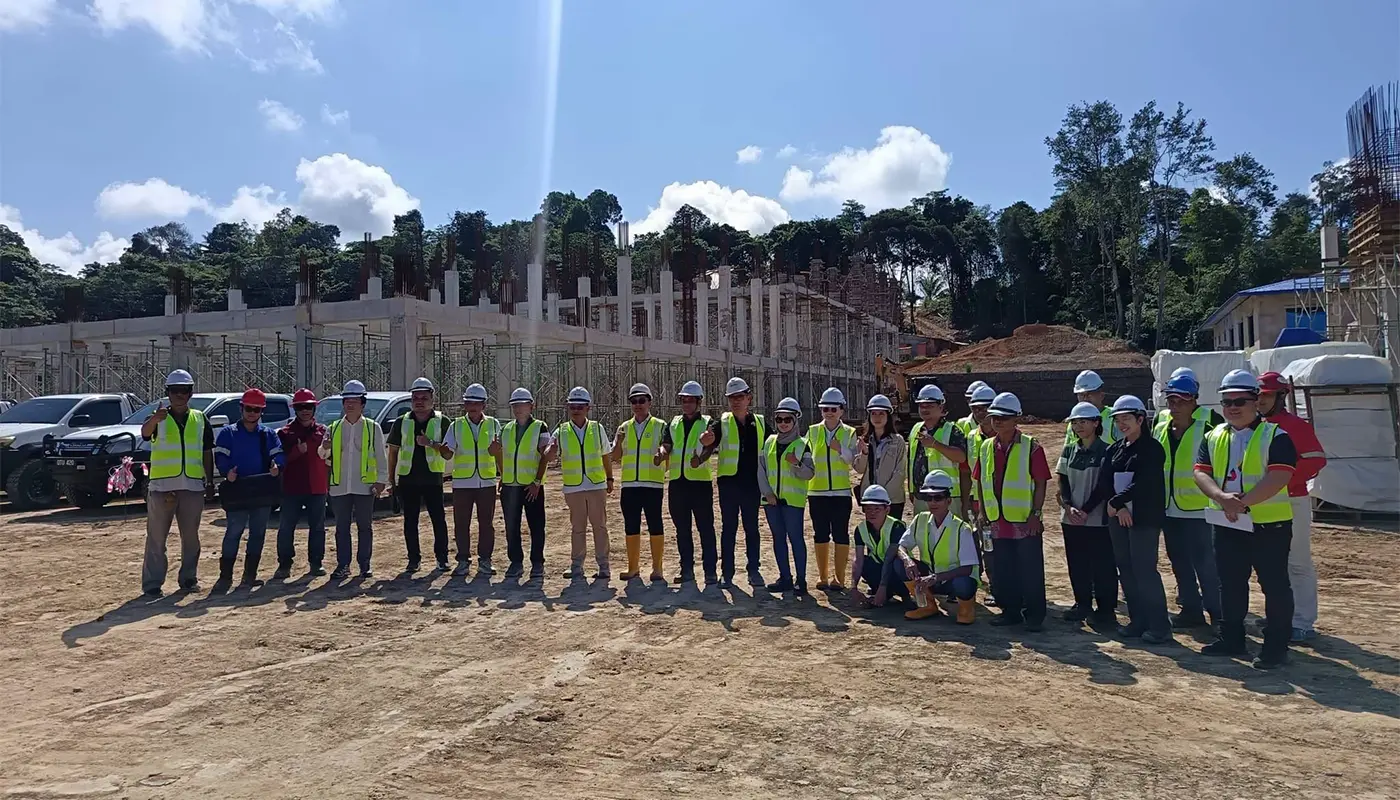
BINTULU – The construction of the Tubau Water Treatment Plant, a critical infrastructure project aimed at improving water accessibility for rural communities in the Bintulu Division, was the focus of a high-level monitoring visit on Saturday, 18 July 2026.

Yang Berhormat Kennedy Chukpai Ugon, the Assemblyman for N66 Murum, led the delegation to assess the latest developments and ensure the project remains on track.
The visit provided an opportunity for key stakeholders to review the physical progress of the site and address any logistical or technical challenges.
Accompanying the Assemblyman were Mr. Lai Kien Hong, the Divisional Water Engineer for the Bintulu Division Rural Water Supply Department, along with project consultants and contractors responsible for the execution of the works.
Significantly, the inspection also included active participation from local community representatives. Community leaders, tribal headmen, and representatives from various longhouses in the Tubau area were present, underscoring the importance of community engagement in major public infrastructure projects.
Their presence ensured that the voices of the end-users were heard and that their specific concerns regarding the timeline and quality of the supply could be addressed directly by the implementing agencies.
The Jurus Binaan Air Lestari Berhad (JBALB) Bintulu branch played a pivotal role in facilitating the visit. The agency coordinated the site tour and provided a comprehensive briefing on the current status of the construction.
This transparency is vital for maintaining public trust and ensuring that the local population remains informed about the benefits they can expect once the facility becomes operational.
The project, officially titled the “Sarawak Water Supply Grid Water Program – Stressed Area Proposed Water Supply Along Bakun Road From Labang To Tubau Areas, Bintulu Division (Package 2),” represents a significant investment in the region’s utility infrastructure.
It includes the construction of the Tubau Water Treatment Plant, which is designed to provide a consistent and clean water supply to areas that have historically faced shortages or relied on less reliable sources.
For residents in the Tubau and Labang areas, access to treated pipe water has been a long-standing aspiration.
The completion of this plant promises to alleviate daily hardships associated with water scarcity, thereby improving overall hygiene, health, and quality of life.
The Assemblyman expressed gratitude to all parties involved for their dedication to delivering this essential service. During the visit, prayers were offered for the successful and timely completion of the project.
The collective hope is that the infrastructure will be handed over soon, allowing the community to finally enjoy the clean water supply they have awaited for years.
This sentiment reflects the broader state agenda of ensuring equitable development across urban and rural divides.
The inclusion of local leaders in the monitoring process highlights a collaborative approach to governance.
By involving tribal heads and longhouse representatives, the authorities ensure that the project aligns with local needs and that any potential disruptions during the construction phase are managed with cultural sensitivity and community cooperation.
As the construction progresses, the focus remains on maintaining high standards of safety and quality. The involvement of professional engineers and experienced contractors aims to deliver a robust facility capable of meeting the growing demands of the population in the Bakun Road corridor.
This initiative is part of the wider Sarawak Water Supply Grid expansion, which seeks to connect remote areas to a centralised and reliable water network.
The success of Package 2 will serve as a benchmark for future rural water supply projects in the division, demonstrating the state’s commitment to modernising basic amenities for all citizens.
The Assemblyman concluded the visit with messages of unity and progress, echoing slogans such as “Sarawakku Sayang” and “Malaysia MADANI”.
These themes reinforce the idea that infrastructure development is not just about building facilities but about fostering a society where every citizen has access to the basic necessities required for a dignified and prosperous life.
