



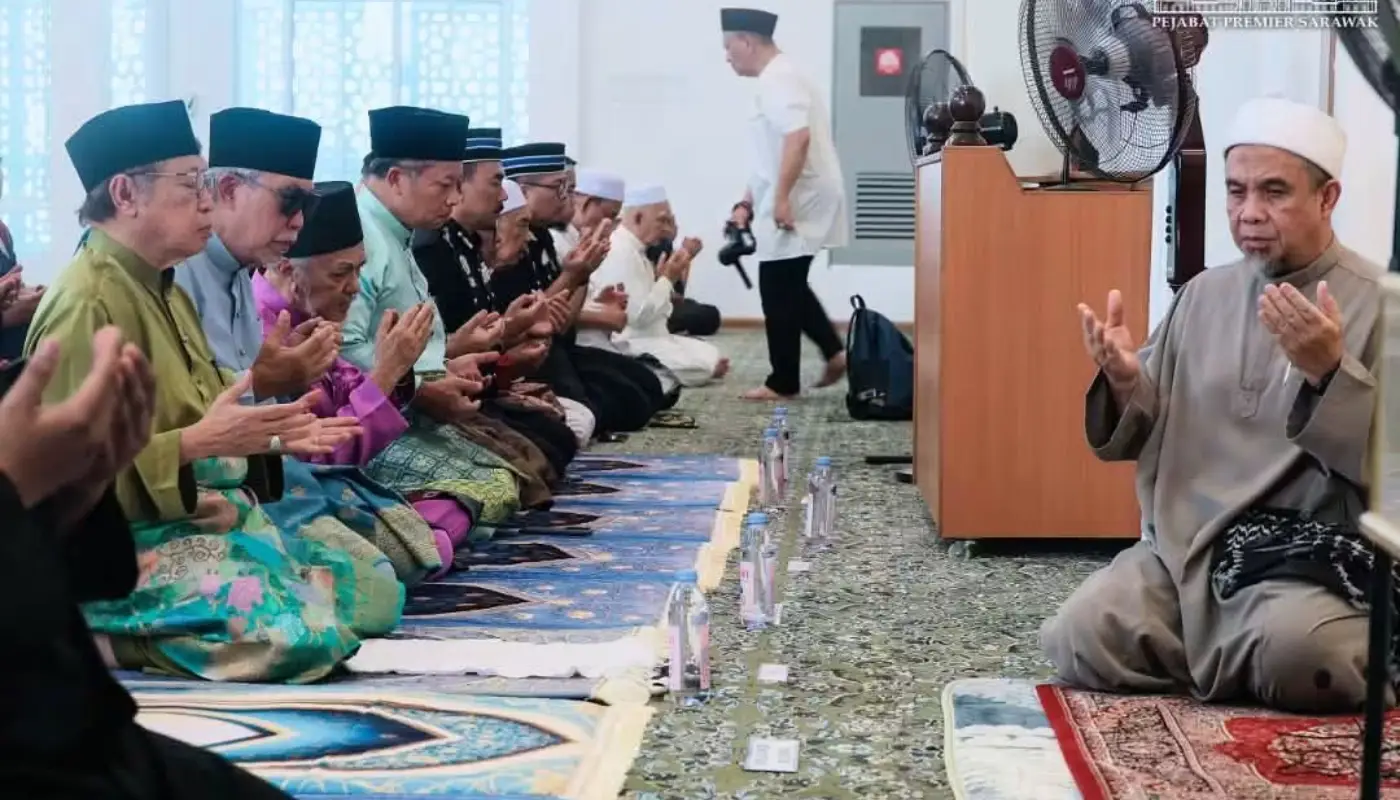
SARIKEI – The Premier of Sarawak, Datuk Patinggi Tan Sri Dr Abang Haji Abdul Rahman Zohari bin Tun Datuk Abang Haji Openg, joined local worshippers for the weekly congregational prayers at the Al-Muttaqin Mosque this afternoon. His attendance in the town served as a significant moment of spiritual observance and civic connection within the division.

The state leader reached the place of worship shortly after half past twelve in the afternoon. Upon arrival, he proceeded directly to participate in the religious rites alongside the assembled faithful. This visit allowed him to engage personally with residents in a setting dedicated to devotion and communal reflection.
Prior to the commencement of the main prayer service, attendees listened to a sermon focused on themes of development and gratitude. The religious address was delivered by the Grand Imam of Sarawak, Sahibul Fadilah Dato Haji Mustapha Kamal bin Haji Ahmad Fauzi. His message encouraged the congregation to appreciate the blessings associated with regional progress and infrastructure improvements.
Such visits by senior government officials are often viewed as vital opportunities to reinforce social bonds outside of formal administrative settings. By sharing in these religious duties, the Premier demonstrated a commitment to maintaining close relationships with the people of Sarikei. It provided a platform for interaction that transcends typical political engagements, fostering a sense of shared identity and mutual respect.
Following the conclusion of the formal prayers, Abang Johari remained at the mosque to converse with those present. He took time to greet individuals and exchange pleasantries with members of the local community. These informal interactions are frequently cited as essential components of grassroots leadership, allowing officials to gauge public sentiment in a relaxed environment.
The atmosphere within the mosque was described as one of unity and peaceful worship. Residents expressed appreciation for the presence of their elected representative during such a significant weekly ritual. Events of this nature help to bridge the gap between governance and daily life, ensuring that leadership remains visible and accessible to ordinary citizens.
Religious institutions in Sarawak have long played a central role in community cohesion beyond their primary spiritual function. They serve as gathering points where social networks are strengthened and local issues can be discussed organically. When political leaders participate in these spaces, it signals an acknowledgement of the importance of faith-based community structures in the broader societal fabric.
The sermon’s focus on development aligns with ongoing state initiatives aimed at improving living standards across rural and semi-urban areas. Gratitude for such advancements is a recurring theme in local religious discourse, linking material progress with spiritual thankfulness. This perspective helps to contextualise government projects within the cultural and moral framework valued by the population.
Observers note that consistent engagement with constituents through non-political channels builds trust over time. While policy announcements and official launches have their place, the quiet solidarity shown during communal worship carries its own distinct weight. It humanises leadership and reinforces the idea that representatives share in the same traditions and values as those they serve.
The Al-Muttaqin Mosque continues to be a focal point for religious and social activities in the area. Its capacity to host large gatherings makes it an ideal venue for events that bring together diverse segments of the local population. Visits by high-ranking officials further elevate its status as a key institution within the district.
As the Premier departed, the mood among worshippers appeared positive and reflective. Such encounters leave a lasting impression that extends well beyond the immediate timeframe of the visit. They contribute to a narrative of inclusive governance where spiritual and civic life intersect meaningfully.
Community leaders in Sarikei have previously highlighted the value of having state-level representation during important religious occasions. It affirms the significance of the locality within the wider state agenda. Furthermore, it provides reassurance that the concerns and aspirations of smaller towns remain on the radar of top decision-makers.
Looking ahead, similar engagements are expected to continue as part of the administration’s outreach strategy. Maintaining this rhythm of interaction ensures that communication flows both ways between government and populace. Ultimately, these moments of shared prayer and conversation form the bedrock of stable and responsive local governance in Sarawak.
