



KUCHING – A significant step towards regional economic integration and environmental sustainability was taken in late July 2026, as a high-level delegation from Sabah arrived in Sarawak for a strategic working visit.

The primary objective of the mission was to foster deeper cooperation between the two states in the development and expansion of the bamboo industry, a sector increasingly recognised for its potential in driving a green economy.
The visit, which took place on the twenty-eighth and twenty-ninth of July, saw representatives from key Sabahan agencies engaging with the Sarawak Timber Industry Development Corporation, known locally as PUSAKA.
The delegation comprised officials from the Sabah State Development Office (ICU), the Sabah Foundation, and the Sabah Handicraft Center. Their presence in Kuching underscored a shared commitment to leveraging natural resources for sustainable economic growth.
Upon their arrival, the visitors were warmly received by Ms. Hajah Haluyah Awi, the Deputy General Manager of PUSAKA. Her role in facilitating the dialogue highlighted the corporation’s proactive stance in building cross-border partnerships.
The Sabah contingent was led by Yang Berbahagia Datuk Samsul Dollah, the Director of the State Development Office (ICU) under the Sabah Prime Minister’s Department.
Joining him was Yang Berusaha Tuan Haji Hanafiah Diman, the Corporate Secretary of Yayasan Sabah, who represented both the foundation and the Sabah Handicraft Center.
The agenda for the two-day visit was comprehensive, designed to provide the Sabah delegates with a holistic understanding of Sarawak’s advancements in bamboo cultivation and processing.
PUSAKA officials presented detailed insights into their operational framework, covering critical aspects such as agricultural planting techniques, research and development initiatives, and the integration of modern technology in farm management.
A significant portion of the discussions focused on the downstream sector, where raw bamboo is transformed into value-added products. This area is crucial for maximising economic returns and creating employment opportunities within rural communities.
By sharing these insights, PUSAKA aimed to demonstrate how scientific approaches and technological innovation can elevate the bamboo industry from traditional practices to a modern, competitive sector.
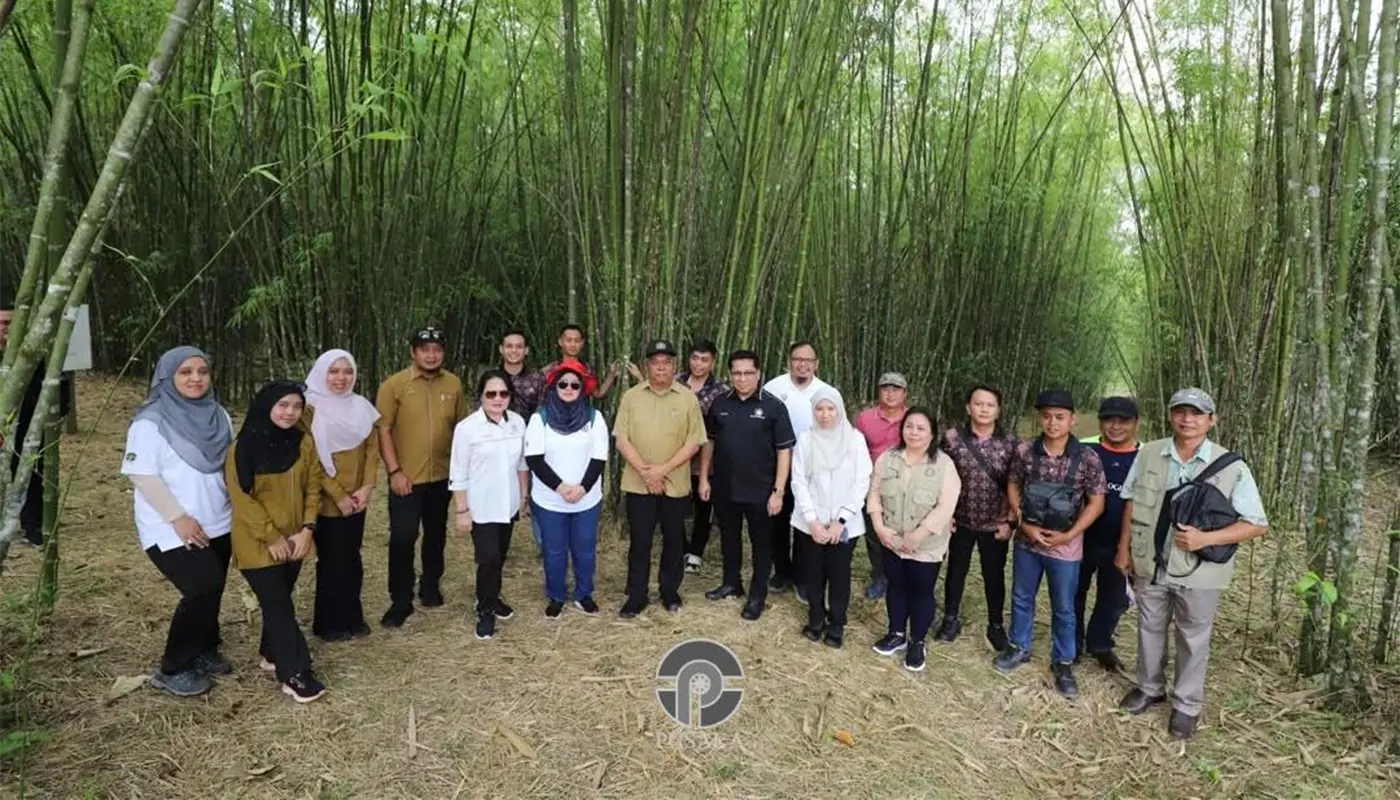
To complement the theoretical presentations, the delegation embarked on a technical field trip to the Sabal Forest Reserve in Simunjan. Here, they visited PUSAKA’s Trial Plot and Bamboo Nursery, gaining first-hand exposure to practical farm management practices.
The site served as a living laboratory where delegates could observe the development of plant materials and the meticulous care required to ensure high-quality yields.
During the tour, the Sabah officials witnessed PUSAKA’s efforts to strengthen the entire value chain of the bamboo industry. Emphasis was placed on sustainable methods that protect the environment while ensuring long-term resource availability.
This hands-on experience allowed the visitors to appreciate the complexities of large-scale bamboo cultivation and the importance of adhering to best practices in agronomy.
The visit also served as a vital platform for knowledge exchange. PUSAKA shared its expertise and accumulated experience, offering valuable lessons that could be adapted to the specific conditions in Sabah.
Such collaboration is essential for avoiding duplication of efforts and accelerating progress in both states. By learning from each other’s successes and challenges, Sabah and Sarawak can develop more robust strategies for industry growth.
A key component of this partnership is the implementation of the Bamboo and Rattan Raw Materials Planting Apprenticeship Program. This initiative involves officials from the Sabah Foundation and participants from the Sabah Handicraft Center, who are receiving training and guidance from Sarawakian experts.
The programme aims to build human capital and ensure that there is a skilled workforce capable of managing bamboo plantations and processing facilities effectively.
This recent visit builds upon a formal agreement established between the two states. Last year, PUSAKA and Yayasan Sabah signed a Memorandum of Understanding (MoU) to solidify their joint commitment to the sustainable development of the bamboo industry.
The MoU outlined several areas of collaboration, including joint research projects, technology transfer mechanisms, human capital development, and sustainable resource management.
The renewal of energy and focus demonstrated during this latest visit suggests that both parties are eager to move beyond preliminary stages and into active implementation. The synergy between Sabah’s handicraft expertise and Sarawak’s agricultural and processing capabilities creates a complementary relationship that benefits both regions.
Sabah’s strong tradition in crafting bamboo products can be supported by a steady supply of high-quality raw materials developed through Sarawak’s advanced farming techniques.
Both delegations expressed optimism about the future of this strategic collaboration. They view the bamboo industry not just as a source of income but as a driver of a competitive green economy.
As global demand for sustainable and eco-friendly materials rises, bamboo offers a viable alternative to timber and plastic.
Its rapid growth rate and low environmental footprint make it an ideal crop for addressing climate change concerns while supporting livelihoods.
The alignment of this initiative with broader sustainable development agendas in both Sabah and Sarawak is evident. By prioritising environmentally friendly practices, the states are positioning themselves as leaders in sustainable forestry and agriculture.
This approach attracts investment and enhances the reputation of their products in international markets, where consumers are increasingly conscious of the ecological impact of their purchases.
The involvement of the Sabah Handicraft Center highlights the cultural and artistic dimensions of the industry. Bamboo has long been a staple material in traditional crafts, and enhancing its production ensures the preservation of these cultural heritage skills.
At the same time, introducing modern design and processing techniques can help artisans create contemporary products that appeal to wider audiences.
Furthermore, the participation of the Sabah State Development Office indicates strong governmental support for the initiative. The ICU’s role in coordinating state development projects ensures that the bamboo industry receives the necessary policy backing and infrastructure support.
This top-down approach, combined with bottom-up engagement from farmers and artisans, creates a comprehensive ecosystem for industry growth.
As the delegation concluded their visit, the sense of mutual benefit was palpable. The exchange of ideas and experiences has laid a solid foundation for future joint ventures. Both sides acknowledged that while challenges remain, such as market access and initial investment costs, the potential rewards far outweigh the risks.
The success of this collaboration could serve as a model for other sectors and other regions in Malaysia. It demonstrates how state-owned entities can work together to overcome common hurdles and achieve shared goals.
By pooling resources and knowledge, Sabah and Sarawak are setting a precedent for inter-state cooperation that prioritises sustainability and economic resilience.
Looking ahead, the focus will likely shift to scaling up pilot projects and expanding the apprenticeship program. Continuous monitoring and evaluation will be necessary to ensure that the initiatives deliver the intended outcomes.
Regular dialogues between PUSAKA and its Sabah counterparts will help maintain momentum and address any emerging issues promptly.
The bamboo industry stands at a pivotal point, with increasing recognition of its economic and environmental value. The strategic visit by the Sabah delegation to Sarawak marks a significant chapter in this evolving narrative.
It reinforces the belief that through collaboration, innovation, and a commitment to sustainability, the bamboo sector can become a cornerstone of the regional economy.
For the communities involved, particularly those in rural areas where bamboo is abundant, this development promises new opportunities.
From farmers who cultivate the crop to artisans who craft it into beautiful objects, the value chain offers diverse avenues for income generation. The strengthening of this industry thus contributes directly to poverty alleviation and community empowerment.
In conclusion, the visit by the Sabah delegation to PUSAKA was more than a routine official engagement. It was a reaffirmation of a shared vision for a greener, more prosperous future.
As the two states continue to work together, the bamboo industry is poised to flourish, bringing tangible benefits to people and the planet alike. The journey has just begun, but the direction is clear and the commitment unwavering.
