



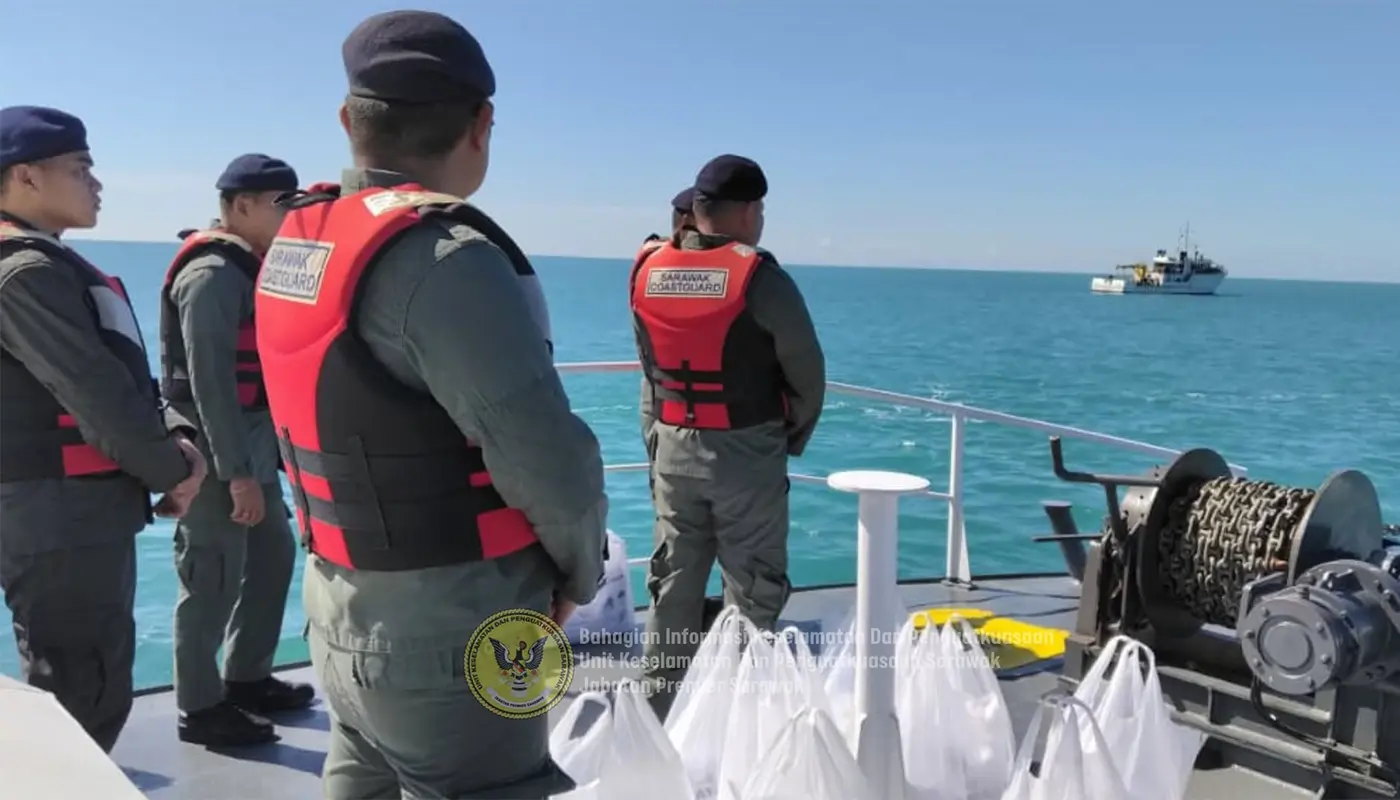
KUCHING – A solemn ceremony was held on 20 June 2026 in Kuching waters, where the Sarawak Islamic Religious Department (JAIS) released 1,802 kilogrammes of ash from Quranic materials into the South China Sea.

The event was organised to uphold the sanctity of damaged religious texts while ensuring the disposal process remained environmentally responsible.
The ash, derived from purification centres across Sarawak, was packed into 212 specially designed AQ-01 biodegradable paper bags.
Each bag weighed approximately 8.5 kilogrammes and was engineered to sink and decompose within minutes, ensuring the materials were respectfully returned to nature without harming marine ecosystems.
This method, unique to Sarawak, differs from practices in other states where ashes are either frozen or released directly into the sea.
Head of JAIS’s Quran Unit, Abdul Rahim Rashid, explained that the initiative followed the guidance of the National Fatwa Committee’s Muzakarah, which mandates proper disposal of Quranic materials to preserve their dignity.
“This is a Quran ash release programme that is routinely carried out based on the decision of the Muzakarah of the National Fatwa Committee in efforts to preserve the sanctity of the Quranic materials that have been damaged,” he said during the ceremony at Pending Ferry Terminal.
The ash was collected from four centres: SK Agama Majlis Islam Sarawak in Sibu, Masjid Al-Muttaqin in Sarikei, An Naim Purification Centre, and Masjid Ikhwanul Islam in Taman Sukma, Kuching.
These centres have been operating since 2016 but continue to face capacity challenges due to rising demand for purification services.
The ceremony was attended by senior officials including Sarawak Mufti Department director Ahmad Sukarno Saini, Sarawak Coastguard assistant director Paul Khiu Khon Khiang, Marine Police Region 5 intelligence head DSP Mohd Noor Mohd Yassin, and Sarawak Ministry of Home Affairs Enforcement and Control Division director Asydidi Hamzah.
Their presence underscored the collaborative nature of the programme, which involved multiple agencies such as the Sarawak Rivers Board, Marine Police Force, Malaysian Fisheries Department, Sarawak Coast Guard, Malaysian Maritime Department, and the Malaysian Maritime Enforcement Agency.
Observers noted that the event was not only a religious obligation but also a demonstration of Sarawak’s commitment to environmental stewardship.
By adopting biodegradable materials, JAIS ensured that the disposal process aligned with modern ecological standards while maintaining respect for Islamic traditions.
This large-scale release, the first in southern Sarawak, reflects the state’s proactive approach in balancing faith and sustainability.
It also highlights the importance of expanding purification facilities to meet growing needs, ensuring that damaged Quranic texts are always treated with the reverence they deserve.
