



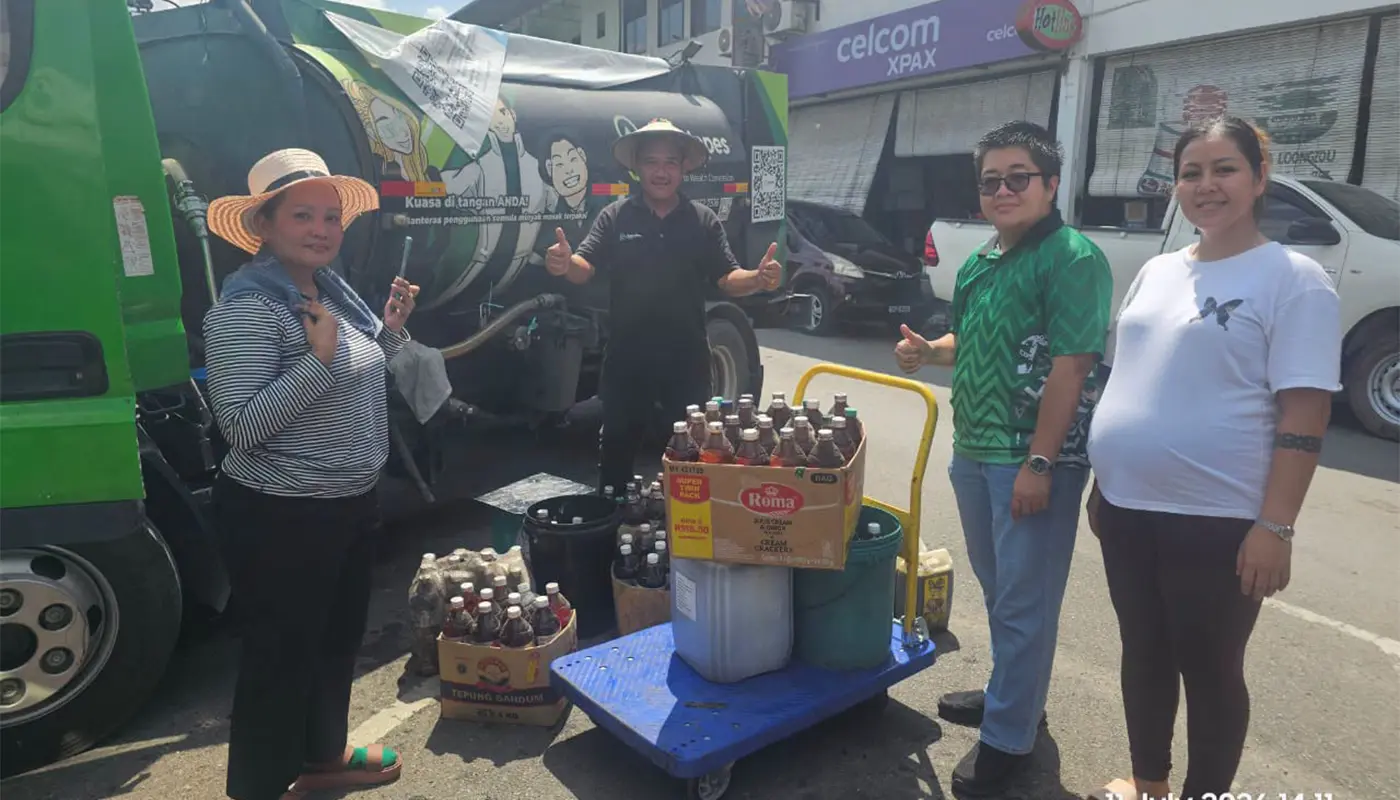
SELANGAU – A community-driven environmental initiative at Pasar Tamu Selangau on 11 July 2026 successfully collected 1,350 kilograms of used cooking oil, marking a significant step forward in local sustainability efforts.

The programme, organised by the Sibu Rural District Council, aimed to encourage responsible waste management and reduce pollution caused by improper disposal of cooking oil.
Used cooking oil, when discarded into drains or waterways, can cause blockages, contaminate rivers and harm aquatic ecosystems.
Recognising these risks, the council has been actively promoting collection programmes to ensure that the oil is recycled safely.
The initiative also supports broader environmental goals by reducing waste and promoting cleaner community practices.
The collection drive at Pasar Tamu Selangau drew participation from local traders, households and small food businesses.
Many residents arrived with containers of used oil accumulated over weeks, demonstrating growing awareness of the importance of proper disposal.
Council representatives noted that the strong turnout reflects increasing community engagement in environmental programmes.
The collected oil will be channelled to authorised recyclers who convert it into products such as biodiesel, industrial lubricants and other eco-friendly materials.
This process not only prevents environmental harm but also contributes to the circular economy by turning waste into valuable resources.
Local authorities emphasised that such initiatives are part of ongoing efforts to promote sustainable living across rural districts.
Regular collection programmes are expected to continue, with plans to expand outreach to more villages and trading centres.
The council hopes that consistent engagement will help build long-term habits among residents, ensuring that used cooking oil is never disposed of improperly.
Environmental advocates in the region have praised the initiative, noting that rural communities play a crucial role in protecting Sarawak’s natural environment.
They highlighted that even small actions, such as collecting used cooking oil, can have a meaningful impact when embraced collectively.
The Sibu Rural District Council expressed appreciation to Selangau residents for their cooperation and commitment.
The council also encouraged more households to participate in future programmes, reminding the public that responsible waste management is essential for safeguarding water quality, public health and the broader ecosystem.
As Sarawak continues to strengthen its environmental agenda, initiatives like the Selangau collection drive demonstrate how community-level action can support state-wide sustainability goals.
With increasing participation and awareness, the council is optimistic that future programmes will achieve even greater results.
