



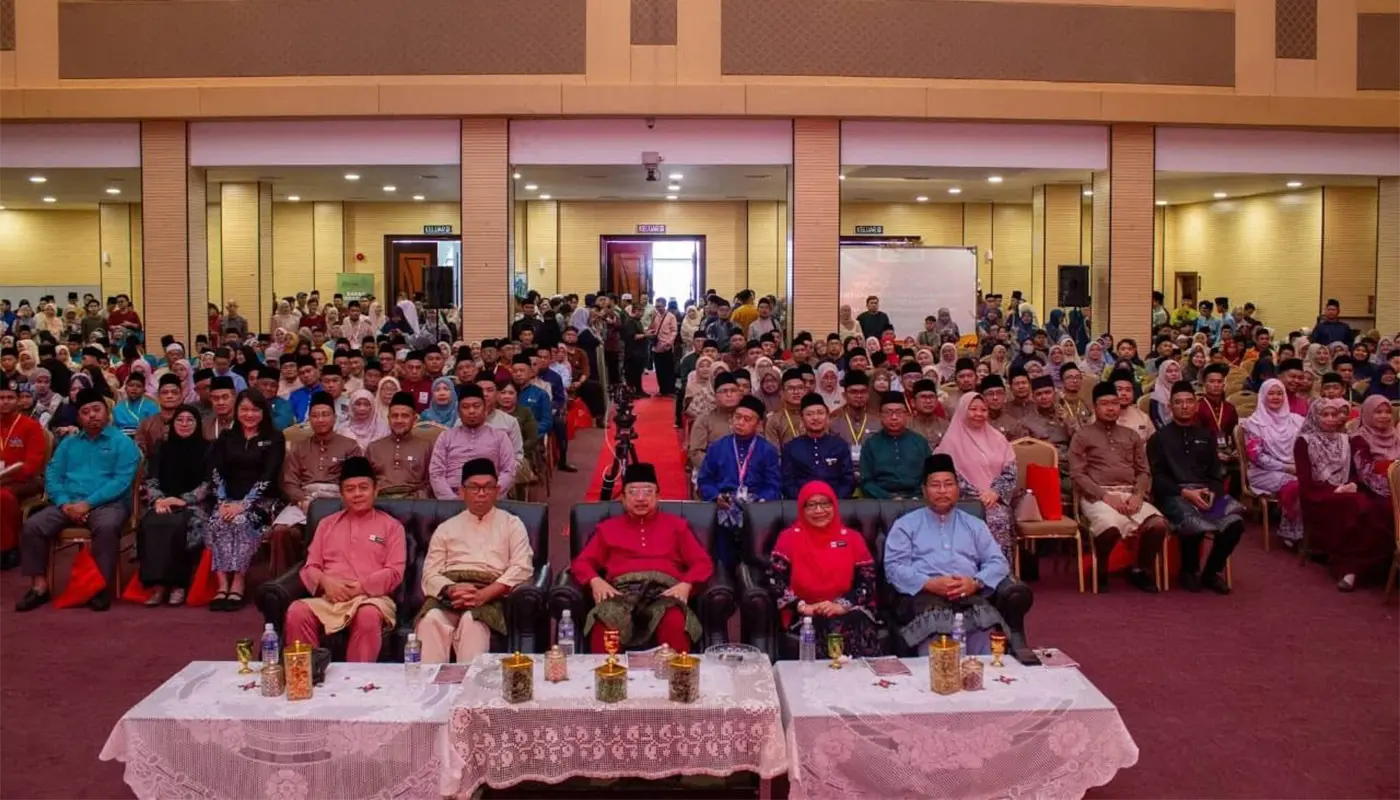
SIBU – The curtains fell on the state-level Schools’ Al-Quran, Nasyid and Khat competition (MQNKSS) on 14 June 2026, culminating in a vibrant closing ceremony and prize presentation.
Held at the Sarawak Islamic Complex in Sibu, the multi-day event brought together the finest student talents from across the region to demonstrate their expertise in sacred arts, musical performance, and traditional calligraphy.
The annual gathering operated under a central theme focused on courtesy and values as the core drivers of educational reform.
This guiding philosophy sought to highlight how character development and academic development must go hand in hand within the contemporary school system.
The closing ceremony was officially overseen by Tuan Omar bin Haji Mahli, the director of the Sarawak State Education Department.
Joining him as a distinguished guest was Tuan Hamdan bin Jar’ee, the Director of the Department of Islamic Development Malaysia (JAKIM) in Sarawak, reflecting the collaborative effort between educational bodies and Islamic affairs departments.
Organisers noted that the primary ambitions of the initiative were fully realised over the course of the festival.
Beyond serving as a competitive arena for Al-Quran memorisation, recitation, nasyid singing, and khat calligraphy, the gathering functioned as an essential platform for strengthening Islamic education.
The framework of the competition is designed to cultivate a highly competitive yet morally grounded generation of young people.
Officials emphasised that nurturing individuals who are both knowledgeable and ethically conscious directly supports the wider social aspirations of the Malaysia MADANI national vision, which promotes sustainability, care, and compassion.
Sibu has frequently played host to major regional student activities, with the local Islamic Complex offering modern facilities capable of managing large delegations.
Students representing various districts across Sarawak spent days engaging in rigorous assessments, which evaluated not only technical precision in recitation and brushwork but also spiritual dedication.
The inclusion of calligraphy and vocal performances alongside textual recitation highlights a comprehensive approach to cultural preservation.
Educators present at the event shared that such programmes provide vital outlets for youth expression, helping to maintain centuries-old practices in a rapidly modernising digital world.
With the distribution of accolades complete, the event concluded with a shared commitment from regional directors to expand support for extracurricular spiritual education.
These joint ventures between school boards and religious institutions are anticipated to grow, ensuring ethical literacy remains a pillar of regional youth development.
