



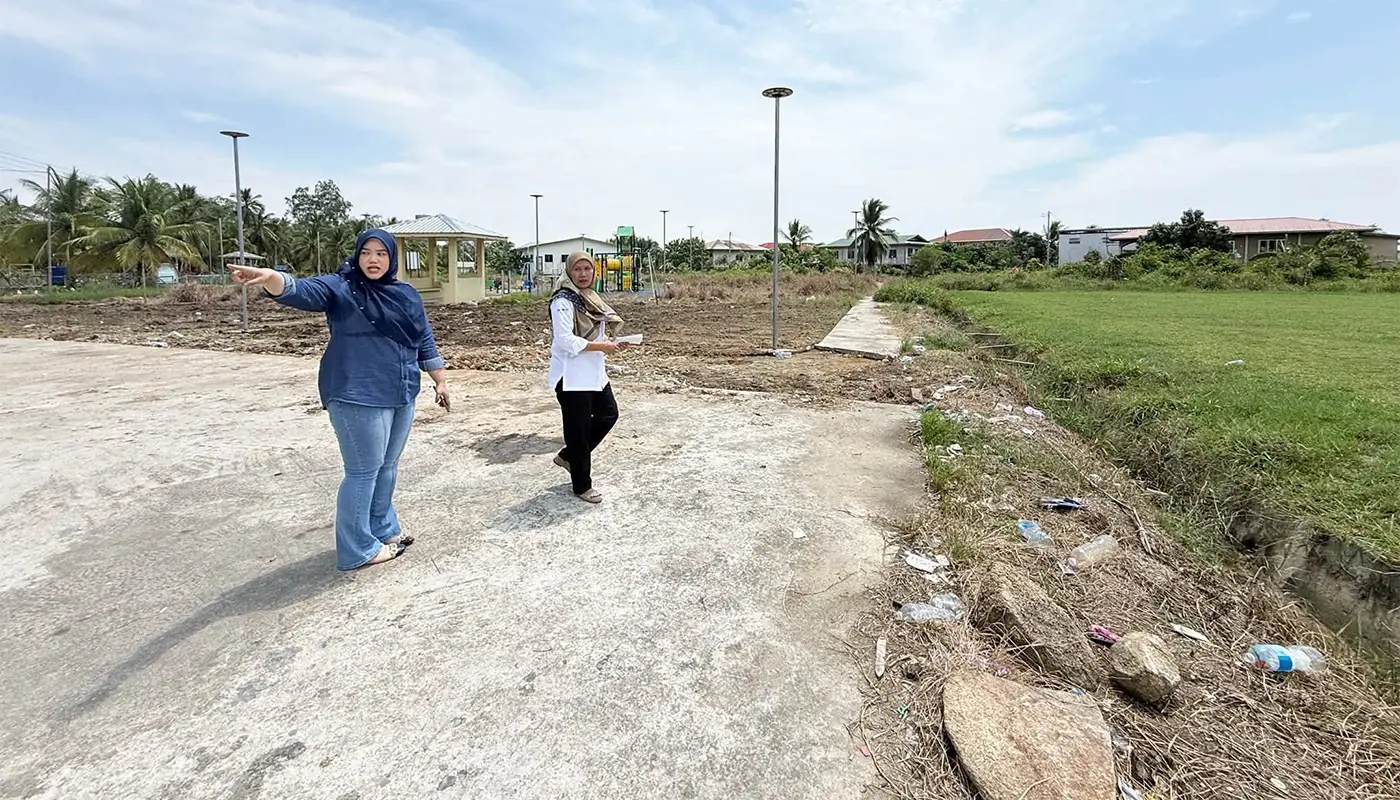
MALUDAM – Significant strides are being made in enhancing recreational infrastructure in the rural district of Maludam, as officials monitored the ongoing upgrades to the local football field.

The site visit was conducted by YB Puan Hajah Dayang Noorazah binti Awang Sohor, who inspected the progress of the construction work alongside Puan Noraini binti Aden, the Officer of the Maludam Subdistrict Office.
The inspection focused on the implementation of the Kampung Maludam Football Field Upgrading Project, a key initiative under the Rural Transformation Project (RTP) for the year 2026.
With a financial allocation of RM150,000, the project aims to modernise the facility to better serve the needs of the local population.
The scope of work includes the construction of concrete squares and covered concrete ditches, improvements designed to enhance both the functionality and safety of the venue.
These infrastructural additions are intended to improve the overall convenience and comfort for residents who use the field for various activities.
By addressing drainage issues through covered ditches and providing stable concrete areas, the project seeks to ensure that the space remains usable even during adverse weather conditions, thereby maximising its utility for the community throughout the year.
During the visit, YB Dayang Noorazah emphasised the broader social impact of such developments. She noted that upgrading public facilities like football fields does more than just provide a safe environment for leisure and sports.
These spaces serve as vital community hubs that foster interpersonal connections and strengthen the spirit of togetherness.
“Efforts to upgrade public facilities such as football fields not only provide a more comfortable and safe environment for leisure and sports activities, but also become a space that strengthens friendships and a spirit of togetherness among the community, especially among Maludam Youth,” she stated.
The focus on youth engagement is particularly significant, as accessible and well-maintained sports facilities play a crucial role in promoting healthy lifestyles and positive social interaction among younger generations.
By providing a dedicated space for physical activity, the local authorities aim to encourage active participation in sports and reduce idle time, contributing to the overall wellbeing of the district’s youth.
Looking ahead, the current phase of development is part of a longer-term strategy. YB Dayang Noorazah informed attendees that the project would continue in subsequent phases, with proposed work extensions already listed under the 2027 Rural Transformation Project.
This phased approach ensures that the facilities in Kampung Maludam will be progressively enhanced, ultimately providing a comprehensive and high-quality recreational area for all residents.
The commitment to rural development remains a priority for the state representative, who stressed the importance of delivering quality public facilities that meet the evolving needs of the community.
This aligns with the broader aspiration to improve the quality of life for people in rural areas, ensuring they have access to amenities that support both physical health and social cohesion.
The collaboration between the state assemblyman’s office and the local subdistrict administration highlights a coordinated effort to deliver tangible benefits to the grassroots level.
By regularly monitoring project implementation, officials can ensure that work proceeds according to plan and adheres to the required standards.
Residents of Kampung Maludam have expressed anticipation for the completion of the upgrades, viewing the improved football field as a valuable asset to their village.
The project exemplifies how targeted investments in rural infrastructure can yield significant social returns, fostering a sense of pride and ownership within the community.
As the work continues, the focus remains on delivering a facility that is not only functional but also inviting and safe for users of all ages.
The successful execution of this phase sets a positive precedent for future rural transformation initiatives in the region, demonstrating the tangible impact of government support on local livelihoods and community spirit.
