



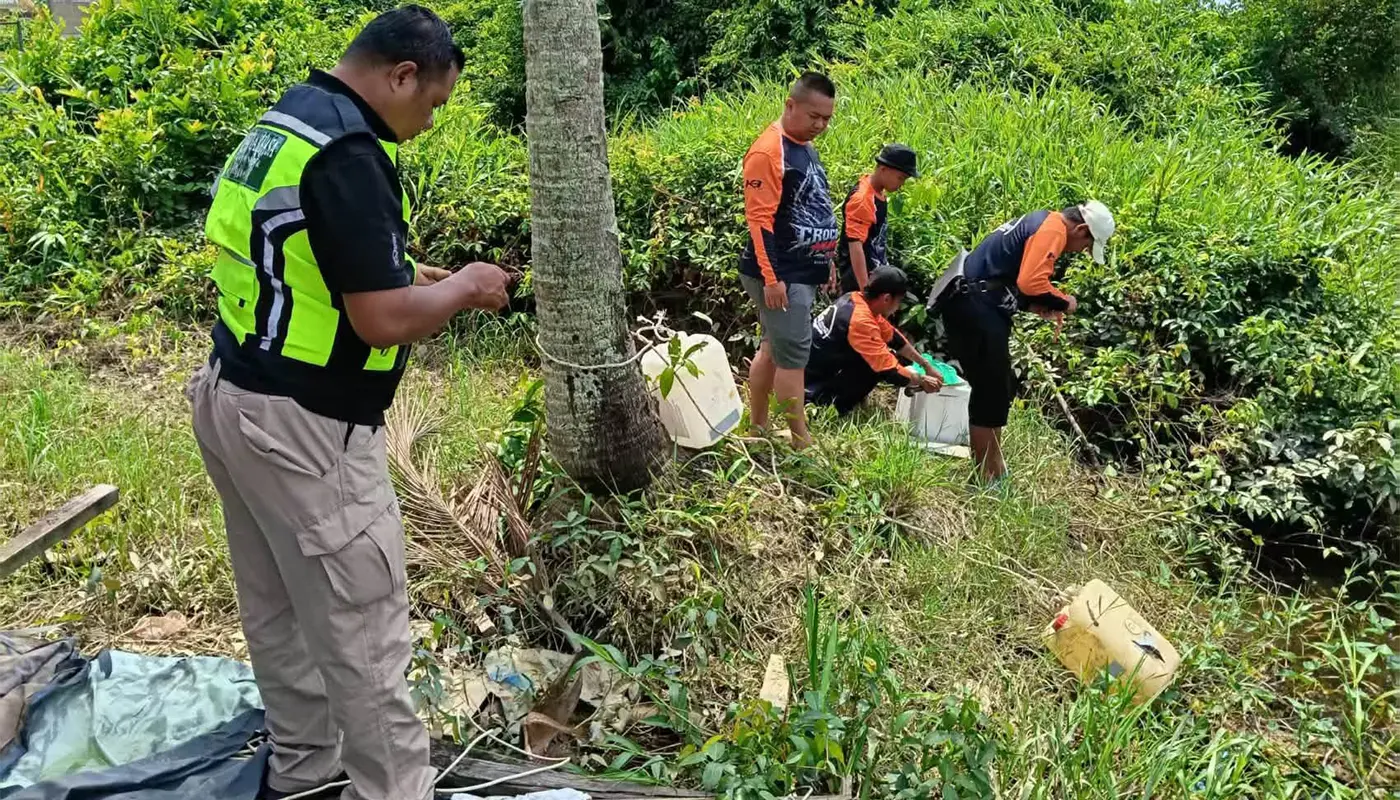
MIRI – Wildlife authorities have launched an immediate monitoring operation in Kampung Kuala Baram following reports of crocodile activity in the vicinity. The swift response aims to assess potential risks and safeguard residents who live near waterways in this coastal community.

Team Eric Cat and the Sarawak Forestry Corporation (SFC) deployed rapidly to the site upon receiving notification from villagers. Their coordinated arrival demonstrates established protocols for addressing human-wildlife conflict incidents in the region.
Upon reaching the reported location, operatives identified areas believed to constitute the reptile’s regular movement corridors. Strategic placement of monitoring bait commenced without delay to facilitate observation and potential capture if necessary.
Such proactive measures are standard procedure when crocodiles appear near populated zones. Early intervention prevents escalation whilst gathering intelligence about individual animal behaviour patterns and habitat usage within the area.
Residents have been urged to exercise heightened vigilance until further notice from responding agencies. Avoiding riverbanks, drainage ditches, and other freshwater bodies significantly reduces encounter probabilities during active monitoring periods.
Immediate reporting of any subsequent sightings remains crucial for operational effectiveness. Timely information enables responders to adjust strategies based on real-time data rather than relying solely on initial observations that may become outdated quickly.
Kampung Kuala Baram’s proximity to estuarine environments creates inherent interface zones where wildlife and human settlements overlap. Understanding these ecological dynamics helps communities coexist more safely with native species over the long term.
Monitoring bait serves dual purposes beyond mere attraction for capture attempts. It also functions as a detection tool, confirming presence and movement patterns even when visual confirmation proves elusive due to vegetation or water conditions.
The collaboration between specialised response teams and forestry corporation personnel leverages complementary expertise. Such partnerships enhance operational capacity whilst ensuring compliance with wildlife protection regulations throughout intervention processes.
Public safety advisories issued during these operations reflect precautionary principles rather than confirmed imminent threats. Nevertheless, treating all crocodile reports seriously maintains community trust and encourages continued cooperation with authorities.
Historical data suggests that crocodile movements often correlate with tidal cycles, rainfall patterns, and prey availability. Incorporating environmental variables into monitoring plans increases efficiency by focusing efforts during periods of highest likely activity.
Capture operations, should they become necessary, follow strict ethical guidelines designed to minimise stress on animals whilst protecting handlers. Translocation to suitable habitats away from human settlements represents the preferred outcome whenever feasible.
Community education forms an integral component of every wildlife response deployment. Sharing knowledge about crocodile behaviour, warning signs, and appropriate responses empowers residents to make informed decisions independently.
The presence of dedicated response units like Team Eric Cat reflects institutional recognition that wildlife conflicts require specialised skills beyond general law enforcement capabilities. Continuous training ensures readiness for diverse scenarios encountered across Sarawak’s varied landscapes.
Waterway avoidance recommendations extend beyond immediate crisis periods to encompass habitual safety practices. Cultivating lasting behavioural change proves more effective than temporary alerts alone for reducing accident rates over time.
Documentation of each incident contributes to broader understanding of crocodile ecology and human-wildlife interaction trends. Accumulated records inform policy development, resource allocation, and preventive infrastructure planning at regional levels.
Communication channels between villagers and authorities must remain open and responsive to maintain confidence. Feedback loops ensure that community concerns are heard whilst official guidance reaches those most vulnerable to potential hazards.
As monitoring continues, updates will be provided based on operational findings and risk assessments. Transparency regarding progress and outcomes reinforces accountability whilst managing public expectations realistically throughout the process.
Ultimately, balancing conservation imperatives with human safety requires nuanced approaches tailored to specific local contexts. Each response operation refines methodologies through practical experience gained in authentic field conditions.
