



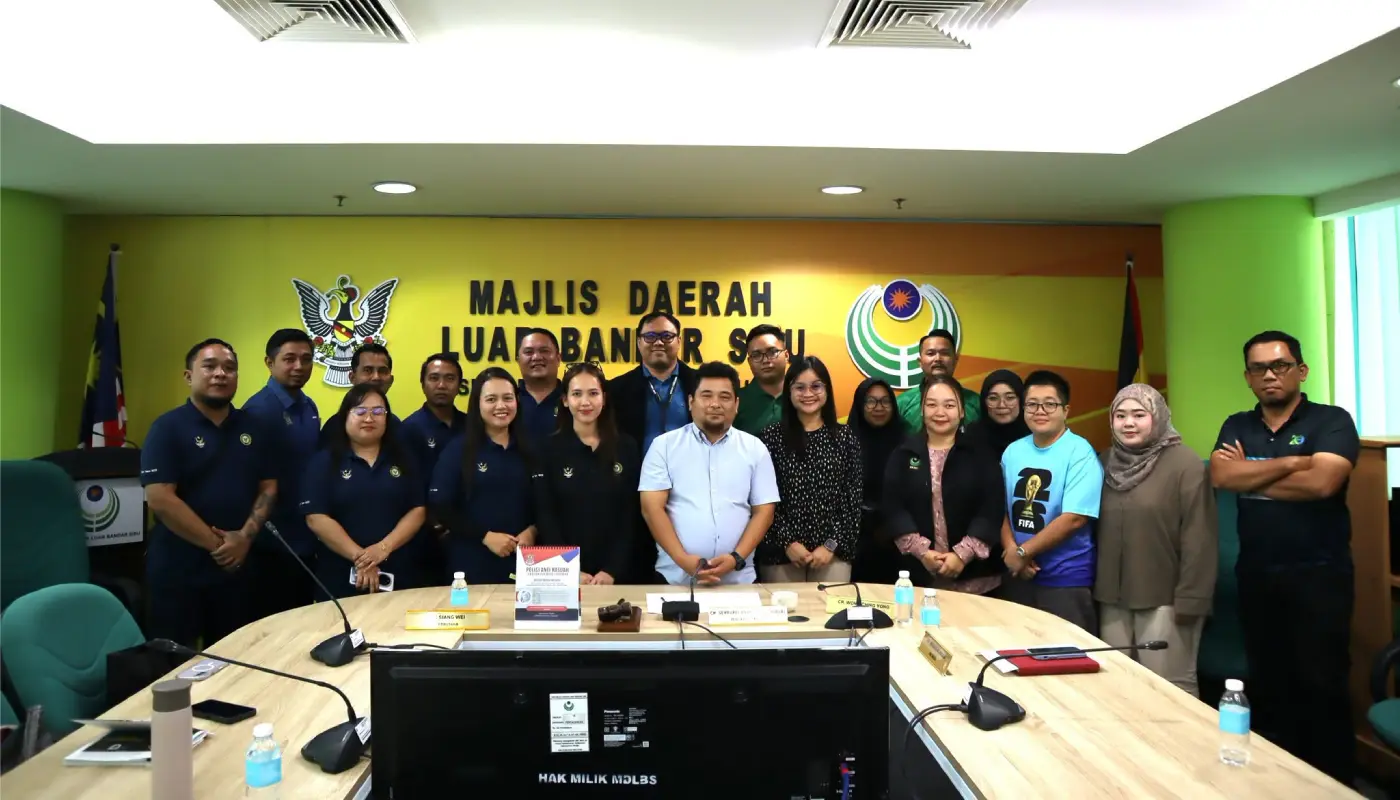
SIBU – The Sibu Rural District Council (MDLBS) hosted a delegation from the Sarikei District Council’s Innovative and Creative Group (KIK) on 12 June 2026, as part of a role-sharing session aimed at strengthening collaboration and promoting innovation in local governance.

The delegation, led by Assistant Secretary Mrs Susanna Ubong Johnny, introduced the Flip-X Bin Innovation Project, a creative solution developed by the Sarikei District Council’s KIK 6 DIV SQUAD.
The project was presented as an example of how innovation can improve efficiency and service delivery within local councils.
The session was attended by MDLBS KIK members, including Group Nineteen-52 from the Engineering Division and Group PH13 from the Health and Urban Services Division.
Both groups engaged in discussions on how the Flip-X Bin project could inspire similar initiatives within their respective divisions.
The Flip-X Bin Innovation Project was designed to address waste management challenges by improving the functionality and usability of waste bins.
The project reflects Sarikei District Council’s commitment to creative problem-solving and its focus on enhancing public services through innovation.
Council representatives emphasised that the role-sharing session was not only about exchanging ideas but also about building stronger ties between local authorities.
By sharing experiences and solutions, both councils aim to cultivate a culture of creativity and efficiency that benefits communities across Sarawak.
The collaboration between Sarikei District Council and Sibu Rural District Council demonstrates the importance of inter-council partnerships in driving progress.
Such initiatives are seen as vital in ensuring that local governments remain responsive to community needs while adopting modern approaches to service delivery.
Participants expressed optimism that the session would lead to more joint efforts in the future, with councils continuing to share knowledge and best practices.
The event highlighted the value of innovation in local governance and reinforced the role of KIK groups in fostering continuous improvement.
By encouraging creativity and collaboration, the councils hope to set an example for other local authorities in Sarawak, showing how innovation can be harnessed to deliver more effective and sustainable services.
