



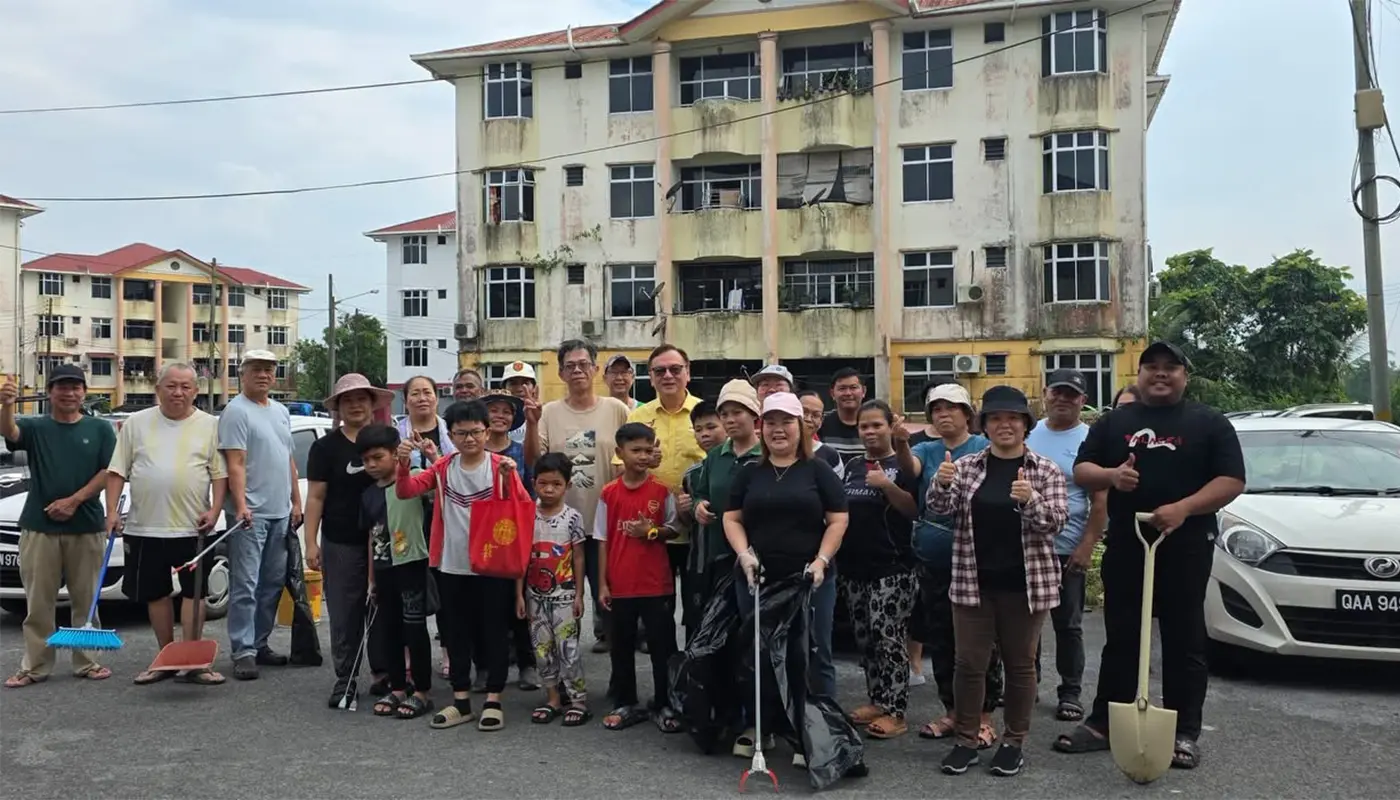
KUCHING – A spirit of communal cooperation filled the air at Taman Country Hill this weekend as residents joined hands for a neighbourhood cleanup initiative. The event, held along Jalan Stephen Yong, saw active participation from local households and community leaders working together to enhance the living environment.

YB Dato Ir Lo Khere Chiang, the State Assemblyman for Batu Kitang the area, was present to support the efforts. He worked alongside the residents and the organising committee, demonstrating a hands-on approach to community engagement. His presence highlighted the importance of elected representatives staying connected with the grassroots needs of their constituencies.
The programme focused on maintaining cleanliness, safety, and aesthetic appeal within the residential zone. Participants engaged in various tasks, including clearing debris, trimming overgrown vegetation, and ensuring that public spaces were free from hazards. Such activities are vital for preventing health risks and improving the overall quality of life for inhabitants.
Gotong-royong, a traditional Malay term for communal work, remains a cornerstone of social cohesion in Malaysian society. By coming together for a common cause, neighbours strengthen their bonds and foster a sense of shared responsibility. This collective action helps to build a more resilient and supportive community network.
Dato Ir Lo Khere Chiang expressed his gratitude to everyone who took part in the initiative. He acknowledged the time and effort contributed by volunteers, noting that their dedication was essential to the success of the day. The assemblyman emphasised that a clean and safe environment is a shared goal that requires consistent collaboration from all stakeholders.
“The neighbourhood looks cleaner, safer, and more beautiful thanks to your efforts,” the assemblyman noted in his appreciation of the turnout. He reinforced the message that such initiatives are not just about physical cleanup but also about building a stronger and more caring community. This sentiment resonated with the participants, who felt a renewed sense of pride in their surroundings.
The organising committee played a crucial role in coordinating the logistics of the event. They ensured that necessary tools and resources were available for the volunteers. Their planning allowed the cleanup to proceed smoothly, maximising the impact of the collective effort within the limited timeframe of the morning session.
Taman Country Hill, located in a strategic part of Kuching, benefits significantly from such regular maintenance. Urban residential areas often face challenges related to waste management and upkeep of green spaces. Proactive community involvement helps to mitigate these issues before they escalate into larger problems requiring municipal intervention.
Safety was another key focus of the day’s activities. By removing potential tripping hazards and ensuring clear pathways, the residents contributed to a safer environment for children and the elderly. This aspect of the cleanup underscores the holistic approach to community welfare, where physical cleanliness translates directly into enhanced security and well-being.
The aesthetic improvement of the neighbourhood also has psychological benefits. Living in a well-maintained area can boost morale and encourage further civic participation. Residents who see the tangible results of their labour are more likely to engage in future projects, creating a positive cycle of community improvement.
Such events also provide an opportunity for social interaction among neighbours who may not otherwise meet. In modern urban settings, where isolation can be common, gotong-royong serves as a bridge between households. It allows people to connect, share stories, and build friendships based on shared local interests.
The involvement of YB Dato Ir Lo Khere Chiang signals strong political support for grassroots initiatives. When leaders participate directly, it validates the efforts of ordinary citizens and encourages broader participation. This model of leadership fosters trust and transparency between the government and the governed.
Environmental awareness was implicitly promoted through the cleanup activities. Participants gained a better understanding of waste disposal practices and the importance of preserving green spaces. This educational aspect contributes to long-term behavioural changes that benefit the wider ecosystem of the city.
The success of this particular event sets a benchmark for other neighbourhoods in Kuching. It demonstrates that with adequate organisation and community will, significant improvements can be achieved without substantial financial investment. The primary resource required is the willingness of residents to contribute their time and energy.
As the event concluded, the neighbourhood appeared visibly refreshed. The collective effort had transformed common areas into inviting spaces for relaxation and play. This immediate visual reward serves as motivation for sustaining the momentum in future months.
