



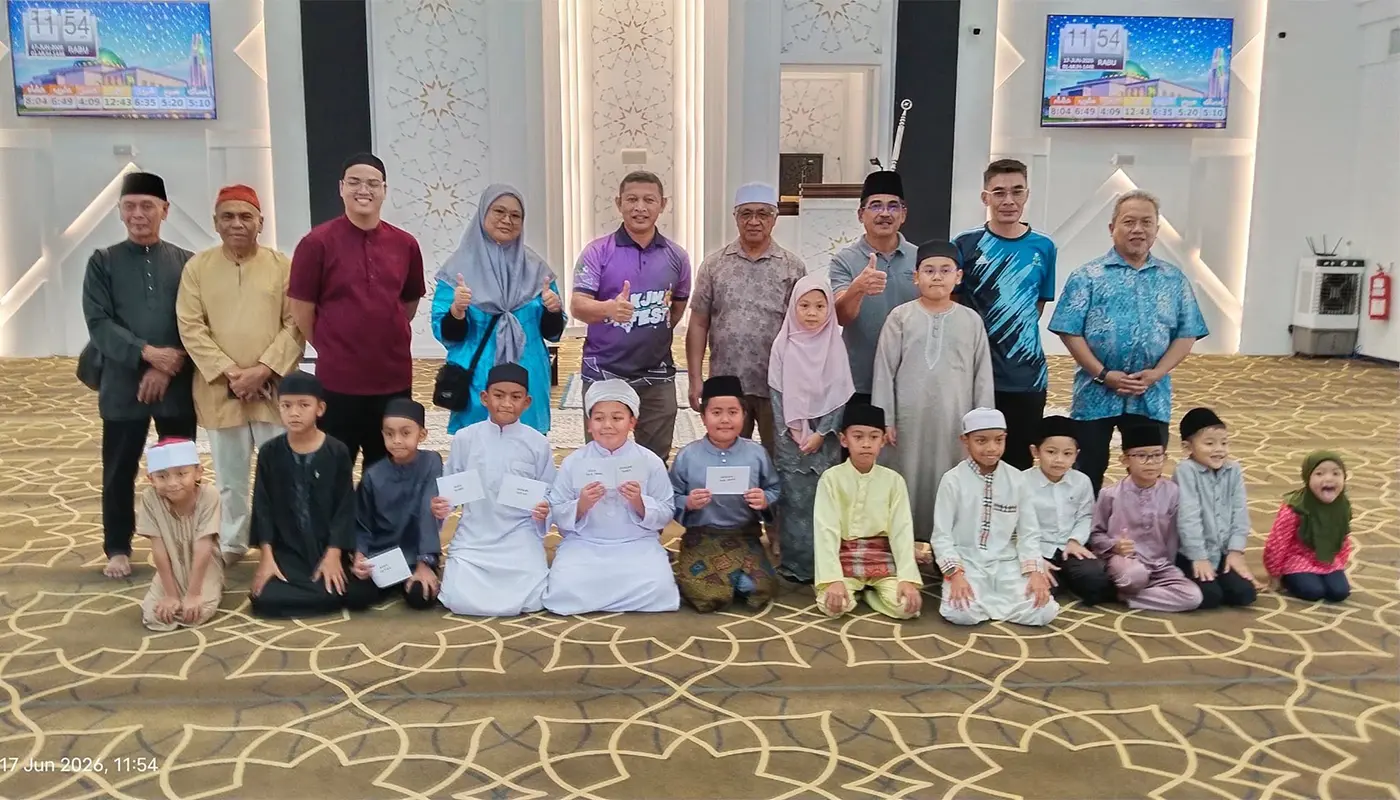
KUCHING – The annual KJM N7 Samariang Maal Hijrah Carnival brought together residents of Taman Sukma on 17 June 2026, with a full day of activities hosted at the Ikhwanul Islam Mosque.

The event was coordinated by KJM N7 Samariang in collaboration with KJM Taman Sukma, supported by KRT Sukma and KEMAS, with the mosque committee acting as host for this year’s programme.
Organisers highlighted that the carnival was designed to foster unity, encourage participation, and strengthen neighbourhood ties.
Morning sessions featured a variety of competitions aimed at engaging children and families. These included a colouring contest for youngsters and a hantaran arrangement competition, as well as contests in azan and hafizan recitation.
Health screenings were also offered, reflecting the organisers’ commitment to community wellbeing. In the afternoon, residents gathered for a friendly ping-pong competition, which drew enthusiastic participation from both youth and adults.
The sporting activity added a recreational dimension to the carnival, complementing the cultural and religious elements of the programme. The highlight of the evening was a religious talk delivered by Ustaz Haji Azmi Shaari.
His lecture, titled “Neighbours: Forgotten Hijrah Trusts”, underscored the importance of neighbourly relations, collective responsibility, and the values of togetherness in building a harmonious society.
His message resonated strongly with attendees, many of whom emphasised the relevance of these values in modern community life.
Yang Berusaha Encik Faisal Adenan, Deputy Director of Kuching North City Hall (DBKU), was also present, signalling official support for the initiative.
His attendance reflected the city’s recognition of grassroots programmes that promote social cohesion and civic pride.
The Maal Hijrah Carnival is part of a wider effort across Sarawak to celebrate the Islamic new year while reinforcing community bonds.
Similar events have been held in other districts, often combining religious observances with cultural and recreational activities.
These programmes are seen as vital in encouraging youth involvement, preserving traditions, and promoting health awareness.
Organisers noted that the success of the carnival was due to strong cooperation between local agencies, mosque committees, and residents.
They expressed hope that future editions would continue to expand, offering more opportunities for participation and strengthening the values of unity and harmony within the community.
By blending religious reflection with social activities, the Samariang Maal Hijrah Carnival demonstrated how local initiatives can enrich community life, ensuring that the spirit of hijrah remains meaningful in contemporary society.
