



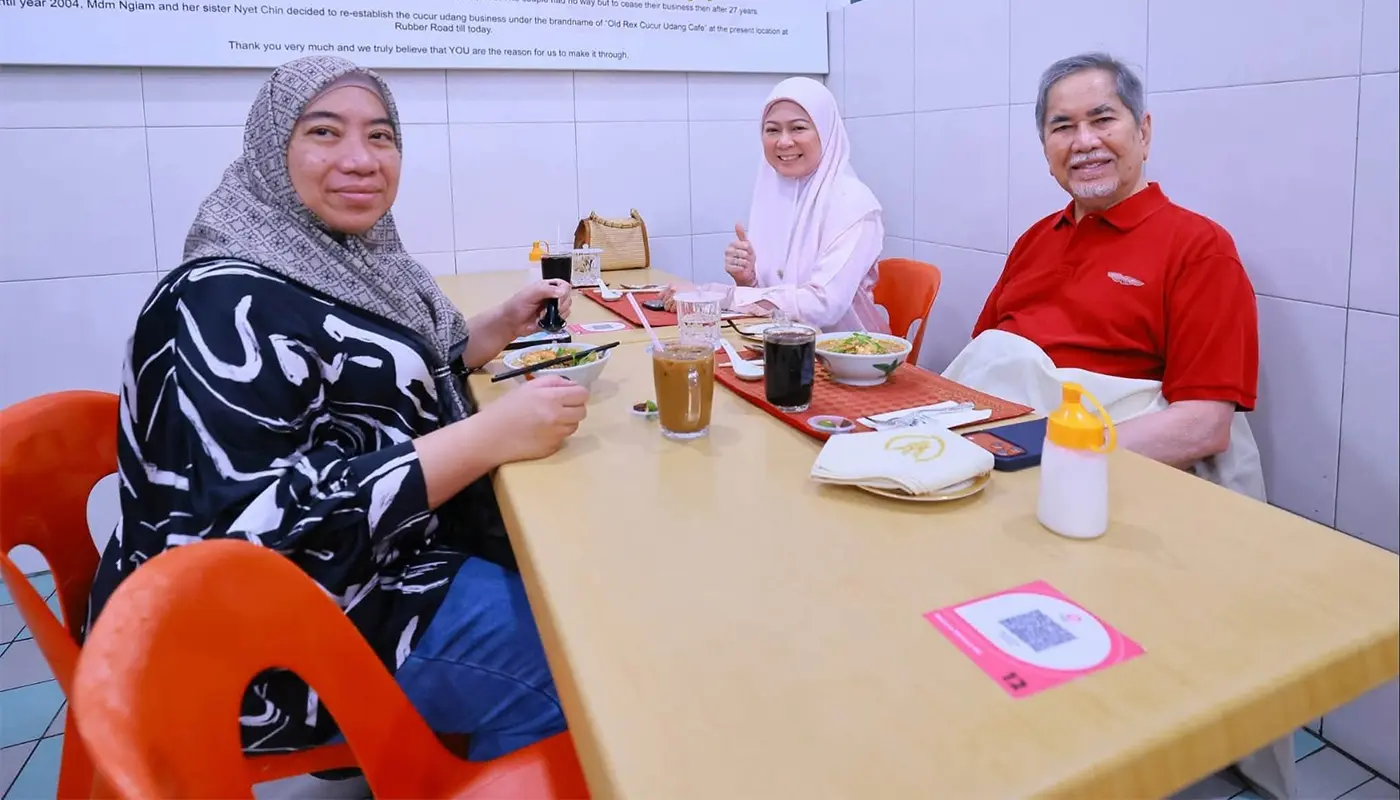
KUCHING – The Sarawak Governor, Tun Pehin Sri Dr Haji Wan Junaidi bin Tuanku Jaafar, was seen enjoying a morning meal at the Old Rex Cafe in Satok on 5 July, accompanied by his wife, YABhg Toh Puan Datuk Patinggi Hajjah Fauziah binti Mohd Sanusi, and their daughter, Puan Hajah Sharifah Fariah.

The family’s visit drew attention from patrons at the well-known eatery, which has long been a favourite among locals for its traditional Sarawakian dishes.
The Old Rex Cafe, established decades ago, remains a popular spot for residents and visitors alike, offering a menu that highlights regional culinary heritage.
During the breakfast, Tun Pehin Sri opted for Sarawak Laksa, a dish often regarded as one of the state’s signature delicacies. Toh Puan selected Malay-style fried noodles, a meal she is known to enjoy.
Their daughter joined them in the casual outing, which provided an opportunity for the family to spend time together while engaging with members of the community.
The presence of the state’s top leader and his family at the cafe added a sense of warmth to the morning, as they mingled with acquaintances and greeted customers who happened to be dining at the same time.
Such informal appearances are often seen as a way for leaders to remain connected with everyday life in Sarawak, reinforcing ties with the public outside of formal events.
Local diners expressed appreciation for the visit, noting that it reflected the leaders’ willingness to embrace Sarawak’s food culture and share in the experiences of ordinary citizens.
The Old Rex Cafe itself has become symbolic of Kuching’s culinary identity, with dishes like Laksa frequently celebrated in food festivals and tourism campaigns.
Sarawak Laksa, in particular, has been recognised internationally as a must-try dish, combining rice vermicelli, prawns, shredded chicken, and a rich broth infused with spices and coconut milk.
Meanwhile, Malay fried noodles remain a staple comfort food across Malaysia, valued for their simplicity and flavour.
The breakfast outing underscored the importance of food as a cultural bridge, bringing together leaders and citizens in a relaxed setting.
It also highlighted the enduring appeal of traditional cafes in Kuching, which continue to thrive despite the rise of modern dining establishments.
