



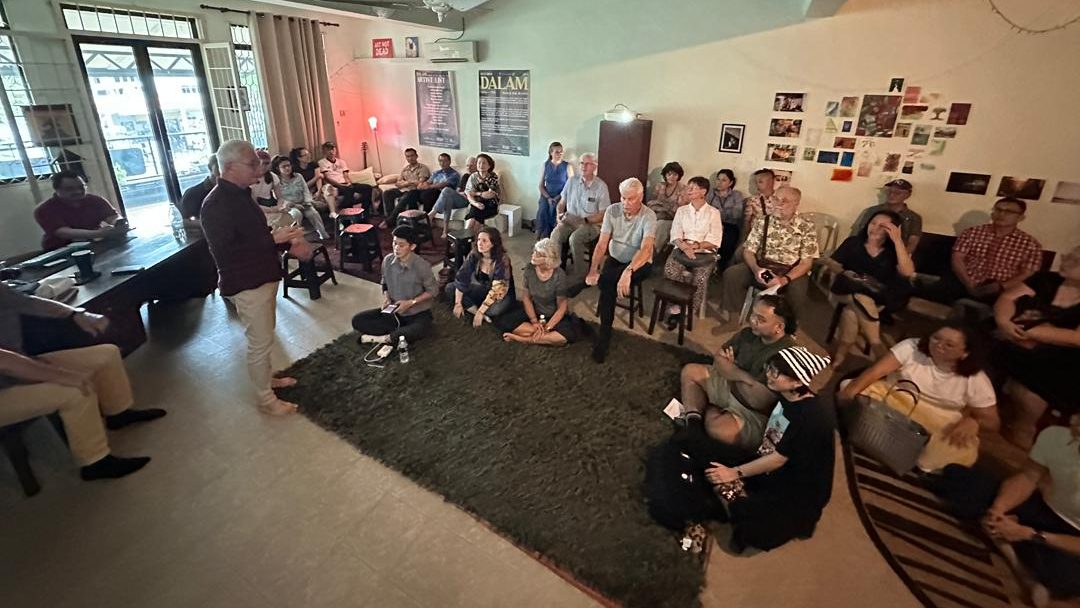
KUCHING, April 13 — A recent heritage talk in Kuching has brought renewed attention to the journey of Melanau cultural artefacts now housed in European collections, raising important questions about preservation, ownership, and cultural identity.

The session, organised by the Sarawak Heritage Society, was part of its ongoing Heritage Speakers Series and took place on April 11. The event featured Dr. Rolf Schlömer, an independent researcher from Germany, who has spent years studying Melanau objects kept in museums across Europe.
Dr. Schlömer shared that his connection to Sarawak dates back to the 1970s, when he first lived in rural areas as a young dentist under the German Volunteer Service. Since then, he has developed a deep interest in the region’s cultural heritage, particularly the Melanau community and its traditional artefacts.
During the session, attended by more than 40 participants, Dr. Schlömer presented detailed findings on how various Melanau objects made their way into collections in countries such as England, Scotland, Germany, France, Switzerland, Denmark, and even the Vatican. His research traced the movement of these artefacts across thousands of kilometres, offering a rare glimpse into historical collecting practices.
The discussion also explored key issues surrounding these collections, including their cultural and historical significance, as well as ethical considerations. Among the questions raised were whether the removal of such objects from Sarawak was justified, and whether their absence today represents a loss to local heritage.
Dr. Schlömer noted that, based on his research, many of the artefacts found in European museums were likely produced specifically for collectors rather than being used in traditional rituals. As a result, he suggested that their removal may not necessarily represent a direct cultural loss for Sarawak.
However, he acknowledged that at least one known textile piece has gone missing over time, highlighting a more tangible concern regarding the preservation and documentation of such items.
He also pointed out that while European institutions have preserved these artefacts, their cultural meaning could be better understood if they were displayed closer to their place of origin. Local institutions, such as the Oya Museum, were cited as suitable spaces where such objects could be appreciated within their cultural context.
The session attracted heritage enthusiasts, researchers, tourism players, and members of the public, all eager to learn more about Melanau material culture and the broader debate on cultural restitution. Many participants expressed interest in the stories behind how these objects travelled from Sarawak to distant museum depots.
The event underscored the importance of ongoing dialogue in preserving Sarawak’s cultural heritage, both locally and internationally. It also reaffirmed the Sarawak Heritage Society’s commitment to promoting awareness and understanding of the state’s rich and diverse history.
As discussions on cultural ownership and preservation continue globally, sessions like this serve as a reminder of the need to balance historical practices with present-day values, ensuring that heritage remains meaningful for future generations.
