



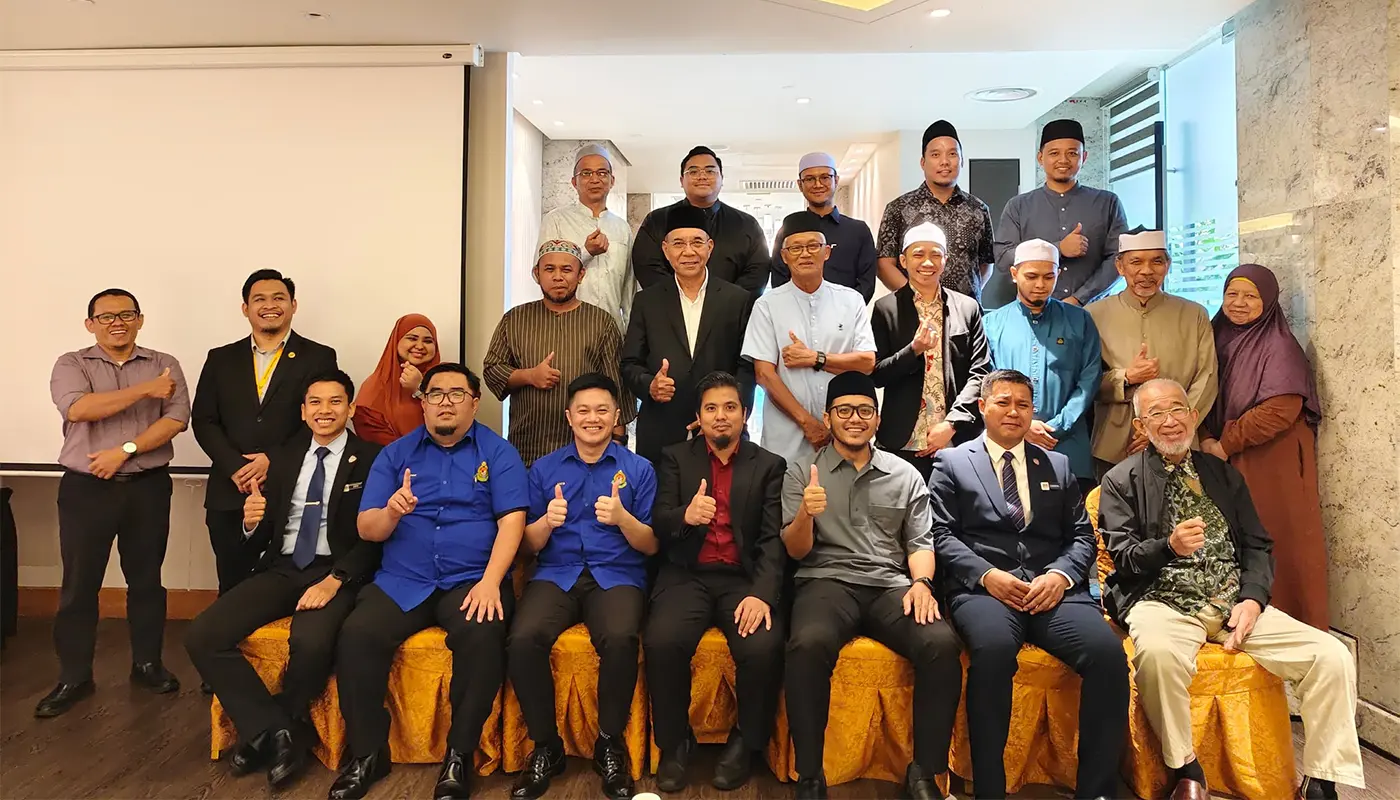
BINTULU – The Sarawak Islamic Religious Department, through its Da’wah Division, successfully conducted the GAIWA Induction Programme on 28 April 2026, corresponding to 10 Zulkaedah 1447 Hijrah.

The event was held at the Ruby Room of NU Hotel, Bintulu, and brought together 20 participants alongside the organising secretariat and guest speakers.
The programme was designed to provide sponsors of GAIWA with a clear and structured understanding of the certification application process.
Participants were guided through the various stages, including application methods, procedural rules, police review, study procedures, and the final approval and permission process from the Immigration Department.
By engaging directly with representatives from relevant agencies, attendees were able to access accurate and up-to-date information from official sources.
Three guest speakers delivered presentations during the induction. The first session was led by Assistant Superintendent of Police (ASP) Mohd Syamsul Rizal bin Ahmad from the Royal Malaysian Police (PDRM), who explained the procedures involved in police reviews and assessments of GAIWA applications.
His briefing highlighted the importance of thorough vetting to ensure compliance with national regulations.
The second session featured Senior Deputy Assistant Director of Immigration, Mr. Mohd Alhafis bin Hamdi, from the Malaysian Immigration Department.
He provided detailed insights into the approval process and the permissions required from Immigration authorities, outlining the steps necessary to secure certification.
The final session was conducted by Ustaz Izwan Syafrein bin Ibrahim, an Islamic Affairs Officer, who elaborated on the application methods and procedural requirements of GAIWA.
His presentation ensured that participants gained a comprehensive understanding of each stage, enabling them to navigate the process more effectively.
The induction programme reflects the department’s commitment to strengthening awareness among sponsors and ensuring that certification applications are managed smoothly and in accordance with established procedures.
Organisers expressed hope that similar initiatives will continue in the future, providing ongoing exposure and guidance to stakeholders.
By equipping sponsors with the necessary knowledge, the programme aims to facilitate orderly management of applications while reinforcing transparency and accountability.
The collaboration between religious authorities, police, and immigration officials underscores the importance of inter-agency cooperation in maintaining integrity within certification processes.
