


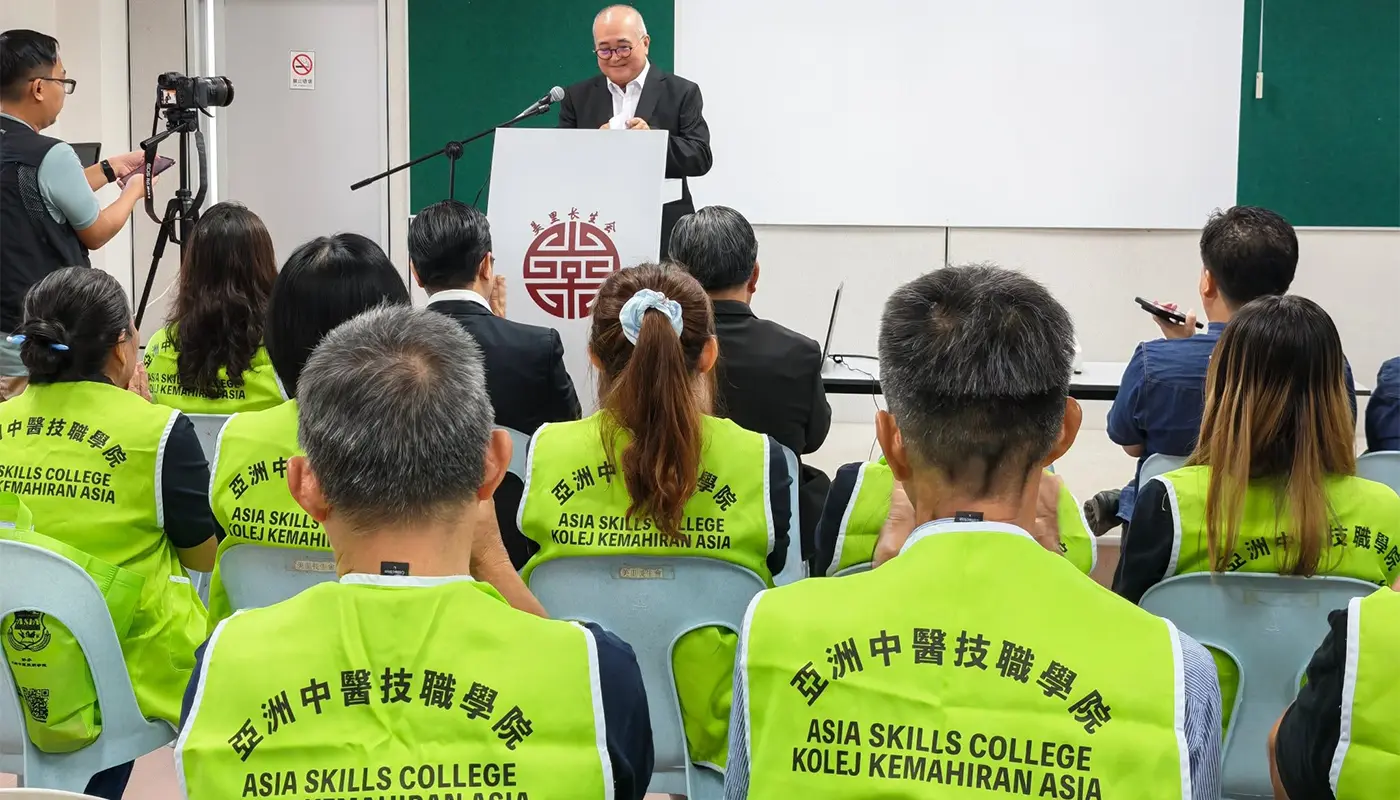
MIRI – Traditional medicine, long regarded as an essential part of public health, was highlighted during the commencement of the fourth course at Asia Skills College on 14 June 2026.
The event, held at Chang Sheng Hui, underscored the enduring role of traditional practices in complementing modern healthcare.
Traditional medicine in Sarawak encompasses a wide range of practices, including Traditional Chinese Medicine, Malay healing traditions, Indian Ayurvedic methods and herbal remedies passed down through generations.
These systems have historically safeguarded communities, offering accessible healthcare rooted in cultural wisdom.
With the implementation of the Traditional and Complementary Medicine Act, traditional medical services are moving towards greater professionalisation and standardisation.
This legislation aims to ensure that practitioners meet recognised standards, thereby enhancing safety and credibility.
Miri City Council Mayor, YB Adam Yii, emphasised the importance of systematic training and certification for aspiring practitioners.
He noted that legal qualifications would enable trainees to provide safer and more professional services, ensuring the continuation of traditional medicine while complementing modern healthcare systems.
The mayor also highlighted Sarawak’s broader healthcare ambitions, particularly the state’s pursuit of greater autonomy in managing its medical services.
He acknowledged the long-standing challenges of limited medical personnel and resources, stressing that these issues must be addressed through comprehensive planning and investment.
Healthcare services, he said, are fundamental to the well-being of the people. A stronger system requires not only infrastructure but also adequate talent development and policies tailored to Sarawak’s specific needs.
By integrating traditional medicine into the wider healthcare framework, the state aims to build a more inclusive and sustainable system.
The commencement of Asia Skills College’s fourth course reflects ongoing efforts to train new practitioners who can bridge traditional knowledge with modern standards.
This initiative is expected to strengthen Sarawak’s healthcare landscape, offering communities more diverse and reliable options for treatment. The event also served as a reminder of the importance of cultural heritage in healthcare.
Traditional medicine, rooted in centuries of practice, continues to play a vital role in shaping Sarawak’s identity while contributing to the health of its people.
As Sarawak moves forward, the combination of modern medical advancements and traditional wisdom is seen as a pathway to building a healthier, more resilient society.
