



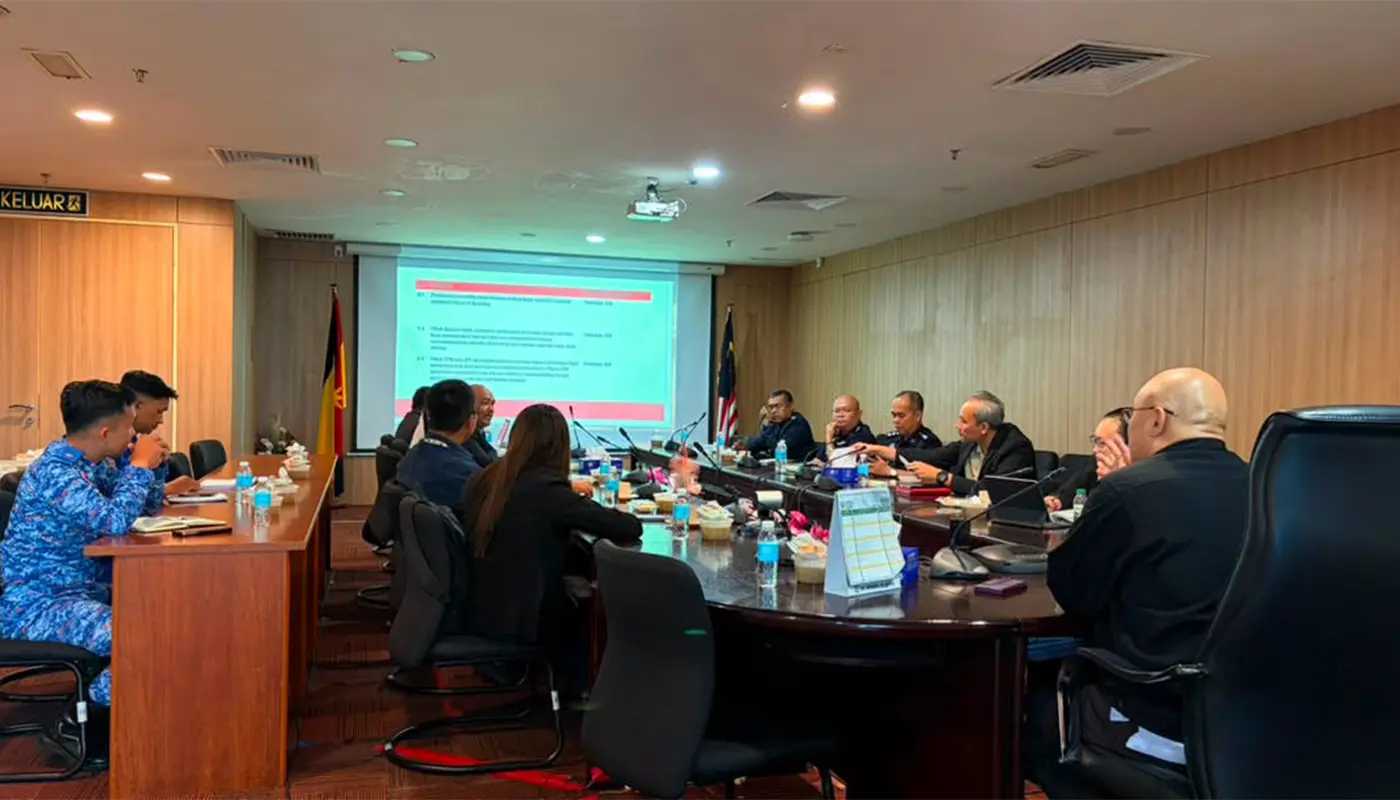
KUCHING – A special task force committee has convened in Kuching to enhance coordination among agencies in managing human-crocodile conflicts across the division.

The meeting, held on 7 July 2026 at the Kuching Division Resident’s Office, was chaired by Acting Resident Mr. Lim Hock Meng and brought together representatives from state and federal agencies.
Among those present were officials from the Royal Malaysian Police (PDRM), the Malaysian Civil Defence Force (APM), the Social Welfare Department (JKM), the Sarawak Rivers Board, as well as district officers from Bau and Lundu.
The gathering underscored the importance of inter-agency cooperation in addressing wildlife-related safety concerns.
A report presented by Mrs. Sophia Sik from the Kuching Regional Office outlined activities carried out between January and June 2026.
These included crocodile removal operations, trap installations, warning sign placements, and the handling of public complaints.
The operations were led by Mr. Amran bin Omar, who coordinated field responses across affected districts.
The meeting also featured a briefing on the Wildlife Attack Victim Assistance Initiative 2026, delivered by Mr. Chai Min Sing, Head of the SWAT Section.
He explained that the Sarawak Forestry Corporation (SFC) has taken over responsibility for processing aid since January.
The initiative aims to ensure victims and their families receive assistance more promptly, with terms and conditions distributed to district offices for wider community awareness.
Officials stressed that the committee’s role is not only to manage immediate risks but also to build long-term strategies for coexistence between communities and wildlife.
Crocodile encounters have been a recurring issue in Sarawak, particularly in riverine areas, where human activity often overlaps with natural habitats.
The task force reaffirmed its commitment to strengthening collaboration among agencies, ensuring that responses are both effective and integrated.
By improving communication channels and sharing resources, the committee hopes to reduce risks, provide timely support to victims, and maintain public confidence in safety measures.
The meeting concluded with a call for continued vigilance and proactive measures. Authorities emphasised that community leaders and village heads play a vital role in disseminating information, ensuring that residents are aware of safety guidelines and available assistance.
This initiative reflects Sarawak’s broader approach to wildlife management, balancing conservation with public safety.
The task force’s efforts highlight the importance of unity among agencies and communities in addressing challenges posed by human-wildlife conflict.
